I have an elixir 2 and hubba nx 1 and rarely use them. Subpar tents where you’re paying for the brand name. I have a xmid 1 solid which I much prefer but it’s by no means a 4 season tent.
Maybe look at the new Fjern Stormgrotta when it’s back in stock. It looks like it can take a beating and you can’t beat it for £160.
My set up right now.
Durston 55L bag
Durston Xmid 1 solid tent
Nemo switchback pad for summer, tensor extreme for everything else.
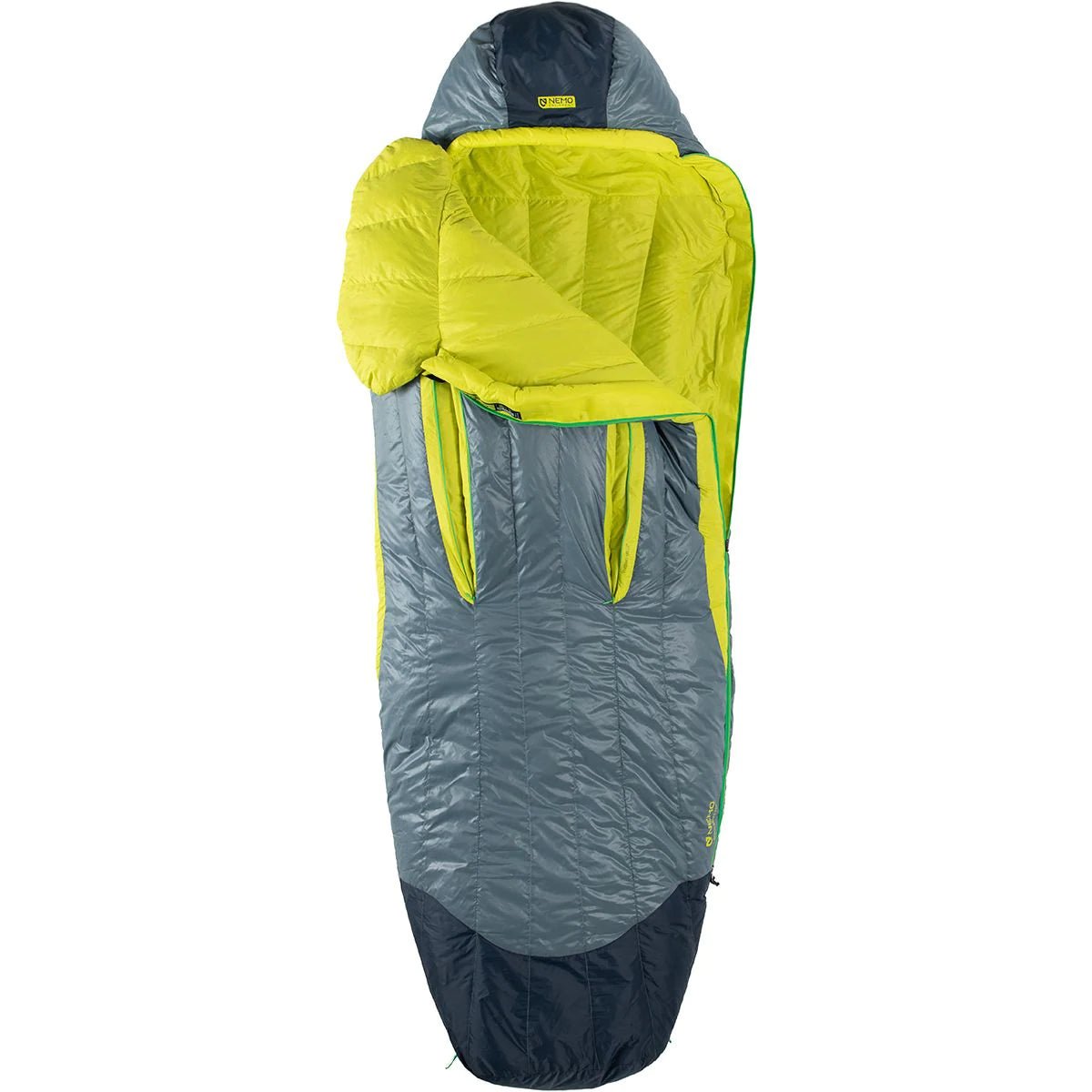
Nemo disco 15 sleeping bag
Only thing I’m missing is a quilt for warmer weather. Got my eyes on one from little shop of hammocks
In the first 700 miles of the PCT the bugs aren’t too bad, so you could use just the fly with a ground sheet, but it is sandy sometimes so the interior can be nice.
The regular interior is much more popular on the PCT and works well, but certainly people do use the solid as well. I would only opt for the solid if you are quite a cold sleeper.
The ‘solid’ inners for our X-Mid have a panel of mesh (on the upper part of the doors) that can’t close, but with the X-Dome this mesh panel is accompanied by a second layer of solid material that can be closed to have it ‘full’ solid (no areas of exposed mesh).
I don’t have a great photo of it, but [this shot](https://durstongear.com/cdn/shop/files/16_-_Durston_X-Dome_2_Ultraight_Tent_-_Solid_Inner_446.jpg?v=1757631867) shows it when the solid layer is shut behind the mesh
The short answer is that it is a combination of sewn on and zippers, and is included in the weight.
The long answer is that the ‘flap’ of solid fabric is a triangle that is sewn along the bottom edge (permanently attached & part of the weight). So the bottom edge is ‘sealed’ such that any snow building up on the solid panel isn’t going to slide down into the tent.
Then the other two sides are both sewn for the lowest 4-5” to further prevent wind blown snow from sneaking in, and this creates a pocket that the rest of the flap can be tucked into when it is open.
Then above that, the side of the triangle along the main zipper has a zipper to zip shut. The zipper is not vertical, but angling over the flap, so it does a nice job of raising up the flap to cover the mesh. Operating the zipper is what closes the flap.
As it does that, the final side near the top is pulled closed and sits shut with a bit of overlap. It is an overlap closure for the upper part of the ‘top’ side, such that the mesh is covered but the edge here is not ‘sealed’. We could’ve put another zipper here (or Velcro etc) but it’s at the top, sits shut nicely now, and is shielded by the fly. If it’s so windy it’s forcing snow through there, it’s probably not the right conditions for this tent anyways, but if a user wanted it would be easy to add a bit of velcro
For that vestibule cord, it is a thin cord (1.5mm) that theoretically can be damaged, although I think we've only had that reported once. This cord is thin and so are the cords at the corners, but I consider those relatively minor things because they are so easily replaced.
For the poles, we do also have the aluminum option now with DAC poles that are basically the same pole as other ultralight tents, so a similar limitation there. I know in general people are more worried about the carbon poles and there is some history there, but in the current iteration we are seeing similar or lower reports of damage as with the aluminum option, with the exception that occasionally the carbon poles have splinters from the original production.
In terms of critiques, it's already been mentioned that light/ultralight shelters in general have less durable materials than traditional tents, so the X-Dome is comparable to it's peers in material durability, but less so than a heavier traditional tent.
For X-Dome specific critiques, I think the 3 main ones are:
**1)** Some people prefer a natural inner first pitch. I am a passionate advocate for a fly first pitch because it keeps the interior dry during setup in the rain, and then it is possible to pitch inner first/inner only but it is not quite as easy. There are some people who prefer the opposite because they mostly hike in good weather and usually do an inner only pitch, so this inner only pitch is a higher priority than a fly first pitch. The X-Dome works for that, but it's not as easy because we prioritize function in rough weather.
**2)** The footprint is larger than small 1P tents. The X-Dome 1+ footprint is not large for the amount of space it provides, but since it is essentially a 1.5P tent it does take up more real estate that a relatively small 1P tent like a Nemo Hornet. I think the footprint is still a reasonable size and the occasionally minor inconvenience of a larger footprint is worth it for more living space, but others will disagree.
**3)** It's not that light. The X-Dome is as light as it gets for a doublewall, nicely sized, freestanding tent (no other freestanding doublewall tent of comparable size is lighter), but there are tents that are lighter because they are smaller and/or semi-freestanding tent (e.g. Tigerwall). If you don't value the space and freestanding then a lighter tent may look appealing.
The X-Dome has more “controlled variables” so there is less to go wrong (less skill/practice). It is not necessarily faster because you still have to connect everything together, but there is less skill/technique.
So in skilled hands the X-Mid can be faster, while the X-Dome is more predictable and may be faster in less skilled hands.
The main thing is that you would be able to push it into higher winds before you would need to add the trekking pole supports.
As we showed in our wind tunnel video, the current structure can handle over 110 km/h (70 mph) winds and still looked fine at that point, so I wouldn’t be surprised if the current structure could go to about 130 km/h with the trekking pole supports.
But without them, the limit is substantially lower.
I like this approach because you are using skill and multi use to push gear into higher limits, rather than adding weight, but once we are talking about a true four season rated tent than it is nice to have it “just work” and have less dependencies.
So a stronger structure would let you go quite a bit higher winds without the extra support.
Yeah I could also provide you pictures of it pitched with the inner of it helps.
It works great as a winter tarp in anything other than wind blown snow. As you can see in the video I managed to completely close up the front with a tarp but it isn’t the roomiest tarp to spend a lot of time under. It does shed snow pretty well and weighs around 300 grams without stakes so it is a great option for lightweight winter trips.
I have upgraded my winter shelter last year to the x-mid 1p solid outer and I couldn’t be happier. It is a palace in winter and you can easily sit up inside and sleep without worrying about touching the sides. It does need a bigger footprint though and the four corner stakes need to be kind of Bomber if you really want to tighten it down.
The Solid is unnecessary for the AT. I got a X-Mid 1 Solid for hiking in New Zealand this year from January to June (I did the South Island Te Araroa and a bunch of shorter hikes). It was particularly lovely for fall/early winter in New Zealand, but I think you'll appreciate more mesh for hiking the US East Coast from spring to fall. It gets hot and humid on the AT and you'll want as much ventilation as you can get.
The X-Mid 1 is quite spacious! I'm 5'6"/150 lb and the tent has SO much room for activities. Unfortunately that does mean it has a larger footprint than a lot of single-person tents. Its size felt like its main drawback, because the space for camping along the TA (or the AT) is sometimes very limited, especially if you're in the bubble.
I'm a big fan of the tent. I love that I can set it up with just five stakes most of the time (4 for the corners and 1 for the door that I'm going to use), but I can also use like 20 stakes in super high wind (holy shit is New Zealand windy). I love that the rain-fly goes up first and comes down last, which means that my stuff doesn't all get soaked if I'm making or breaking camp in the rain. The tent inner was fantastic to keep the sandflies off in New Zealand and will do wonders to keep mosquitoes away in the US. It works better than most tents above treeline, but it certainly doesn't work anywhere near as well as a proper mountaineering tent for high wind. This definitely isn't a concern for the AT, but it's something to keep in mind.
Have a great hike!
The Solid is unnecessary for the AT. I got a X-Mid 1 Solid for hiking in New Zealand this year from January to June (I did the South Island Te Araroa and a bunch of shorter hikes). It was particularly lovely for fall/early winter in New Zealand, but I think you'll appreciate more mesh for hiking the US East Coast from spring to fall. It gets hot and humid on the AT and you'll want as much ventilation as you can get.
The X-Mid 1 is quite spacious! I'm 5'6"/150 lb and the tent has SO much room for activities. Unfortunately that does mean it has a larger footprint than a lot of single-person tents. Its size felt like its main drawback, because the space for camping along the TA (or the AT) is sometimes very limited, especially if you're in the bubble.
I'm a big fan of the tent. I love that I can set it up with just five stakes most of the time (4 for the corners and 1 for the door that I'm going to use), but I can also use like 20 stakes in super high wind (holy shit is New Zealand windy). I love that the rain-fly goes up first and comes down last, which means that my stuff doesn't all get soaked if I'm making or breaking camp in the rain. The tent inner was fantastic to keep the sandflies off in New Zealand and will do wonders to keep mosquitoes away in the US. It works better than most tents above treeline, but it certainly doesn't work anywhere near as well as a proper mountaineering tent for high wind. This definitely isn't a concern for the AT, but it's something to keep in mind.
Have a great hike!
I for one love my X-Mid, and have used it all over the UK, including many summit camps. I would argue it’s weight, livability, and weather resistance make it an ideal ‘thru hike’ tent.
I have a DCF pyramid as well, and while it’s both much lighter and better in wind, it doesn’t stand a chance vs. my X-Mid when it comes to rain/condensation and long term livability.
Just to give what seems to be a contrarian opinion: I have nothing but great experiences with my X-Mid 1 Solid all over the UK. If you pitch the fly without a gap (this is important), and use guy lines on the mid panels, it can withstand a lot more than you’d think!
I got stuck right on top of a cliff on the SWCP when an Atlantic storm made landfall. Yes, it was loud. No, I didn’t sleep. But the tent stood its ground, which really is quite amazing for this weight and price. I wouldn’t seek out a storm with it, but it’s an ideal tent for a UK long distance walk for sure.
Personally, I won’t be bringing my X-Dome 2 to areas where I expect strong wind. It relies very much on extensive use of guy lines.
I’d rather bring a tent with more inherent structural stability, with thicker and more (aluminium) poles, and fly cover to the ground. Something like a Slingfin Windsaber.
There will be cheaper, but sturdy tents. For example, I’ve got a pretty old geodesic tent by Karrimor. Those are likely just going to be (quite) a bit heavier.
BTW I’m sure others would be happy to bring the X-Dome 2, but I’m personally just not too impressed (although I love my X-Mid 1 Solid, Wapta, and Kakwa packs).
Top Camping Tents on Reddit
1
The North Face
Wawona 6
86% positive of 132 users
Spacious vestibule, strong in storms, but rainfly tricky solo.



 Ancient_Total_7611