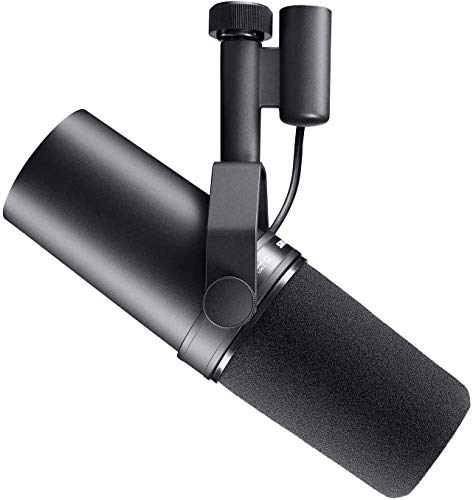
The mic is absolutely a solid starting point. It’s a step up from the lowest-end USB mics and it’s easy to plug in and make something that doesn’t sound like you’re in a tunnel.
Here’s the truth about it:
Can you do amateur work with it?
Yes. Amateur podcasts, YouTube stuff, hobby voiceover, stream chats - it’ll get you there. You can be intelligible, clean, and listenable.
Can it take you to professional voiceover?
Maybe, but not automatically. Voiceover isn’t about the mic alone. It’s about **performance, mic technique, room control, editing, and delivery**. Pros use better gear because those tools help capture more detail and give engineers flexibility. But plenty of working pros started on modest mics and upgraded only when their business needed it.
If you only have the AT2020USBX today, work with it. Learn about **placement, room treatment, and editing**. That’s where most people actually improve the sound more than changing gear.
When you find yourself booking paying gigs regularly, then consider stepping up to an XLR setup with an interface and maybe a mic that suits your voice better. That’s when the investment actually pays you back.
A few practical points:
* USB is convenient, but XLR rigs give you **more control and better quality ceiling**.
* Treat your room as part of the chain. Even a cheap reflection filter or blankets on walls makes a bigger difference than swapping mics.
* Your voice and performance matter far more than the exact model of mic.
Mic alone won’t make you a pro. Discipline, craft, and consistency will.
It’s my daily driver. I’ve recorded a lot of audiobooks through ACX and done a few video game parts using it without any issue.
As others have said, it’s the room treatment (I’ve got an insulated closet converted into a booth), your acting, and your editing that’ll carry the rest.
I upgraded from a cheap USB mic to a calibration mic (also not ideal) to an AT2020 USBX. It makes a huge difference! Cheap USB mics have a really high noise floor, which is heavily amplified by compression. The calibration mic was a tiny bit better than the cheap USB mic but still no contest compared to the AT2020. And you can get even better mics than the AT2020 but I wanted to save money and not get an audio interface just yet and now I'm doing fine without one.
Most of my students are online, so I deal with this a a lot.
For online lessons, you CAN use an iPhone for a lot. Android mics don't do so well. Webcam mics are generally terrible for singing as they are designed to pick up a wider field of sound than we want.
A USB connected condenser microphone is the most direct way to get this going, but you will likely have to re-buy stuff later if you get really serious. I suggest something like an AT2020USB. Large diaphragm condenser, 20Hz-18kHz+. These should run a bit over $100.
You will still need an arm to mount it on (not a regular mic stand to start)
If you are looking to do online karaoke and online lessons, look for something like an AT2020USB. If you are looking to do live karaoke then you want something like an SM58. The Behringer XM8500 is pretty darn close to the sound of an SM58, but it will require something to connect an XLR device to your computer, usually by USB. Something like a Behringer 302USB.
These are the cheapest ways I have found to get starting gear you won't hate in a year. Budget $100-$150.
I had a lot of problems with my USB AT2020 + found the XLR version to have a tinny, hollow sound. Get a dynamic mic for the same price and learn to mix!
Top External Microphones on Reddit
1
Shure
SM58
79% positive of 373 users
Indestructible live workhorse; but muffled for studio vocals.


 BeigeListed