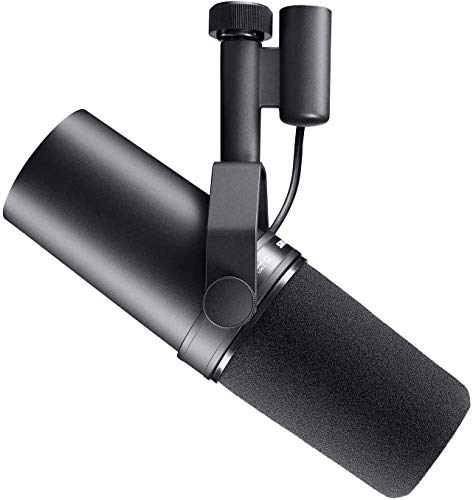
Every mic will pick up some keyboard typing, but cardioid dynamic mics are less sensitive than cardioid condensers. I use USB condensers. I have XLR dynamic mics, but they're not cheap, and so no personal experience, budget friendly model recommendation. Have you tried shopping for a good cardioid dynamic USB podcaster mic?
Th Audio-Technica [ATH-M50xSTS StreamSet](https://www.audio-technica.com/en-us/ath-m50xsts) is a headset with a great gooseneck cardioid condenser capsule, at the upper end of your budget. It's very sensitive, but you can lower the gain with the mic so near your mouth.
I like the Audio-Technica [AT2020USB+](https://www.audio-technica.com/en-us/at2020usb) even better. A-T says they both use the same capsule, but the AT2020USB+ seems to benefit from the traditional housing. It's also very sensitive, so if you're nor speaking right into it, up close, it's going to report all typing, fans running, etc. To keep it close, t's best to use it with a [boom arm](https://www.bhphotovideo.com/images/fb/O_C_White_14295_B_ProBoom_Elite_Microphone_Arm_557226.jpg).
A cardioid dynamic mic on that boom arm, kept close to your mouth. Maybe the [RØDE PodMic](https://rode.com/en-us/products/podmic?srsltid=AfmBOoqlusvecTtphqjjI7KaNaN8CwrOZWHRS3efgRcxgdxoxY_VEIjS), in XLR, [USB](https://rode.com/en-us/products/podmic-usb?srsltid=AfmBOorVZWOoNNM-WJPVgFgAEj8emClLYsAo8G1hgIoDoFc31u0IYOIN), or using an [XLR to USB adapter](https://www.bhphotovideo.com/c/product/1142054-REG/polsen_xlr_usb_48_xlr_usb_interface_48v.html?ap=y&smp=Y&srsltid=AfmBOoqoJ34hTpP0EXP1HbRhb40nnoRCsggd5vZCs0mPapVg4poM3er2t_E).
I started with the Blue Snowball a few years ago and it sounded OK.
I upgraded to the Audio-Technica AT2020USB+ Cardioid Condenser USB Microphone and it is much better.
I've been using an AT2020+ and have been happy with it. When my first one stopped working, I got a new one of the same model. There's a USB and an XLR version.
Most of my students are online, so I deal with this a a lot.
For online lessons, you CAN use an iPhone for a lot. Android mics don't do so well. Webcam mics are generally terrible for singing as they are designed to pick up a wider field of sound than we want.
A USB connected condenser microphone is the most direct way to get this going, but you will likely have to re-buy stuff later if you get really serious. I suggest something like an AT2020USB. Large diaphragm condenser, 20Hz-18kHz+. These should run a bit over $100.
You will still need an arm to mount it on (not a regular mic stand to start)
If you are looking to do online karaoke and online lessons, look for something like an AT2020USB. If you are looking to do live karaoke then you want something like an SM58. The Behringer XM8500 is pretty darn close to the sound of an SM58, but it will require something to connect an XLR device to your computer, usually by USB. Something like a Behringer 302USB.
These are the cheapest ways I have found to get starting gear you won't hate in a year. Budget $100-$150.
Audio engineer here. You are not alone in your distaste for the SM7B. I've used the SM7B on podcasts, including my own, and while it does need a lot of work (gain and EQ), in the end it always delivers what I want. In fact Finneas also hates the SM7B, so you are in good company :) Despite the fact I've used it for many podcasts, I don't always recommend it depending on the podcast host. Most of the time it's up to the client though.
What I don't think has been mentioned in the comments, although I might have missed it, is the fact the SM7B is a dynamic microphone, whereas the Scarlett CM25 MkIII is a cardioid condenser. I think that's why you prefer the more colorful sound with it, which I'm also a fan of. Another condenser mic you may or may not have considered is the Audio-Technica AT2020. I'm not sure if you are in the US or not but on Amazon it's $99. Honestly, it blows me away and I'm a huge fan of it, especially for singing and vocal work.
Top External Microphones on Reddit
1
Shure
SM58
79% positive of 373 users
Indestructible live workhorse; but muffled for studio vocals.


 Origami_Avatar