
Running these analyses costs money. Buy through my links to help keep lights on! I may get a small commission.
Reddit Reviews
 BangsNaughtyBits 1.0
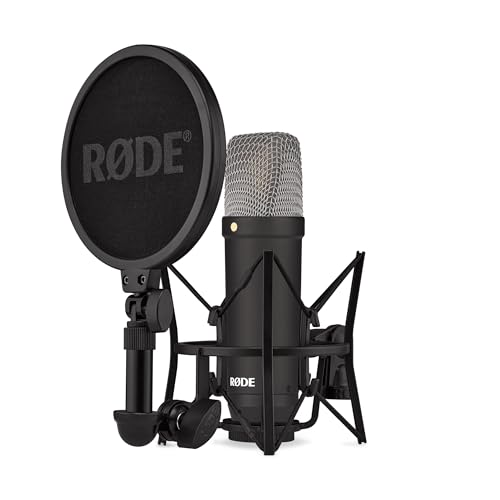
The Snowball is a cheap condenser mic. They tend to pick up more transients in my experience and I've measured increased ambient sound with them but they are *crisp* and can record in higher fidelity. Dynamic mics have to be closer usually and seem to have a tighter pickup pattern. They sound slightly more compressed as well. Usually a new person working with a dynamic mic can get away with more than a condenser. MXL makes some decent cheap condenser mics but ifg you want a good one, the Røde NT1 5th gen (XLR and USB) or the Signature Edition (same but XLR only) is a very good starter mic. It will pick up the cat in the litter box downstairs, though. DISCLAIMER: Yes, I am in fact an asshole. !
benji_brine 1.0rode nt1 signature series is awesome and it’s what i use now - it’s $150 but comes with a pop filter and cable (some microphones don’t come with the xlr cable LOL) or just use the at2020 it’s very popular for a reason
BimmySchmendrix 1.0I use the NT1 in my room and i'm pretty happy with it. I'm using an Arturia Minifuze as an interface which i would also recommend... If your room is very echo-y i would recommend a more near field mic than your picks. The Shure SM7B is the obvious choice here but you can also have a look at the MV7 which is the cheaper little brother to that one and is also closer in price to the ones you picked...
Crafty_East4075 1.0Honestly, if you're willing to spend a bit more and have an audio treated space get yourself a Rode Signature Series.
DailyVO 1.0There’s also the Rode NT1 signature series. Lacks the usb connection and 32 bit float functionality, but that’s overkill for beginners. And it’s only $150!
Deuces_1234 1.0Admittedly I’m a relative newbie to audio engineering/production so haven’t had the chance to try a load of different mic’s. I currently use a rode NT1 signature for vocals and alongside a well treated environment I’ve had great results. It does the job! I then throw on silk vocal by waves in production and it brings out a tonne of clarity. Unless I was to try another mic that I decide I like more, I don’t see myself changing it.
Dipcrack 1.0I recently added a Rode NT1S to my gear, but before that I had a decent time with a Fifine k669b. It's a built in preamp if you don't have an interface and it can get decent sounds if you know a bit about EQing. Only 30 dollars on Amazon.
Dismal_Garden_7239 1.0I got the NT1 signature bc I heard it’s good for sopranos
intel_Core_ 1.0I'm surprised you're only mentioning dynamic mics as I've heard that dynamic mics are pretty much a no-go for voice acting. The minimum suggestion for voice acting as I've heard is a solid large diaphragm condenser like the Rode NT1 Signature Series which can be had for around 150$. That's also what I got myself and I'm really happy with it!
jimedgarvoices 1.0A microphone will never sound better than the space it is in. So as you get better quality mics (and the Rode NT1 signature is a ridiculous value for the investment), those will "hear" and reproduce all the imperfections in your room. So keep some budget handy for treating the space. That Rode NT1 is going to notice a lot of things that your Yeti did not. The Rode is a Large Diaphragm Condenser. The SM7B is a broadcast dynamic. They are both "XLR" connected mics but significantly different from one another. The Yeti has the audio interface stuffed inside it, which is why it's simpler to use. The reason that a USB mic might differ in quality is more about the quality of the electronics and the quality of the capsule/diaphragm. There just aren't that many quality Large Diaphragm Condenser mics that are USB-direct connected. The Rode NT-USB is a good one, but once you try to spend more $, you'll find there aren't many to choose from. The main reason is that you can get a good quality interface (I'd get the Focusrite Scarlett 2i2 Gen4 for a couple of reasons...) and then use that for every mic you ever buy. So when you are ready to drop $200, $600, or $1,500 on a mic, \_all\_ that money goes into the mic, rather than being spread between the interface bits and the microphone bits. I have an in-depth microphone resource (and an interface resource) on my site. If you want a deeper dive, the info is there - [https://justaskjimvo.studio/microphones/](https://justaskjimvo.studio/microphones/) Here's the resource for interfaces - [https://justaskjimvo.studio/interfaces/](https://justaskjimvo.studio/interfaces/) And a couple of posts about the Scarlett 2i2 Gen4 - [https://justaskjimvo.studio/in-praise-of-scarlett/](https://justaskjimvo.studio/in-praise-of-scarlett/) [https://justaskjimvo.studio/a-different-way-to-control-input/](https://justaskjimvo.studio/a-different-way-to-control-input/)
As they say in drag racing, "Run what you brung..." ;) Seriously - no one has to see what you record with or know what mic you use. If it sounds good, it is good. Now, a microphone will never sound better than the space it is in, so focus on making what you have sound as good as possible. If your budget is $150, that's what you have. No shade. No issue. Invest wisely. You could likely get a Rode NT-USB and use that until you can upgrade. Rode (Australian brand - for which we all thank you!) is solid. High value. Consistent hardware. Great customer service. Now I will also say that we live in a time of riches for recording gear. The Rode NT1 Signature is a ridiculous value and a decent interface - Scarlett 2i2 Gen4, for example - will probably be fine for the next 4 or 5 mics you get. Cables will outlast your wardrobe. Good treatment for the recording space should be fine for the next 5 years at least. So as you book gigs and have working capital, prioritize what you need next. As far as "re-recording"? Naaahhh.... If a client is concerned, offer to send them a sample. Australia is a little different than the US market, where about 99.9% of our opportunities are audition-based. You all do tend to rely on pre-recorded demo's. But from what my Aussie compatriots are saying, most are set up to record from home these days. However, you never have to show the client where you record. Mics - [https://justaskjimvo.studio/microphones/](https://justaskjimvo.studio/microphones/) (including USB mics) Interfaces - [https://justaskjimvo.studio/interfaces/](https://justaskjimvo.studio/interfaces/)
Thanks for sharing these thoughts. I'm going to push back on your mic recommendations. First, a microphone will never sound better than the space it is in. Treating the space for echoes and resonances is very important. Second, I've worked with a couple of newer VO's who had the MV7. It's not really a "bad" mic. But if the microphone budget allows that kind of investment, there are more appropriate choices. Dynamic mics generally lack the kind of detail needed for VO work (they certainly do work fine for podcasts/broadcasts). A good large diaphragm condenser would be preferred. (TL;DR - a Rode NT1 Signature combined with a Focusrite Scarlett 2i2, mounted on a proper (not tabletop) mic stand in a well-treated, isolated space). More on mics - [https://justaskjimvo.studio/microphones/](https://justaskjimvo.studio/microphones/) More on interfaces - [https://justaskjimvo.studio/interfaces/](https://justaskjimvo.studio/interfaces/) A bit about treating a space - [https://justaskjimvo.studio/thwack-that-echo/](https://justaskjimvo.studio/thwack-that-echo/)