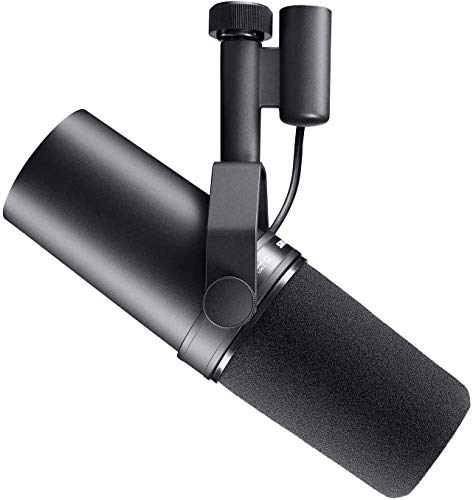
Shure MV7i and MV7+ combo
The “i” will be the interface for the “+”, and eliminate the issue with echo and cancellation since there is only one input to the computer.
The correct solution is the cheapest solution.
I started with the AT2020. The biggest hurdle will be room treatment. This mic will pick up EVERYTHING.
"XLR is better" people are silly. This IS the regular cardioid AT2020 with a basic interface built in. Its D-tier, but it's a start.
From experience, I would suggest that you save your money and buy something higher quality that will last you longer into your career.
I personally like dynamic mics. The Shure MV6 or MV7i would be slightly better in my opinion.
You could go for a mic with a built-in audio interface. For example:
Shure MV7 – it has a USB output and is based on the legendary SM7B, the favorite mic of many podcasters. The sound is a bit different but still very similar. It’s a dynamic mic, so it’ll cut out a lot of background noise. You mentioned that noise isn’t a problem for you, BUT even if the room is quiet, an untreated space will still have nasty echo and reverb. Dynamic mics help reduce that.
Rode NT-USB – this one’s condenser, not top-tier but still miles ahead of the mics you listed.
AT2020USB – also a solid condenser option.
If you’re okay with having a few more devices on your desk, getting a mic + external audio interface combo will give you noticeably better quality.
Some good budget interfaces:
Focusrite Scarlett Solo – some people say it’s overrated, but I wouldn’t agree
UAD Volt – nice
SSL 2 – from the company behind the mixing consoles used on half the hit records ever made
And for mics to pair with them:
- Audio-Technica AT2020
- sE Electronics X1s (i personally very like it🙃)
- Rode NT1
---
No mic should ever be right up to your mouth. Even stage vocal mics are meant to have a bit of distance.
For all the ones I mentioned, keep roughly 20 cm (about 8 inches) away. Personally, I don’t even pay attention to how far mine is — it’s on a boom arm, sometimes ends up half a meter (around 20 inches) away, and I just don’t care. It still sounds fine, since most apps for calls and stuff already do some loudness leveling. But if you actually want better sound — stay around 20–30 cm (8–12 inches).
Shure is always pretty good if your willing to pay for it so Shure MV6 USB ($170) or Shure MV7 USB ($300), I have the MV7 and have had no complaints the last few years. Would first recommend if your on NVIDIA Graphics Card try NVIDIA Broadcast if you haven't already
iPad or laptop with a mouse track will help. But yes, better mic will Eliminate most of your problems.
The sm7b is a great mic. It forces you to be close to the mic and therefore only pick mostly your voice. But fyi, it’s xlr mic. You can get the baby brother Shure mic with the usb option.
You'll want a dynamic mic, it will be better at rejecting mouth and room sounds and constrain the volume range somewhat naturally. The tradeoff is you'll most likely need to set it near your mouth and be aware to keep your mouth near it when streaming, off-axis sound will fall off fast.
I use a Shure MV7 as another commenter suggested and it's been great. I use a large foam filter off an SM7B to break up plosives and such a little bit more. It can kind of upgrade with you because it is both USB and XLR. So I started on USB and then moved up to an XLR interface.
I've been streaming 3 years and I'm only now looking to upgrade from the MV7 because I make my streams into long-form videos that people put on in the background or even sleep to so I'm looking to squeeze the last bit of smoothness out of a nicer mic
The Shure MV7 over USB did everything I ever needed. But I have a very specific audio profile in my head that I am constantly chasing. Running it through XLR and learning to treat it got me another few %. Then recently, I bought an SM7DB. That had its own learning curve and then got me another few more % towards the sound in my head.
Your content only *needs* a decent USB mic and the knowledge to use it. If you enjoy chasing particular parts of audio and have the funds and time to spend doing that instead of other stream things, and fancier mics help you do that, then yes it's worth it in that sense.
I make videos that are hours long from my streams, with the intention that people can listen all day or as they're falling to sleep, and I want it to sound the way I would want to listen to.
Much like a $300-500 guitar will perform perfectly at what 99% of musicians will ever need to do, but high-dollar instruments can be justified - but lack of one is not reason to not get started, and buying one can't replace skill and education.
IMO
Top External Microphones on Reddit
1
Shure
SM58
79% positive of 373 users
Indestructible live workhorse; but muffled for studio vocals.



 JohnMaySLC