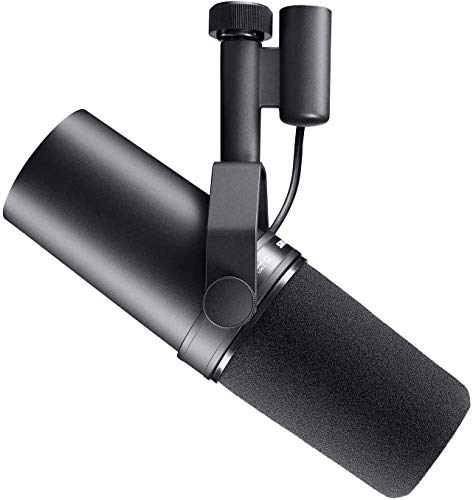
Most Dynamic mics require a audio interface such as the Wave XLR or focus rite and such
I would recommend as an entry level, the fifine k688 or AM8. (35$ to 50$ dollars) A dynamic mics with USB connections without the need for an audio interface. For the price of it is actually okay and nice for recording.
For a mid tier level, I would recommend a Shure MV7+ (Near $269) or Shure MV6 (Near $160)as it includes real time denoiser and great audio quality.
If you do want to buy an audio interface, i would recommend waiting until Elgato releases their new Wave XLR Mk.2. Could be in a few months or just buy a focusrite 2i2 3th gen.
The mic arm i personally use is a Elgato Wave Mic Arm LP, bought new one week ago. It’s nice and has a handle to tighten up everything so the mic stays in the air. But there are reports of the mic arm sagging after a couple months with heavy mics. So i would keep onto the warranty and order details in case that happens. (Costs 100)
But the kind of mic arm you want depends on your liking, if you like low profile or you like a big boom arm
honestly, been there with the over-research paralysis. for your specific setup—untreated room, slightly nasal voice, usb-c only—i'd lean away from the podmic usb. i found it a bit boomy even in a decent space, and that might exaggerate nasal tones.
the mv7+ is solid but i actually returned mine because the usb mode felt... inconsistent? like the dsp sometimes over-corrected my voice in a weird way. it *shines* on xlr, but if that's a big "maybe never," it's a lot of cash for features you might not use.
weirdly, the thing that saved me was a tiny wireless lav setup for flexibility when i move around. i know you're doing voiceovers, but hear me out—i got the BOYA LINK3 mostly for on-camera stuff, but i started using it for seated voice work too because the ai noise suppression is stupid good for untreated spaces. handles the room echo and computer hum way better than i expected from a wireless mic. no interface, just usb-c receiver into my laptop.
if you're dead set on one of your three, the mv6 is probably the safest "it just works" usb choice. but if you ever think you'll record outside that one spot, maybe consider a wireless option. changed my whole workflow.
I got a Shure MV7+ as a gift, and I like it, but I'm also not convinced it's significantly better than my ATR2100x USB, which has the benefit of being a bit more forgiving of minor background noise. And the 2100x, when it was still available, cost about $50 vs. almost $300 for the MV7+, so cost is not necessarily an indicator of quality.
I haven't used the Samson, but I have two of the ATR2100s--the regular 2100 and the 2100x--that were considered almost identical. I also have an MV7+, and I have to say that I'm not at all convinced the MV7+ is worth the extra cash outlay. It's hot as hell, which makes it annoying to work with, whereas the 2100 (and I assume the Samson, if they really are so similar) is much more forgiving. I'm also just not convinced the sound from the MV7+ is really significantly better. Certainly not $200+ better.
I just can't imagine the Samson wouldn't be perfectly fine for OP's needs. I'd rec the 2100x if it weren't discontinued.
So you haven't really said what you use your setup for. "Consumer stuff" could me just about anything that isn't professional, from talking to friends to some casual music recording, so there can still be quite a wide range of needs.
With that said, I'll just keep this general:
USB is plenty for the majority of consumer uses. The performance of a good quality USB microphone like the PodMic USB is plenty (assuming good microphone placement/technique and that you're not trying to use it for something it just isn't a great fit for).
For the average person, I'd say that XLR's big advantages aren't actually the performance. It's the versatility and maybe a bit of better aging as well. Once you've taken the leap to XLR, you've opened up your options to the great big world of prosumer and professional microphones and other related equipment. Not only that, if you want to upgrade or add a specific component, you don't need to replace your entire recording setup. Regarding aging, many professional microphones, especially dynamic ones like the PodMic USB can last half or even a whole lifetime. Even interfaces tend to age well (at least the decent ones; maybe not a bottom-tier one). Not that USB is fragile or expected to fail in a few years, but it's easier for it to not last decades for reasons like wearing out or damaging the USB port. If you've got the money, XLR is a better choice for future-proofing, but as you are probably gathering by now, it's likely not essential. It's really up to you.
Regarding the headphones, if you don't mind, I'd go with 250 Ω whether or not you get an interface because you can always get a headphone amplifier. It is worth pointing out that not all entry-level audio interfaces have good enough headphone amps to get a lot of volume out of the DT 990s (remember that impedance doesn't determine how much dB per watt you get, sensitivity does; impedance comes into play because that will affect the maximum wattage you'll be able to pull out of a headphone amplifier).
Regarding an interface, don't bother if you're going to buy some $50 piece of garbage. At that point, a USB microphone will likely perform better. If you want to consider this option, I'd say have at least $100 available to spend on it, but more would be preferred.
My personal recommendations for entry-level audio interfaces are the [MOTU M-Series](https://motu.com/en-us/products/m-series/), [Foscurite Scarlett 4th Generation](https://focusrite.com/scarlett) (preferably the 2i2 or better since the Solo has a weaker microphone preamp which can be an issue with some dynamic microphones), [Audient iD range](https://audient.com/id-audio-interface-range/), or the [Solid State Logic SSL range](https://solidstatelogic.com/music-and-audio-production/ssl-audio-interfaces). Within these product lines, typically the performance between models is very similar or the same; you mainly get more I/O with higher-end models. As I pointed out, the Scarletts are an exception as the Solo has significantly weaker preamps (it didn't get an upgrade for the 4th Generation like the other models did), plus it lacks other useful for beginner features that the higher models have, such as auto gain and clip protection. Since you did mention headphone usage, I'd probably lean towards the M-Series as they have very competent headphone amplifiers for entry-level interfaces.
Finally, as another commenter said, you might want to get the PodMic USB either way. You can start with a USB connection and if you find yourself wanting to move to XLR in the future (for example, if you start doing work with a DAW, which might work better with an interface and ASIO drivers or if you just want to take that step up), you can do so without needing to buy a new microphone. The XLR performance of the PodMic and PodMic USB should be identical or at least nearly identical (I have tested the similar Shure MV7+ and MV7X and can confirm the XLR outputs on these mics have identical performance).
I hope this helps!
I would get a new mic, the Blue Yeti is a condenser microphone known for being very sensitive, and will pick up most sounds. You need to treat your room very well to get it to sound decent.
You should get a dynamic microphone, they are not so sensitive, meaning you will have to keep it close to your mouth. And what to reccomend is hard without knowing your budget. But if you want an USB mic, there are some good alternatives. Remember that no microphone will be a magic device out of the box, they still need to be tuned. Use a compressor and noise gate to get the most out of them.
Fifine K688 and AM8 are good budget microphones. On sale they are around $50 USD. They are plug and play trough USB, no software, so they need 3rd party software to be adjusted. Personally I use a K688 and use Elgato Wavelink as software. Elgato Wavelink 3 will be free and are currently in open Beta if you want to try it.
Røde PodMic USB is a good choice from a professional microphone company and is around $200 USD. And comes with Rødes own software.
And as a third option, and the most expensive one, the Shure MV7+. It comes from Shure who are one of the most known microphone companies out there. Have tons of features and an easy setup with Shures own software. The price is around $300 USD.
A thing they all share is a XLR output if you in the future want to get a separate interface, but they all work really well on USB too.
Top External Microphones on Reddit
1
Shure
SM58
79% positive of 373 users
Indestructible live workhorse; but muffled for studio vocals.



 Zestyclose_Arm2652