A great little video on why a screen is not always necessarily needed (going from a fairy expensive screen to just the wall) for an amazing image.
https://youtu.be/Xaj-xeYFBfo?si=tdUZroN64jRzZ7Sl
A darker color will absolutely make a difference for your light spillage...if you want any type of home theater experience with contrast that is quite important. I would even go as far as a carpet for in front of the screen to further reduce that light spillage.
https://a.co/d/01CPuaGu
If you do not want to paint your walls (which again is not for everyone) then another solution for around the screen and ceiling is this felt which almost completely eliminated all spillage...
https://a.co/d/007FwbcR
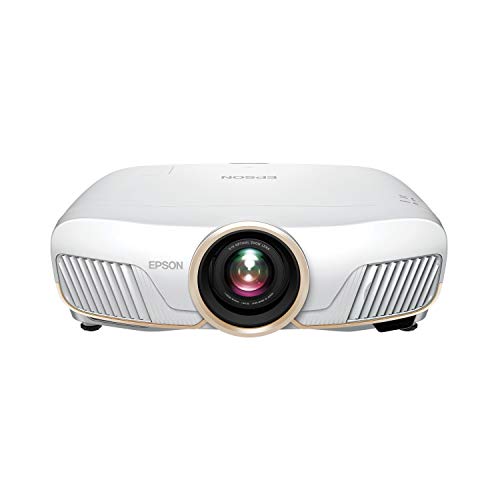
As far as projectors go the 'lifestyle' projectors are absolutely a fantastic product with exceptional image, brightness and clarity. I owned many Epson products including their UB line 5030UB, 5040UB and 5050UB and I have not gone back to those for a reason. JMGO has their upcoming line in the N3 Ultimate that will have optical zoom, optical lens shift and Dolby Vision making it VERY hard to beat.
I started with a 5030ub and upgraded to a 6050ub for 4K and HDR support. I was immediately disappointed in the poor static tone mapping, and it felt like a downgrade from coming from a solid SDR projector before hand.
I invested in building my own video processor for tone mapping using MadVR open source and video processor.org with a HDMI capture card and GPU. This is not for the faint of heart to setup, tune and calibrate, but the payoff is well worth it. I have a dedicated light treated home theater that benefits from high contrast. I have a 180" screen, and the 6050ub lights it up very well while achieving excellent contrast and shadow detail. I wouldn't say that natively without a video processor it is worth it at this point in time since projectors native tone mapping has come so far. I also added an HDFury inline which adds support for Dolby Vision using an HDR flag hack and is a really nice upgrade which means I have all the functionality of newer models with the excellent color, lens and contrast ratio. I am on my second bulb, which cost under $100.
I echo others that say 3D is amazing and I agree, hands down destroys anything else I have ever seen.
I would love love to side by side my setup with a Valerion Max to see how it compares, but I doubt it will given my configuration. Obviously technology moved forward and everything improves over time, but newer isn't always better.
Years and years ago - like 8 at this point - I bought a Epson 5030ub for $300cad.
It was a fantastic deal. Still on same bulb, still runs perfectly.
Its quiet, inky blacks, but in no way portable.
If you are looking to set up a home theater, something like this would be perfect.
You are not getting 4k for $300
Thanks for replying. I was just curious because currently I have an epson 5030ub that I believe is 2400 lumens. I have it in my living room with an ALR screen and while the picture is greatit definitely struggles with ambient light still since it’s in the living room with lighting everywhere. I was thinking of doing some shopping around for something else with more lumens.
I also wanted to add, how do you feel about short throw projectors? I see an epson one at 2200$ and 3600 lumens.
I know that $500 *sounds* like a lot of money. And it is. But that is an ***extremely*** low budget in the world of projectors.
Yes, you're going to have to buy used, but that goes without saying. You're also going to need to pick some other pretty significant compromise to make. And in this case, IMO, you should forget about 4K or HDR.
If you stick with 1080p SDR, there starts to be some pretty decent options with good picture quality in this price range.
Chief amongst them would be the **Epson 5020UB and 5030UB:**
https://www.projectorcentral.com/Epson-PowerLite_Home_Cinema_5020UB.htm
https://www.projectorcentral.com/Epson-PowerLite_Home_Cinema_5030UB.htm
They were the last and best of Epson's flagship 1080p home theater projectors. They are over a decade old. But they would have superior brightness, contrast, and color accuracy than pretty much anything else in the $500 range. Including anything that claims to do 4K in this price range.
You can find used models for less than $500. Example listings:
https://www.ebay.com/itm/205824351687
https://www.ebay.com/itm/306379935912
And it's quite easy and affordable to find replacement lamps for them that would restore them to full brightness:
https://www.myprojectorlamps.com/projector-lamps/Epson/PowerLite%20Home%20Cinema%205020UB.html
1080p Epson and Panasonic LCD projectors from ~2008-2013 are an excellent value used. Great colors and contrast. The bulbs are cheap, and if you drop in a fresh one, you can get enough brightness for SDR content (50-75 nits).
For Epson, the models to watch are the 6500UB, 8500UB, 8700UB, 5020UB, and 5030UB.
For Panasonic, the models to watch are the PT-AE3000, PT-AE4000, PT-AE7000U, and PT‑AE8000U
Ouch, some pretty severe downvotes out the gate.
I didn't downvote you, but I get why it happened. Your expectations for how much half-decent projection costs and how it preforms are pretty far off from the real situation. That's alright, but it would help to come back to reality.
First, "smart" projectors in this price range are almost all crap. The **Nexigo PJ40** is the best amongst these, but that still doesn't mean it is good:
https://www.amazon.com/NexiGo-PJ40-Pro-Projector-Enhancement/dp/B0FFP3RG53/
Feel free to buy it from Amazon, try it out, and return it when you realize it's not for you. I'm not saying this to make fun of you. It's a dead serious suggestion. There's a ton of people who are exactly like you: You want a compact, cheap, all-in-one solution. They see a ton of them on Amazon. Certainly, one of them must be decent, right? All the nerds on Reddit making blanket statements that they are all terrible are just being elitist, right? It helps to see for yourself and actually understand. As I said, just because the Nexigo PJ40 is the best of these doesn't mean it's actually good enough. You might end up deciding differently, and if that's the case, then great. I'm happy for you.
As far as what my actual recommendation is, it would be to just continue borrowing that projector from the library for the rare occasions when you actually use it. Realistically, in a living room environment with a lot of light, you're going to use a projector way less than you think.
But if you did want to buy a projector for a few hundred dollars, then my other actual recommendation would be to buy a used one. Ideally, something like an **old Epson 5020UB or 5030UB** for $300-500. And then count on spending another $100 on a new bulb for it. And these are not "smart" projectors (which is a good thing in my book), so count on spending another ~$30 on basic streaming box like the [Oon 4K Plus](https://www.walmart.com/ip/ONN-4K-PLUS/15557424949). So all in, it will cost about double of what you wanted to spend. But that really is the entry level for getting a good 1080p SDR home theater experience with projection.
Offhand I would be disappointed with the brightness on anything larger than 100" or in situations with any ambient light. I am sure most people here would want to know where you're using, how far away, how much ambient light, etc.
Personally, I've learned my lesson and am not touching anything with so few usable lumens - seemingly around 1200. Contrast sounds pretty mediocre as well, which makes the low lumens even worse. Otherwise it's probably pretty nice and user friendly.
Personally I'm aiming for 2500 lumens "usable". That's a personal choice after purchasing and testing projectors rated for 500 lumens, 2500 lumens, and 5000 lumens, and a few different screen options.
After testing the 5000 lumen projector, I'm a bit in love with brightness. Unrelated to projectors, I have recently painted my wall a darker blue with a 4% LRV (though eggshell choice likely increases the light reflectivity higher than 4%) - and the 5000 lumen projector on the wall looked surprisingly good still, even with both 3000 lumen overhead room lights on. Good contrast is tough for projectors, so rather than buying an expensive Epson 5050ub rated for 2600 lumens max, I'm leaning towards a low-gain screen combined with higher lumens, which helps both with contrast and ambient light.
Most projector are noisy at full power though, so running in Eco mode cuts "usable" lumens by 25% or more. I just want a projector capable of 7k lumens and no fan noise for $1,000, is that so hard to do? Why can't physics bend to my will!
Ah, a 5030 is pretty good quality! If your ALR screen is legit, that's a pretty good combo for quality contrast, but reading a quick review, it sounds like "usable" lumens is likely 1600 or even less than 1000 if not using Dynamic mode and/or using Eco mode to help with fan noise.
I haven't personally researched UST projectors much, but they have also made some big improvements recently, especially if combined with the right screen.
Whatever you go for, make sure to try and find reviews with lumen ratings for the different modes. For "usable" lumens, I assume I'll be using Eco mode, unless the review states the fan is quiet enough on normal mode. Personally I'm leaning towards a Horizon Pro 20 (too poor for the Ultraor C3 Max, but could change my mind again by time i buy. I think either would get me in a decent "usable" lumen range, but are both a stretch on finances.
Top Home Projectors on Reddit
1
Valerion
VisionMaster Pro 2
81% positive of 122 users
Great picture/gaming, but RBE and no lens shift are dealbreakers.



 Imapfsr