After basically eating and sleeping at **CanJam NYC 2026** for two days, I wanted to share some quick impressions of a few IEMs that were quite popular at the show. These are purely my personal opinions. For most IEMs I spent **at least around an hour listening**, though a few I only had limited time with. My music library mostly consists of **modern music**.
**Gear used:** AK SP3000M
**Eartips:** Spinfit W1
# 1. Mysticraft Hex ($9000)
The build quality is absolutely top-tier: titanium faceplate and nozzle with diamond and gold inlays, extremely premium looking. The shell is large but surprisingly light and quite comfortable.
Bass has strong punch with very satisfying mid-bass impact. Sub-bass extends deep with strong rumble and full texture. The bass notes are round with a very unique “bouncy” character that makes it extremely engaging, though it can get slightly bloomy on certain tracks.
The midrange is fairly forward. Vocals and instruments are clear and well defined. Male and female vocals sound natural without being overly warm or thin.
Treble keeps the **Annihilator DNA**, but is tuned much smoother. It’s bright, sparkly, and very detailed without ever becoming harsh, even at higher listening volumes.
Technical performance is excellent: wide soundstage with good width, height, and depth, accurate imaging, and **top-tier detail retrieval**.
**Rate: 9.5/10**
For my taste, the tuning is nearly perfect and it performs well across almost every genre. The only real issue is the price — **$9000 is wild**.
# 2. Mysticraft Myth ($1000)
You could consider Myth a **“downgraded” version of Hex** at roughly **1/9 of the price**. The titanium shell is very solid and compact, making it quite comfortable.
The bass tuning is quite similar to Hex, with that same satisfying bouncy character. However, it’s not as clean, tight, or textured.
The midrange follows a similar direction with forward vocals and instruments, but overall sounds thinner. Female vocals can occasionally become slightly sharp on certain tracks.
Treble actually feels **even closer to the classic Annihilator tuning** than Hex. It’s brighter but still smooth, though the stronger treble presence makes the overall sound noticeably thinner.
Technical performance is **excellent for the price**, honestly feeling closer to something in the **$2k range**.
**Rate: 9/10**
Myth delivers about **90% of Hex’s sound** at $1k, which makes it a far more reasonable option. At this price point, very few IEMs can compete with Myth’s overall sound quality unless you specifically prefer a more neutral or natural tuning.
# 3. Unique Melody Pentara ($5000)
Pentara can be seen as an **upgrade to the Maven II**. The titanium shell is solid yet lightweight. The finish reminds me of Dunu Glacier or Sony IER-Z1R, which means it attracts fingerprints and scratches easily. The faceplate design looks a bit strange to me personally, but it’s definitely unique.
It includes a tuning switch, though I mostly listened in the **ON mode**.
Bass isn’t heavily boosted but is very well balanced. It feels like a hybrid between the **speed and cleanliness of BA bass** and the **impact and texture of DD bass**. Overall, it might be the **best bass I’ve heard from a UM IEM**.
The midrange isn’t as forward as Mysticraft IEMs, but it feels more balanced. Instrument notes have satisfying weight and sound very natural. Vocals retain the classic **UM “magic”**, with a slight reverb-like presentation that gives them a special character.
Treble emphasizes the mid-treble region, sounding bright and sparkly. It can occasionally get a bit sharp depending on the eartips. Personally, I still think Mysticraft and Elysian handle treble better.
Technical performance is where UM really shines. The **soundstage is extremely wide**, even wider than Hex, and live recordings feel almost like you’re standing on stage.
**Rate: 8.5/10**
The best UM IEM I’ve personally heard. If you listen mostly to **pop, vocal, acoustic, or live recordings**, this could easily be endgame. Faster or more aggressive music can become slightly fatiguing over long sessions.
# 4. Elysian Annihilator 26 ($3200)
This version feels like both an **upgrade and downgrade** compared to previous Annihilator models.
The shell design is mostly unchanged from the 2023 version, though the nozzle is slightly longer. Comfort remains quite good.
The new **9.2mm LSR dynamic driver** improves the biggest weakness of the older Annihilators. Sub-bass now has better weight and texture, while mid-bass punch is stronger and less dry.
The midrange is also improved, with vocals and instruments gaining more body and sounding less thin.
However, the treble is where things get controversial. Mid-treble is pushed quite aggressively while there seems to be less energy around **10kHz**, making the treble sound slightly sharp and losing some of the smooth, sparkling magic that made the original Annihilator famous.
Technical performance is slightly improved compared to the 2023 version, with better height and depth in the stage. The overall presentation reminds me somewhat of the **Annihilator 2021**.
**Rate: 7.5/10**
The biggest strength of the Annihilator series has always been its treble, but the 26 version seems to lose some of that magic. On its own it’s still a very good IEM, but compared to previous versions it feels a bit disappointing. Personally, I still prefer **Myth by a noticeable margin**.
# A few IEMs I only briefly listened to
# Mysticraft Tet ($7700)
Large shell similar to Hex but still comfortable. The titanium faceplate design is similar to Myth while the transparent shell resembles Hex.
Sub-bass has stronger rumble and texture than Myth. Mid-bass is faster but slightly dry and lacks the bouncy character.
Midrange tuning is more neutral compared to Myth and Hex. Male vocals can sound slightly thin while female vocals are excellent.
Treble is sparkly and not harsh, though upper treble extension feels slightly limited.
Technical performance is quite similar to Hex.
**Rate: 8/10**
Personally I still prefer Myth.
# Alpha Omega Fulgrim ($6900)
Large shell with a very big nozzle, though still fairly comfortable. The faceplate design is a bit flashy, and there is noticeable driver flex.
I initially expected this to have one of the best bass performances, but in practice the bass quantity is **extremely high**, almost basshead level. This makes the bass sound bloomy and somewhat muddy, lacking the tightness and cleanliness I prefer.
The midrange is thick and dark.
Treble has a clear peak around **7–9kHz**, making some tracks quite sharp and fatiguing.
Technical performance is underwhelming for the price: the soundstage is fairly narrow and detail retrieval is only average.
**Rate: 6/10**
# BGVP Wukong ($4300)
The shell is thick and solid with an artistic design, but it’s extremely heavy, probably among the heaviest IEMs I’ve tried. Long listening sessions can become uncomfortable.
Bass has a **pure BA character** with fast speed and good impact. Sub-bass texture is decent but still lacks the physical feel of a dynamic driver.
The midrange follows BGVP’s typical tuning with a very bright upper-midrange. Male vocals sound thin while female vocals can become somewhat sharp.
Treble is safe but lacks extension, so it doesn’t stand out much.
**Rate: 7/10**
# Elysian Apostle 26 ($2000)
The design and sound are almost unchanged from Apostle 25. The titanium shell is very solid and looks great.
The tuning is quite balanced across the spectrum, which unfortunately makes it feel slightly **boring**. It reminds me somewhat of **Thieaudio Valhalla**, but with dynamic driver bass and slightly more forward vocals.
Interestingly, the soundstage is **very impressive for such a warm tuning**.
Overall it’s solid but nothing particularly special.
**Rate: 8/10**
# Aroma Fei-wan ($4688)
The shell is extremely light with a bright transparent yellow color. The build feels somewhat cheap and plastic-like compared to its price, though comfort is excellent.
Despite using a dynamic driver, the bass actually sounds quite BA-like. Mid-bass is very tight and punchy, while sub-bass feels a bit weak.
The midrange overall sounds somewhat thin, and the timbre feels slightly off, especially with vocals.
Treble has a strong mid-treble emphasis and can become quite sharp.
However, the soundstage is **extremely wide and very detailed**.
**Rate: 6.5/10**
# Brise Audio Fukagu Ampless (Price unknown)
The build is solid but fairly heavy, and the design is very unusual compared to most IEMs. The earhooks are extremely difficult to wear properly, making it hard to get a good fit. I had to hold them in place by hand to listen properly.
When properly fitted, the tuning is **neutral leaning warm**, balanced and easy to listen to, but nothing particularly stands out.
**Rate: 6/10**
FatFreq is one of those houses from the never-ending, unstoppable world of IEMs that are not afraid to build and produce unorthodox tunings, which is a far cry from most of the run-of-the-mill, target-focused tuned IEMs. That is not wrong, but it’s important to think out of the box at times, where success or failure is only a learning block to build better. FatFreq clearly knows that, which is why they now have three Grand Maestros, and I have in hand the most attainable one, which still comes in at north of $3000.
I really admire what the Singaporean IEM makers are doing, Symphonium, Forte Ears, Dita Audio, and FatFreq notably. I have formerly reviewed the Deuce and the Maestro Universals before, but the Grand Maestro has exceeded my expectations by leaps and bounds here, and this is one of those cases where I dare say that it fully deserves its asking price.
**Disclaimer:** This unit has not been sponsored by FatFreq in any way, nor have any of the retailers in my country endorsed this unit. I have borrowed it from one of my three main patrons who keep my review pipeline running, and I thank him immensely for loaning me this unit.
# Unboxing, accessories, build quality and comfort
FatFreq’s Grand Maestro has beaten my previous best unboxing experiences with the Unique Melody Mason ST and Volk Etoile, with the IEM and its goodies coming in a compartmentalised box made of actual polished wood, with a varnish that reminds me of unboxing watches from Omega or Patek Philippe, where going this over and beyond for delivering an IEM at that price actually feels justified to me.
There’s a circular carrying case with foam padding where the IEM shells were found, and there are cylindrical holds to keep the tuning modules, along with the cleaning brush tool. I believe the stock modular silver cable that the Grand Maestro comes with is made by Altalune Audio, as the print on the jacks of this cable is the exact one I found on Symphonium Audio Titan’s cable, the Altalune Audio Neptune. I received the blue modules with this IEM, which were encased in a plastic film-bedded snap-lock transparent case, along with a set of stock FatFreq’s eartips. There’s a FatFreq-branded circular cutout to protect the case nestled inside the compartment, along with a greeting card from the maker.
The Grand Maestro is an extremely well-built IEM where, despite being made with resin, there’s serious weight to this, and the recessed connectors add in another layer of being secure. This also happens to be the biggest IEM I have tried, where the concha, tragus and antihelix of both of my ears were stretched out to the max, and I would strongly recommend FatFreq to seriously work towards reducing the footprint on these shells. This is not an IEM that would feel comfortable, or even bearable, for a lot of people, and the current size will limit its usability for many listeners. A reduction in size would honestly make a world of difference here.
The Noah tuning modules can be unscrewed with the provided tool for this, but since I didn’t find one, I used my ever reliable SIM card ejector tool to unscrew the modules. Pins or screwdriver heads of the same size would do the trick too, and the module is simple enough to be mounted back with one good thumb push, and it stays in place.
The Grand Maestro also comes with switches which can alter the perceived sound to a good amount, and it is indeed safe to say that both the modules and switches implemented here are not gimmicky at all, and they work to a solid extent.
For the review, I will be reviewing it primarily with the stock black “power” module and the switches up, as it had the IEM perform at its most optimum, and I’ll include a brief impression with the blue modules.
***Now on to the sound.***
# Lows
The FatFreq Grand Maestro is an anomaly when it comes to delivering the lower end consistently throughout anything that I throw at it, provided the source it’s connected to can keep up with it. It is plentiful in quantity, textured in quality, and it doesn’t skimp out on detail throughout the quantity either.
In tracks like Daft Punk’s *Get Lucky*, the Grand Maestro gets to the job right away, funtastic groove and rumble through the bass lines that this track has. Kick drums have excellent weight. Toms and snares are slightly subdued, which lets the kicks shine through even more. The cymbal work is fabulous despite the huge quantity of the lows, and vocals never lose prominence despite the rumble going on. Even on *Instant Crush*, the kicks have tremendous weight and quantity, and the bass lines just keep on getting so much better, absolutely clean, distinct, and a meaty rumble through and through.
In tracks like Rush’s *Limelight*, the Grand Maestro is simply not all talk, it walks the talk. Unlike something like the Symphonium Titan which can tend to miss details while delivering the quantity, the Grand Maestro effortlessly pulls the ropes on this grand puppet show like a master puppeteer. Toms, snares and kicks simply do not skip a beat, the bass line growls like the lead lion of a blood thirsty hunting pack, and the notes do not linger for even a second more than they need to, which demonstrates the Grand Maestro’s prowess in keeping it clean, energetic and plenty throughout its play time, regardless of modules, tracks and eartips.
# Mids
The Grand Maestro continues its grand parade even through here, although there are a few nitpicks here and there, which is honestly bound to happen given its default tuning.
In tracks like Periphery’s *Marigold* and Meshuggah’s *Bleed*, the Grand Maestro nails the fundamentals right, excellent imaging, terrific instrument separation, especially in *Bleed*, where I clearly heard Haake keep the metronome sweating with the phenomenal cymbal work that this track has. And the Grand Maestro can discern between the different strokes of the cymbals with such breeziness, it’s bonkers that a bass heavy tuning can also be this serious.
I wished the vocals had some weight to them, as the guitars on both the tracks mentioned had the hefty chugs that give these tracks their distinct identities and some forwardness, and a whisker’s length of weight would have done wonders for the Grand Maestro further. Just a nitpick, not a complaint. Easily fixable with EQ anyway.
In tracks like Tool’s *Pneuma* and *First It Giveth* by Queens of the Stone Age, the Grand Maestro gets tonality down to a fault, especially picked up while judging how the snares felt on both of these tracks, particularly in *Pneuma*, where the Grand Maestro was as natural as it could get while Danny Carey carried forward his legendary paradiddles. Timbre is remarkably held in place, especially realised through the cymbals on *First It Giveth*, where the Grand Maestro delivered it the same way it had delivered on tonality.
Perceived stage is also remarkably wide for an IEM, and the Grand Maestro establishes one of the benchmarks in IEMs for that, especially on the blue module, I perceived it to be wider, directly resulting in an improvement over an already excellent instrument separation.
# Highs
The Grand Maestro comes full circle towards shutting the lights out on what I gauge to be a phenomenal performance from an IEM that is not outright expected to deliver on elements given its tuning.
In tracks like Adele’s *Easy on Me*, Celine Dion’s *All by Myself* and Whitney Houston’s *I’ll Always Love You*, the Grand Maestro simply lets go of itself in the best way possible, handling the climaxes on these tracks without coming off as fatiguing, albeit with a minute sense of sibilance. The vibratos shine through and over the instruments with such ease, almost effortlessly, although they could have used a slightly forward position, tonality remains flawless. I genuinely enjoyed listening to these tracks so much on this IEM, which made me realise once again not to judge a book by its cover.
In tracks like Luciano Pavarotti’s *Nessun Dorma* from the 1994 Three Tenors Concert, the moment Pavarotti started wailing with his heart over the Vincero climax, the Grand Maestro took me almost close to what I experienced while listening to the Elysian Apostle 2026, where I was stupefied with how powerful the entire performance felt where it was least expected from this IEM. And the best part was that I didn’t perceive any sibilance here this time. So once again, the Grand Maestro’s nick of inconsistent sibilance on its grand armour remains just a scuff, and nothing that would send itself to the forge for repairs.
In tracks like Kendrick Lamar’s *Alright*, the Grand Maestro handles layering and separation like a breeze despite the prematurely clipped cymbals coming and going across its moments, but never intruding upon the background hums. Timbre remains perfect, as I perceived the horns and keys to be perfectly coherent while demonstrating tonality at its best as the track progressed.
# Impressions on the blue “control” module
This works wonders for the Grand Maestro when the mood is less for the bass, and more for the midrange to show up to the occasion. Vocals gained a good amount of weight, plus positioned forward which resulted in more enjoyment through vocal heavy or vocal focused tracks; perceived stage was even wider, and the highs were dialled in further. The bass was still prominent, groovy, rumbling and still a lot in terms of quality, but not as comparatively overwhelming as the power module. Tonality and timbre stayed intact for most of the time, except in cymbal and guitar heavy tracks, the slight perception of cymbals coming off as thin were fully eliminated.
# Concluding notes
The FatFreq Grand Maestro is one of those IEMs that refuses to play it safe, and refuses to be ordinary within its tuxedo. It is flamboyant in its tuning, does not shy away from delivering dollops of that good low end, and yet disciplined enough to keep its technical performance intact. That balance is not easy to achieve, and the Grand Maestro manages to hold that line remarkably well. This is one IEM that fully lives up to its name.
Its biggest drawback remains the size of the shells. There is no getting around that. Comfort will be the deciding factor for a lot of people here, and at this price point, ergonomics matter just as much as sound. If FatFreq can bring the footprint down in future iterations, this platform would become significantly more accessible without sacrificing its identity, because this IEM is not merely an IEM; it’s an experience, and FatFreq’s potential in being ergonomically accessible with its further iterations will be a thing of beauty.
When it comes to the sound, however, the Grand Maestro stands tall. It delivers authority, scale and control in a way that feels intentional rather than excessive. With the power module engaged, it becomes a low end behemoth, while with the control module, it shapeshifts into a one size fits all IEM, and given its price tag and the customisation one can do with the tunings, I would say FatFreq has gone over and beyond with delivering on this.
In a market filled with the same tunings with Lilliput changes and nothing too Gulliver about it, the Grand Maestro feels like a rebel who has decided to be the White amongst Greys. It embodies within itself FatFreq’s philosophy of fortune favours the bold, and the Grand Maestro is blessed with every fiber of its being.
I have zero reluctance in saying that the Grand Maestro earns its place among the summit-fi elite, not because it is eye wateringly expensive for an IEM, where in today’s market this price can net someone a pair of KEF LS50 Meta or Genelec monitors for instance, or even a trinity of endgame headphones in the used marketplaces. The Grand Maestro is not different for the sake of being different. It performs, it excites, and it keeps delivering every single time I put it in my ears. This is one IEM I could see myself keeping in my final endgame roster, alongside the best IEM I have reviewed to date, [the Elysian Apostle 2026](https://guiltygamer.com/elysian-apostle-2026-review/). Hence, the Grand Maestro earns a full circle *S* from my privileged end.
Will I buy it at retail? Yes.
Will I buy it used? Absolutely.
**Sources used:** SMSL Raw MDA-1 and Venture Electronics Megatron desktop DAC amp, Shanling M9 Plus DAP, FiiO KA17 and Venture Electronics Abigail Pro dongle DAC amps.
The Grand Maestro also tends to perform better with sources that can supply healthy amounts of power, hence it is recommended to use moderately powerful sources.
**Eartips used (ranked in order of performance):** Final E, JVC Spiral Dots, Divinus Velvet Narrow Bore, Spinfit CP100+
**Tracks:**
* Rush: Limelight, Spirit of the Radio
* Daft Punk: Get Lucky, Instant Crush
* The Police: Message In A Bottle
* Tool: Pneuma, Schism
* Queens of the Stone Age: First It Giveth
* Pink Floyd: Comfortably Numb, Wish You Were Here, Time
* Tame Impala: The Less I know, The Better
* Animals as Leaders: The Woven Web
* Avicii: Levels
* Periphery: Marigold
* Tesseract: Juno
* Kanye West: Stronger, Flashing Lights, Devil In A New Dress
* Altin Gun: Goga Dunya
* Timbaland: Give It To Me
* Adele: Easy On Me Live, When We Were Young
* Celine Dion: All By Myself
* Pavarotti: Nessun Dorma
* Mdou Moctar: Tarhatazed
* Cigarettes After Sex: Cry
* Meshuggah: Bleed
* AR Rahman: Tere Bina
* Alice in Chains: Down In A Hole (live)
* Allen Stone: Give You Blue
FatFreq is one of those houses from the never-ending, unstoppable world of IEMs that are not afraid to build and produce unorthodox tunings, which is a far cry from most of the run-of-the-mill, target-focused tuned IEMs. That is not wrong, but it’s important to think out of the box at times, where success or failure is only a learning block to build better. FatFreq clearly knows that, which is why they now have three Grand Maestros, and I have in hand the most attainable one, which still comes in at north of 3 lakhs (u/thotfulthinker , if you read this, and if it is feasible, keep the Noah modules in stock. I can understand big ticket products not flying off the shelves for obvious reasons, but at least keeping the modules for sale drastically improves availability for further finesse).
I really admire what the Singaporean IEM makers are doing, Symphonium, Forte Ears, Dita Audio, and FatFreq notably. I have formerly reviewed the Deuce and the Maestro Universals before, but the Grand Maestro has exceeded my expectations by leaps and bounds here, and this is one of those cases where I dare say that it fully deserves its asking price.
**Disclaimer:** This unit has not been sponsored by FatFreq in any way, nor have any of the retailers in my country endorsed this unit. I have borrowed it from one of my three main patrons who keep my review pipeline running, and I thank him immensely for loaning me this unit.
# Unboxing, accessories, build quality and comfort
FatFreq’s Grand Maestro has beaten my previous best unboxing experiences with the Unique Melody Mason ST and Volk Etoile, with the IEM and its goodies coming in a compartmentalised box made of actual polished wood, with a varnish that reminds me of unboxing watches from Omega or Patek Philippe, where going this over and beyond for delivering an IEM at that price actually feels justified to me.
There’s a circular carrying case with foam padding where the IEM shells were found, and there are cylindrical holds to keep the tuning modules, along with the cleaning brush tool. I believe the stock modular silver cable that the Grand Maestro comes with is made by Altalune Audio, as the print on the jacks of this cable is the exact one I found on Symphonium Audio Titan’s cable, the Altalune Audio Neptune. I received the blue modules with this IEM, which were encased in a plastic film-bedded snap-lock transparent case, along with a set of stock FatFreq’s eartips. There’s a FatFreq-branded circular cutout to protect the case nestled inside the compartment, along with a greeting card from the maker.
The Grand Maestro is an extremely well-built IEM where, despite being made with resin, there’s serious weight to this, and the recessed connectors add in another layer of being secure. This also happens to be the biggest IEM I have tried, where the concha, tragus and antihelix of both of my ears were stretched out to the max, and I would strongly recommend FatFreq to seriously work towards reducing the footprint on these shells. This is not an IEM that would feel comfortable, or even bearable, for a lot of people, and the current size will limit its usability for many listeners. A reduction in size would honestly make a world of difference here.
The Noah tuning modules can be unscrewed with the provided tool for this, but since I didn’t find one, I used my ever reliable SIM card ejector tool to unscrew the modules. Pins or screwdriver heads of the same size would do the trick too, and the module is simple enough to be mounted back with one good thumb push, and it stays in place.
The Grand Maestro also comes with switches which can alter the perceived sound to a good amount, and it is indeed safe to say that both the modules and switches implemented here are not gimmicky at all, and they work to a solid extent.
For the review, I will be reviewing it primarily with the stock black “power” module and the switches up, as it had the IEM perform at its most optimum, and I’ll include a brief impression with the blue modules.
***Now on to the sound.***
# Lows
The FatFreq Grand Maestro is an anomaly when it comes to delivering the lower end consistently throughout anything that I throw at it, provided the source it’s connected to can keep up with it. It is plentiful in quantity, textured in quality, and it doesn’t skimp out on detail throughout the quantity either.
In tracks like Daft Punk’s *Get Lucky*, the Grand Maestro gets to the job right away, funtastic groove and rumble through the bass lines that this track has. Kick drums have excellent weight. Toms and snares are slightly subdued, which lets the kicks shine through even more. The cymbal work is fabulous despite the huge quantity of the lows, and vocals never lose prominence despite the rumble going on. Even on *Instant Crush*, the kicks have tremendous weight and quantity, and the bass lines just keep on getting so much better, absolutely clean, distinct, and a meaty rumble through and through.
In tracks like Rush’s *Limelight*, the Grand Maestro is simply not all talk, it walks the talk. Unlike something like the Symphonium Titan which can tend to miss details while delivering the quantity, the Grand Maestro effortlessly pulls the ropes on this grand puppet show like a master puppeteer. Toms, snares and kicks simply do not skip a beat, the bass line growls like the lead lion of a blood thirsty hunting pack, and the notes do not linger for even a second more than they need to, which demonstrates the Grand Maestro’s prowess in keeping it clean, energetic and plenty throughout its play time, regardless of modules, tracks and eartips.
# Mids
The Grand Maestro continues its grand parade even through here, although there are a few nitpicks here and there, which is honestly bound to happen given its default tuning.
In tracks like Periphery’s *Marigold* and Meshuggah’s *Bleed*, the Grand Maestro nails the fundamentals right, excellent imaging, terrific instrument separation, especially in *Bleed*, where I clearly heard Haake keep the metronome sweating with the phenomenal cymbal work that this track has. And the Grand Maestro can discern between the different strokes of the cymbals with such breeziness, it’s bonkers that a bass heavy tuning can also be this serious.
I wished the vocals had some weight to them, as the guitars on both the tracks mentioned had the hefty chugs that give these tracks their distinct identities and some forwardness, and a whisker’s length of weight would have done wonders for the Grand Maestro further. Just a nitpick, not a complaint. Easily fixable with EQ anyway.
In tracks like Tool’s *Pneuma* and *First It Giveth* by Queens of the Stone Age, the Grand Maestro gets tonality down to a fault, especially picked up while judging how the snares felt on both of these tracks, particularly in *Pneuma*, where the Grand Maestro was as natural as it could get while Danny Carey carried forward his legendary paradiddles. Timbre is remarkably held in place, especially realised through the cymbals on *First It Giveth*, where the Grand Maestro delivered it the same way it had delivered on tonality.
Perceived stage is also remarkably wide for an IEM, and the Grand Maestro establishes one of the benchmarks in IEMs for that, especially on the blue module, I perceived it to be wider, directly resulting in an improvement over an already excellent instrument separation.
# Highs
The Grand Maestro comes full circle towards shutting the lights out on what I gauge to be a phenomenal performance from an IEM that is not outright expected to deliver on elements given its tuning.
In tracks like Adele’s *Easy on Me*, Celine Dion’s *All by Myself* and Whitney Houston’s *I’ll Always Love You*, the Grand Maestro simply lets go of itself in the best way possible, handling the climaxes on these tracks without coming off as fatiguing, albeit with a minute sense of sibilance. The vibratos shine through and over the instruments with such ease, almost effortlessly, although they could have used a slightly forward position, tonality remains flawless. I genuinely enjoyed listening to these tracks so much on this IEM, which made me realise once again not to judge a book by its cover.
In tracks like Luciano Pavarotti’s *Nessun Dorma* from the 1994 Three Tenors Concert, the moment Pavarotti started wailing with his heart over the Vincero climax, the Grand Maestro took me almost close to what I experienced while listening to the Elysian Apostle 2026, where I was stupefied with how powerful the entire performance felt where it was least expected from this IEM. And the best part was that I didn’t perceive any sibilance here this time. So once again, the Grand Maestro’s nick of inconsistent sibilance on its grand armour remains just a scuff, and nothing that would send itself to the forge for repairs.
In tracks like Kendrick Lamar’s *Alright*, the Grand Maestro handles layering and separation like a breeze despite the prematurely clipped cymbals coming and going across its moments, but never intruding upon the background hums. Timbre remains perfect, as I perceived the horns and keys to be perfectly coherent while demonstrating tonality at its best as the track progressed.
# Impressions on the blue “control” module
This works wonders for the Grand Maestro when the mood is less for the bass, and more for the midrange to show up to the occasion. Vocals gained a good amount of weight, plus positioned forward which resulted in more enjoyment through vocal heavy or vocal focused tracks; perceived stage was even wider, and the highs were dialled in further. The bass was still prominent, groovy, rumbling and still a lot in terms of quality, but not as comparatively overwhelming as the power module. Tonality and timbre stayed intact for most of the time, except in cymbal and guitar heavy tracks, the slight perception of cymbals coming off as thin were fully eliminated.
# Concluding notes
The FatFreq Grand Maestro is one of those IEMs that refuses to play it safe, and refuses to be ordinary within its tuxedo. It is flamboyant in its tuning, does not shy away from delivering dollops of that good low end, and yet disciplined enough to keep its technical performance intact. That balance is not easy to achieve, and the Grand Maestro manages to hold that line remarkably well. This is one IEM that fully lives up to its name.
Its biggest drawback remains the size of the shells. There is no getting around that. Comfort will be the deciding factor for a lot of people here, and at this price point, ergonomics matter just as much as sound. If FatFreq can bring the footprint down in future iterations, this platform would become significantly more accessible without sacrificing its identity, because this IEM is not merely an IEM; it’s an experience, and FatFreq’s potential in being ergonomically accessible with its further iterations will be a thing of beauty.
When it comes to the sound, however, the Grand Maestro stands tall. It delivers authority, scale and control in a way that feels intentional rather than excessive. With the power module engaged, it becomes a low end behemoth, while with the control module, it shapeshifts into a one size fits all IEM, and given its price tag and the customisation one can do with the tunings, I would say FatFreq has gone over and beyond with delivering on this.
In a market filled with the same tunings with Lilliput changes and nothing too Gulliver about it, the Grand Maestro feels like a rebel who has decided to be the White amongst Greys. It embodies within itself FatFreq’s philosophy of fortune favours the bold, and the Grand Maestro is blessed with every fiber of its being.
I have zero reluctance in saying that the Grand Maestro earns its place among the summit-fi elite, not because it is eye wateringly expensive for an IEM, where in today’s market this price can net someone a pair of KEF LS50 Meta or Genelec monitors for instance, or even a trinity of endgame headphones in the used marketplaces. The Grand Maestro is not different for the sake of being different. It performs, it excites, and it keeps delivering every single time I put it in my ears. This is one IEM I could see myself keeping in my final endgame roster, alongside the best IEM I have reviewed to date, [the Elysian Apostle 2026](https://guiltygamer.com/elysian-apostle-2026-review/). Hence, the Grand Maestro earns a full circle *S* from my privileged end.
Will I buy it at retail? Yes.
Will I buy it used? Absolutely.
**Sources used:** SMSL Raw MDA-1 and Venture Electronics Megatron desktop DAC amp, Shanling M9 Plus DAP, FiiO KA17 and Venture Electronics Abigail Pro dongle DAC amps.
The Grand Maestro also tends to perform better with sources that can supply healthy amounts of power, hence it is recommended to use moderately powerful sources.
**Eartips used (ranked in order of performance):** Final E, JVC Spiral Dots, Divinus Velvet Narrow Bore, Spinfit CP100+
**Tracks:**
* Rush: Limelight, Spirit of the Radio
* Daft Punk: Get Lucky, Instant Crush
* The Police: Message In A Bottle
* Tool: Pneuma, Schism
* Queens of the Stone Age: First It Giveth
* Pink Floyd: Comfortably Numb, Wish You Were Here, Time
* Tame Impala: The Less I know, The Better
* Animals as Leaders: The Woven Web
* Avicii: Levels
* Periphery: Marigold
* Tesseract: Juno
* Kanye West: Stronger, Flashing Lights, Devil In A New Dress
* Altin Gun: Goga Dunya
* Timbaland: Give It To Me
* Adele: Easy On Me Live, When We Were Young
* Celine Dion: All By Myself
* Pavarotti: Nessun Dorma
* Mdou Moctar: Tarhatazed
* Cigarettes After Sex: Cry
* Meshuggah: Bleed
* AR Rahman: Tere Bina
* Alice in Chains: Down In A Hole (live)
* Allen Stone: Give You Blue
FatFreq is one of those houses from the never-ending, unstoppable world of IEMs that are not afraid to build and produce unorthodox tunings, which is a far cry from most of the run-of-the-mill, target-focused tuned IEMs. That is not wrong, but it’s important to think out of the box at times, where success or failure is only a learning block to build better. FatFreq clearly knows that, which is why they now have three Grand Maestros, and I have in hand the most attainable one, which still comes in at north of $3000.
I really admire what the Singaporean IEM makers are doing, Symphonium, Forte Ears, Dita Audio, and FatFreq notably. I have formerly reviewed the Deuce and the Maestro Universals before, but the Grand Maestro has exceeded my expectations by leaps and bounds here, and this is one of those cases where I dare say that it fully deserves its asking price.
**Disclaimer:** This unit has not been sponsored by FatFreq in any way, nor have any of the retailers in my country endorsed this unit. I have borrowed it from one of my three main patrons who keep my review pipeline running, and I thank him immensely for loaning me this unit.
# Unboxing, accessories, build quality and comfort
FatFreq’s Grand Maestro has beaten my previous best unboxing experiences with the Unique Melody Mason ST and Volk Etoile, with the IEM and its goodies coming in a compartmentalised box made of actual polished wood, with a varnish that reminds me of unboxing watches from Omega or Patek Philippe, where going this over and beyond for delivering an IEM at that price actually feels justified to me.
There’s a circular carrying case with foam padding where the IEM shells were found, and there are cylindrical holds to keep the tuning modules, along with the cleaning brush tool. I believe the stock modular silver cable that the Grand Maestro comes with is made by Altalune Audio, as the print on the jacks of this cable is the exact one I found on Symphonium Audio Titan’s cable, the Altalune Audio Neptune. I received the blue modules with this IEM, which were encased in a plastic film-bedded snap-lock transparent case, along with a set of stock FatFreq’s eartips. There’s a FatFreq-branded circular cutout to protect the case nestled inside the compartment, along with a greeting card from the maker.
The Grand Maestro is an extremely well-built IEM where, despite being made with resin, there’s serious weight to this, and the recessed connectors add in another layer of being secure. This also happens to be the biggest IEM I have tried, where the concha, tragus and antihelix of both of my ears were stretched out to the max, and I would strongly recommend FatFreq to seriously work towards reducing the footprint on these shells. This is not an IEM that would feel comfortable, or even bearable, for a lot of people, and the current size will limit its usability for many listeners. A reduction in size would honestly make a world of difference here.
The Noah tuning modules can be unscrewed with the provided tool for this, but since I didn’t find one, I used my ever reliable SIM card ejector tool to unscrew the modules. Pins or screwdriver heads of the same size would do the trick too, and the module is simple enough to be mounted back with one good thumb push, and it stays in place.
The Grand Maestro also comes with switches which can alter the perceived sound to a good amount, and it is indeed safe to say that both the modules and switches implemented here are not gimmicky at all, and they work to a solid extent.
For the review, I will be reviewing it primarily with the stock black “power” module and the switches up, as it had the IEM perform at its most optimum, and I’ll include a brief impression with the blue modules.
***Now on to the sound.***
# Lows
The FatFreq Grand Maestro is an anomaly when it comes to delivering the lower end consistently throughout anything that I throw at it, provided the source it’s connected to can keep up with it. It is plentiful in quantity, textured in quality, and it doesn’t skimp out on detail throughout the quantity either.
In tracks like Daft Punk’s *Get Lucky*, the Grand Maestro gets to the job right away, funtastic groove and rumble through the bass lines that this track has. Kick drums have excellent weight. Toms and snares are slightly subdued, which lets the kicks shine through even more. The cymbal work is fabulous despite the huge quantity of the lows, and vocals never lose prominence despite the rumble going on. Even on *Instant Crush*, the kicks have tremendous weight and quantity, and the bass lines just keep on getting so much better, absolutely clean, distinct, and a meaty rumble through and through.
In tracks like Rush’s *Limelight*, the Grand Maestro is simply not all talk, it walks the talk. Unlike something like the Symphonium Titan which can tend to miss details while delivering the quantity, the Grand Maestro effortlessly pulls the ropes on this grand puppet show like a master puppeteer. Toms, snares and kicks simply do not skip a beat, the bass line growls like the lead lion of a blood thirsty hunting pack, and the notes do not linger for even a second more than they need to, which demonstrates the Grand Maestro’s prowess in keeping it clean, energetic and plenty throughout its play time, regardless of modules, tracks and eartips.
# Mids
The Grand Maestro continues its grand parade even through here, although there are a few nitpicks here and there, which is honestly bound to happen given its default tuning.
In tracks like Periphery’s *Marigold* and Meshuggah’s *Bleed*, the Grand Maestro nails the fundamentals right, excellent imaging, terrific instrument separation, especially in *Bleed*, where I clearly heard Haake keep the metronome sweating with the phenomenal cymbal work that this track has. And the Grand Maestro can discern between the different strokes of the cymbals with such breeziness, it’s bonkers that a bass heavy tuning can also be this serious.
I wished the vocals had some weight to them, as the guitars on both the tracks mentioned had the hefty chugs that give these tracks their distinct identities and some forwardness, and a whisker’s length of weight would have done wonders for the Grand Maestro further. Just a nitpick, not a complaint. Easily fixable with EQ anyway.
In tracks like Tool’s *Pneuma* and *First It Giveth* by Queens of the Stone Age, the Grand Maestro gets tonality down to a fault, especially picked up while judging how the snares felt on both of these tracks, particularly in *Pneuma*, where the Grand Maestro was as natural as it could get while Danny Carey carried forward his legendary paradiddles. Timbre is remarkably held in place, especially realised through the cymbals on *First It Giveth*, where the Grand Maestro delivered it the same way it had delivered on tonality.
Perceived stage is also remarkably wide for an IEM, and the Grand Maestro establishes one of the benchmarks in IEMs for that, especially on the blue module, I perceived it to be wider, directly resulting in an improvement over an already excellent instrument separation.
# Highs
The Grand Maestro comes full circle towards shutting the lights out on what I gauge to be a phenomenal performance from an IEM that is not outright expected to deliver on elements given its tuning.
In tracks like Adele’s *Easy on Me*, Celine Dion’s *All by Myself* and Whitney Houston’s *I’ll Always Love You*, the Grand Maestro simply lets go of itself in the best way possible, handling the climaxes on these tracks without coming off as fatiguing, albeit with a minute sense of sibilance. The vibratos shine through and over the instruments with such ease, almost effortlessly, although they could have used a slightly forward position, tonality remains flawless. I genuinely enjoyed listening to these tracks so much on this IEM, which made me realise once again not to judge a book by its cover.
In tracks like Luciano Pavarotti’s *Nessun Dorma* from the 1994 Three Tenors Concert, the moment Pavarotti started wailing with his heart over the Vincero climax, the Grand Maestro took me almost close to what I experienced while listening to the Elysian Apostle 2026, where I was stupefied with how powerful the entire performance felt where it was least expected from this IEM. And the best part was that I didn’t perceive any sibilance here this time. So once again, the Grand Maestro’s nick of inconsistent sibilance on its grand armour remains just a scuff, and nothing that would send itself to the forge for repairs.
In tracks like Kendrick Lamar’s *Alright*, the Grand Maestro handles layering and separation like a breeze despite the prematurely clipped cymbals coming and going across its moments, but never intruding upon the background hums. Timbre remains perfect, as I perceived the horns and keys to be perfectly coherent while demonstrating tonality at its best as the track progressed.
# Impressions on the blue “control” module
This works wonders for the Grand Maestro when the mood is less for the bass, and more for the midrange to show up to the occasion. Vocals gained a good amount of weight, plus positioned forward which resulted in more enjoyment through vocal heavy or vocal focused tracks; perceived stage was even wider, and the highs were dialled in further. The bass was still prominent, groovy, rumbling and still a lot in terms of quality, but not as comparatively overwhelming as the power module. Tonality and timbre stayed intact for most of the time, except in cymbal and guitar heavy tracks, the slight perception of cymbals coming off as thin were fully eliminated.
# Concluding notes
The FatFreq Grand Maestro is one of those IEMs that refuses to play it safe, and refuses to be ordinary within its tuxedo. It is flamboyant in its tuning, does not shy away from delivering dollops of that good low end, and yet disciplined enough to keep its technical performance intact. That balance is not easy to achieve, and the Grand Maestro manages to hold that line remarkably well. This is one IEM that fully lives up to its name.
Its biggest drawback remains the size of the shells. There is no getting around that. Comfort will be the deciding factor for a lot of people here, and at this price point, ergonomics matter just as much as sound. If FatFreq can bring the footprint down in future iterations, this platform would become significantly more accessible without sacrificing its identity, because this IEM is not merely an IEM; it’s an experience, and FatFreq’s potential in being ergonomically accessible with its further iterations will be a thing of beauty.
When it comes to the sound, however, the Grand Maestro stands tall. It delivers authority, scale and control in a way that feels intentional rather than excessive. With the power module engaged, it becomes a low end behemoth, while with the control module, it shapeshifts into a one size fits all IEM, and given its price tag and the customisation one can do with the tunings, I would say FatFreq has gone over and beyond with delivering on this.
In a market filled with the same tunings with Lilliput changes and nothing too Gulliver about it, the Grand Maestro feels like a rebel who has decided to be the White amongst Greys. It embodies within itself FatFreq’s philosophy of fortune favours the bold, and the Grand Maestro is blessed with every fiber of its being.
I have zero reluctance in saying that the Grand Maestro earns its place among the summit-fi elite, not because it is eye wateringly expensive for an IEM, where in today’s market this price can net someone a pair of KEF LS50 Meta or Genelec monitors for instance, or even a trinity of endgame headphones in the used marketplaces. The Grand Maestro is not different for the sake of being different. It performs, it excites, and it keeps delivering every single time I put it in my ears. This is one IEM I could see myself keeping in my final endgame roster, alongside the best IEM I have reviewed to date, [the Elysian Apostle 2026](https://guiltygamer.com/elysian-apostle-2026-review/). Hence, the Grand Maestro earns a full circle *S* from my privileged end.
Will I buy it at retail? Yes.
Will I buy it used? Absolutely.
**Sources used:** SMSL Raw MDA-1 and Venture Electronics Megatron desktop DAC amp, Shanling M9 Plus DAP, FiiO KA17 and Venture Electronics Abigail Pro dongle DAC amps.
The Grand Maestro also tends to perform better with sources that can supply healthy amounts of power, hence it is recommended to use moderately powerful sources.
**Eartips used (ranked in order of performance):** Final E, JVC Spiral Dots, Divinus Velvet Narrow Bore, Spinfit CP100+
**Tracks:**
* Rush: Limelight, Spirit of the Radio
* Daft Punk: Get Lucky, Instant Crush
* The Police: Message In A Bottle
* Tool: Pneuma, Schism
* Queens of the Stone Age: First It Giveth
* Pink Floyd: Comfortably Numb, Wish You Were Here, Time
* Tame Impala: The Less I know, The Better
* Animals as Leaders: The Woven Web
* Avicii: Levels
* Periphery: Marigold
* Tesseract: Juno
* Kanye West: Stronger, Flashing Lights, Devil In A New Dress
* Altin Gun: Goga Dunya
* Timbaland: Give It To Me
* Adele: Easy On Me Live, When We Were Young
* Celine Dion: All By Myself
* Pavarotti: Nessun Dorma
* Mdou Moctar: Tarhatazed
* Cigarettes After Sex: Cry
* Meshuggah: Bleed
* AR Rahman: Tere Bina
* Alice in Chains: Down In A Hole (live)
* Allen Stone: Give You Blue
$400 is not actually affordable. But price wise it’s not anywhere near the peak of this hobby. After using the Yu9 Que I have tried a bunch of kilobuck and multi kilobuck sets (Valhalla, Annihilator, Monarch, Hex, Moses) and at least based on show floor impressions I preferred the Que to literally all of them.
I did not go into the show expecting that. I was expecting to get some diminishing returns, sure, but I thought I would hear the differences as slight upgrades. To my ear they were sidegrades at best, downgrades at worst. Prisma Lumen kicked ass though. That’s one I probably wouldn’t take the Que over.
says the cable believer with a shitty and expensive iem
at least get the annihilator
sorry bruh but head-fi is calling for you! all em golden ears miss you there
a proper good expensive set for normies is the annihilator or grand maestro anniversary. The u12t is annoyingly boring and it's just not that great overall unless it really agrees with your HRTF.
And maybe the iems didnt agree with his hrtf/preferences? why would you think he doesnt want to be impressed or something lol.
Top IEMs on Reddit
1
7Hz
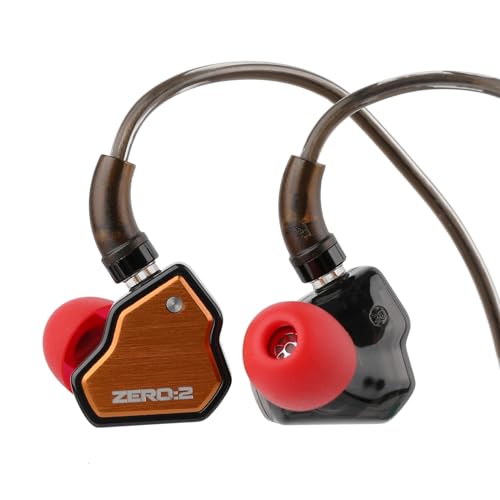
7Hz x Crinacle Zero:2
76% positive of 493 users
Budget gaming pick, but poor cables and polarizing bass.


 Amazing-Review6032