Most of my IEMs are warmer, so not too many mid forward rock/vocal IEMs. In the $250-500 price range, maybe the Moondrop Blessing 2, Thieaudio Hype 4, and anything Penon makes (I really like the Vortex and it's only $200). For $500+, the Oriolus Isabellae probably takes the cake for vocal forward IEMs.
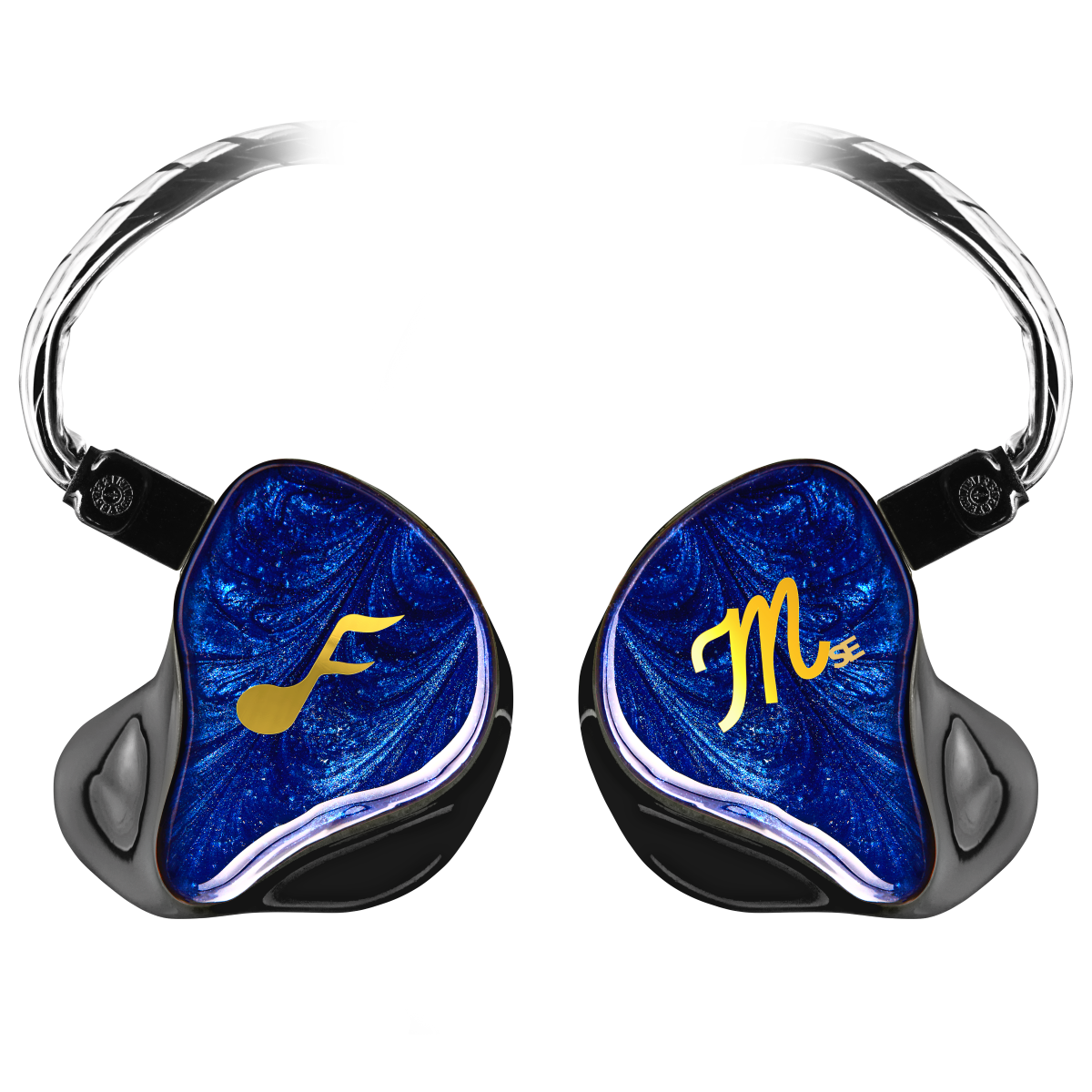
My favorite IEM that I have currently is the FATFreq Maestro SE, but that's out of most people's price range so I definitely wouldn't recommend it for most people. I still feel stupid spending as much money as I did, but hey, I enjoy it so I'm getting my money's worth!
Was just using my Kiwi Ears Septet out of my Schiit stack (Jotunheim 2, Lokius, Bifrost 2) for some gaming, but I plan to do some music listening with my FATFreq Maestro SE and HiBy R4 later today.
All but one of my sets is less than $1k retail - and that set can trade blow for blow with many well regarded $2000 sets... and out of the hundreds I've heard, it is the only one that I can say that for.
It is of course the Moondrop Variations, and they easily sound like a decent $1200 - $1300 set.
The only $1k set I own that does not sound like a. $1k set is the Campfire Alien Brain. I'd say 600-700 would be a fair price for these. Fortunately I got them for $500 open box & /they are my out & about set & have the right characteristics for that.
My list of others, their retail price & my thoughts as to whether they represent good value.
Canpur 622b - $5500
I think this is an INSANE amount of money for a set. I lucked out & bought (technically) secondhand as an unwanted gift & unused.
These are so far from my favourite typical kind of set as they have very little sub bass (not that I need to have every set be a basshead set) - BUT - that does not stop them from easily being the most impressive pair I've ever put in my ears. I savour them. I used them twice a week & really make sure I have no distractions & no one is home.
For funk/rare groove/soul etc, they are unbelievable. For excellent pop/rock in eg Prince, Queen & MJ, same thing. For the Blade Runner 1982 Vangelis soundtrack - best I've ever heard it & I've heard it a lot.
It's really difficult to qualify $5500 as a price for ANY IEM - but if one set does - it's these.
Others -
Final A8000 - $2000 - absolutely. Most clear & natural anything I've ever heard. For well recorded jazz, absolutely unbeatable. Good with lots of other stuff, too.
Empire Ears Raven - $3750 - the best sub bass heavy 'basshead' set that have ever existed IMO. This is basically the dream sound I had in my head as a 'basshead' set & I've been through them all. Absolutely yes - absolutely worth it, but the build quality could certainly be better for that price.
Campfire Astrolith - $2200 - the best planar set that exist IMO. Decent value. Incredible proprietary tech.
Thieaudio Prestige Ltd CIEM - $1800 - my most used set of all time. All day every day for two years solid.
Fatfreq Maestro SE CIEM fully custom - $3500- technically sound, bass is decent but nowhere near the Raven. Still, it's great to have a bottom heavy set that are so comfy, look stunning (my choice of around 200 aesthetic designs + additional options).
FiR RN6 - $3000 - the ultimate one & done!
Thieaudo Valhalla - $2000 - no idea, haven't arrived yet 😅
I have more but I gotta Run.
FatFreq is one of those houses from the never-ending, unstoppable world of IEMs that are not afraid to build and produce unorthodox tunings, which is a far cry from most of the run-of-the-mill, target-focused tuned IEMs. That is not wrong, but it’s important to think out of the box at times, where success or failure is only a learning block to build better. FatFreq clearly knows that, which is why they now have three Grand Maestros, and I have in hand the most attainable one, which still comes in at north of $3000.
I really admire what the Singaporean IEM makers are doing, Symphonium, Forte Ears, Dita Audio, and FatFreq notably. I have formerly reviewed the Deuce and the Maestro Universals before, but the Grand Maestro has exceeded my expectations by leaps and bounds here, and this is one of those cases where I dare say that it fully deserves its asking price.
**Disclaimer:** This unit has not been sponsored by FatFreq in any way, nor have any of the retailers in my country endorsed this unit. I have borrowed it from one of my three main patrons who keep my review pipeline running, and I thank him immensely for loaning me this unit.
# Unboxing, accessories, build quality and comfort
FatFreq’s Grand Maestro has beaten my previous best unboxing experiences with the Unique Melody Mason ST and Volk Etoile, with the IEM and its goodies coming in a compartmentalised box made of actual polished wood, with a varnish that reminds me of unboxing watches from Omega or Patek Philippe, where going this over and beyond for delivering an IEM at that price actually feels justified to me.
There’s a circular carrying case with foam padding where the IEM shells were found, and there are cylindrical holds to keep the tuning modules, along with the cleaning brush tool. I believe the stock modular silver cable that the Grand Maestro comes with is made by Altalune Audio, as the print on the jacks of this cable is the exact one I found on Symphonium Audio Titan’s cable, the Altalune Audio Neptune. I received the blue modules with this IEM, which were encased in a plastic film-bedded snap-lock transparent case, along with a set of stock FatFreq’s eartips. There’s a FatFreq-branded circular cutout to protect the case nestled inside the compartment, along with a greeting card from the maker.
The Grand Maestro is an extremely well-built IEM where, despite being made with resin, there’s serious weight to this, and the recessed connectors add in another layer of being secure. This also happens to be the biggest IEM I have tried, where the concha, tragus and antihelix of both of my ears were stretched out to the max, and I would strongly recommend FatFreq to seriously work towards reducing the footprint on these shells. This is not an IEM that would feel comfortable, or even bearable, for a lot of people, and the current size will limit its usability for many listeners. A reduction in size would honestly make a world of difference here.
The Noah tuning modules can be unscrewed with the provided tool for this, but since I didn’t find one, I used my ever reliable SIM card ejector tool to unscrew the modules. Pins or screwdriver heads of the same size would do the trick too, and the module is simple enough to be mounted back with one good thumb push, and it stays in place.
The Grand Maestro also comes with switches which can alter the perceived sound to a good amount, and it is indeed safe to say that both the modules and switches implemented here are not gimmicky at all, and they work to a solid extent.
For the review, I will be reviewing it primarily with the stock black “power” module and the switches up, as it had the IEM perform at its most optimum, and I’ll include a brief impression with the blue modules.
***Now on to the sound.***
# Lows
The FatFreq Grand Maestro is an anomaly when it comes to delivering the lower end consistently throughout anything that I throw at it, provided the source it’s connected to can keep up with it. It is plentiful in quantity, textured in quality, and it doesn’t skimp out on detail throughout the quantity either.
In tracks like Daft Punk’s *Get Lucky*, the Grand Maestro gets to the job right away, funtastic groove and rumble through the bass lines that this track has. Kick drums have excellent weight. Toms and snares are slightly subdued, which lets the kicks shine through even more. The cymbal work is fabulous despite the huge quantity of the lows, and vocals never lose prominence despite the rumble going on. Even on *Instant Crush*, the kicks have tremendous weight and quantity, and the bass lines just keep on getting so much better, absolutely clean, distinct, and a meaty rumble through and through.
In tracks like Rush’s *Limelight*, the Grand Maestro is simply not all talk, it walks the talk. Unlike something like the Symphonium Titan which can tend to miss details while delivering the quantity, the Grand Maestro effortlessly pulls the ropes on this grand puppet show like a master puppeteer. Toms, snares and kicks simply do not skip a beat, the bass line growls like the lead lion of a blood thirsty hunting pack, and the notes do not linger for even a second more than they need to, which demonstrates the Grand Maestro’s prowess in keeping it clean, energetic and plenty throughout its play time, regardless of modules, tracks and eartips.
# Mids
The Grand Maestro continues its grand parade even through here, although there are a few nitpicks here and there, which is honestly bound to happen given its default tuning.
In tracks like Periphery’s *Marigold* and Meshuggah’s *Bleed*, the Grand Maestro nails the fundamentals right, excellent imaging, terrific instrument separation, especially in *Bleed*, where I clearly heard Haake keep the metronome sweating with the phenomenal cymbal work that this track has. And the Grand Maestro can discern between the different strokes of the cymbals with such breeziness, it’s bonkers that a bass heavy tuning can also be this serious.
I wished the vocals had some weight to them, as the guitars on both the tracks mentioned had the hefty chugs that give these tracks their distinct identities and some forwardness, and a whisker’s length of weight would have done wonders for the Grand Maestro further. Just a nitpick, not a complaint. Easily fixable with EQ anyway.
In tracks like Tool’s *Pneuma* and *First It Giveth* by Queens of the Stone Age, the Grand Maestro gets tonality down to a fault, especially picked up while judging how the snares felt on both of these tracks, particularly in *Pneuma*, where the Grand Maestro was as natural as it could get while Danny Carey carried forward his legendary paradiddles. Timbre is remarkably held in place, especially realised through the cymbals on *First It Giveth*, where the Grand Maestro delivered it the same way it had delivered on tonality.
Perceived stage is also remarkably wide for an IEM, and the Grand Maestro establishes one of the benchmarks in IEMs for that, especially on the blue module, I perceived it to be wider, directly resulting in an improvement over an already excellent instrument separation.
# Highs
The Grand Maestro comes full circle towards shutting the lights out on what I gauge to be a phenomenal performance from an IEM that is not outright expected to deliver on elements given its tuning.
In tracks like Adele’s *Easy on Me*, Celine Dion’s *All by Myself* and Whitney Houston’s *I’ll Always Love You*, the Grand Maestro simply lets go of itself in the best way possible, handling the climaxes on these tracks without coming off as fatiguing, albeit with a minute sense of sibilance. The vibratos shine through and over the instruments with such ease, almost effortlessly, although they could have used a slightly forward position, tonality remains flawless. I genuinely enjoyed listening to these tracks so much on this IEM, which made me realise once again not to judge a book by its cover.
In tracks like Luciano Pavarotti’s *Nessun Dorma* from the 1994 Three Tenors Concert, the moment Pavarotti started wailing with his heart over the Vincero climax, the Grand Maestro took me almost close to what I experienced while listening to the Elysian Apostle 2026, where I was stupefied with how powerful the entire performance felt where it was least expected from this IEM. And the best part was that I didn’t perceive any sibilance here this time. So once again, the Grand Maestro’s nick of inconsistent sibilance on its grand armour remains just a scuff, and nothing that would send itself to the forge for repairs.
In tracks like Kendrick Lamar’s *Alright*, the Grand Maestro handles layering and separation like a breeze despite the prematurely clipped cymbals coming and going across its moments, but never intruding upon the background hums. Timbre remains perfect, as I perceived the horns and keys to be perfectly coherent while demonstrating tonality at its best as the track progressed.
# Impressions on the blue “control” module
This works wonders for the Grand Maestro when the mood is less for the bass, and more for the midrange to show up to the occasion. Vocals gained a good amount of weight, plus positioned forward which resulted in more enjoyment through vocal heavy or vocal focused tracks; perceived stage was even wider, and the highs were dialled in further. The bass was still prominent, groovy, rumbling and still a lot in terms of quality, but not as comparatively overwhelming as the power module. Tonality and timbre stayed intact for most of the time, except in cymbal and guitar heavy tracks, the slight perception of cymbals coming off as thin were fully eliminated.
# Concluding notes
The FatFreq Grand Maestro is one of those IEMs that refuses to play it safe, and refuses to be ordinary within its tuxedo. It is flamboyant in its tuning, does not shy away from delivering dollops of that good low end, and yet disciplined enough to keep its technical performance intact. That balance is not easy to achieve, and the Grand Maestro manages to hold that line remarkably well. This is one IEM that fully lives up to its name.
Its biggest drawback remains the size of the shells. There is no getting around that. Comfort will be the deciding factor for a lot of people here, and at this price point, ergonomics matter just as much as sound. If FatFreq can bring the footprint down in future iterations, this platform would become significantly more accessible without sacrificing its identity, because this IEM is not merely an IEM; it’s an experience, and FatFreq’s potential in being ergonomically accessible with its further iterations will be a thing of beauty.
When it comes to the sound, however, the Grand Maestro stands tall. It delivers authority, scale and control in a way that feels intentional rather than excessive. With the power module engaged, it becomes a low end behemoth, while with the control module, it shapeshifts into a one size fits all IEM, and given its price tag and the customisation one can do with the tunings, I would say FatFreq has gone over and beyond with delivering on this.
In a market filled with the same tunings with Lilliput changes and nothing too Gulliver about it, the Grand Maestro feels like a rebel who has decided to be the White amongst Greys. It embodies within itself FatFreq’s philosophy of fortune favours the bold, and the Grand Maestro is blessed with every fiber of its being.
I have zero reluctance in saying that the Grand Maestro earns its place among the summit-fi elite, not because it is eye wateringly expensive for an IEM, where in today’s market this price can net someone a pair of KEF LS50 Meta or Genelec monitors for instance, or even a trinity of endgame headphones in the used marketplaces. The Grand Maestro is not different for the sake of being different. It performs, it excites, and it keeps delivering every single time I put it in my ears. This is one IEM I could see myself keeping in my final endgame roster, alongside the best IEM I have reviewed to date, [the Elysian Apostle 2026](https://guiltygamer.com/elysian-apostle-2026-review/). Hence, the Grand Maestro earns a full circle *S* from my privileged end.
Will I buy it at retail? Yes.
Will I buy it used? Absolutely.
**Sources used:** SMSL Raw MDA-1 and Venture Electronics Megatron desktop DAC amp, Shanling M9 Plus DAP, FiiO KA17 and Venture Electronics Abigail Pro dongle DAC amps.
The Grand Maestro also tends to perform better with sources that can supply healthy amounts of power, hence it is recommended to use moderately powerful sources.
**Eartips used (ranked in order of performance):** Final E, JVC Spiral Dots, Divinus Velvet Narrow Bore, Spinfit CP100+
**Tracks:**
* Rush: Limelight, Spirit of the Radio
* Daft Punk: Get Lucky, Instant Crush
* The Police: Message In A Bottle
* Tool: Pneuma, Schism
* Queens of the Stone Age: First It Giveth
* Pink Floyd: Comfortably Numb, Wish You Were Here, Time
* Tame Impala: The Less I know, The Better
* Animals as Leaders: The Woven Web
* Avicii: Levels
* Periphery: Marigold
* Tesseract: Juno
* Kanye West: Stronger, Flashing Lights, Devil In A New Dress
* Altin Gun: Goga Dunya
* Timbaland: Give It To Me
* Adele: Easy On Me Live, When We Were Young
* Celine Dion: All By Myself
* Pavarotti: Nessun Dorma
* Mdou Moctar: Tarhatazed
* Cigarettes After Sex: Cry
* Meshuggah: Bleed
* AR Rahman: Tere Bina
* Alice in Chains: Down In A Hole (live)
* Allen Stone: Give You Blue
FatFreq is one of those houses from the never-ending, unstoppable world of IEMs that are not afraid to build and produce unorthodox tunings, which is a far cry from most of the run-of-the-mill, target-focused tuned IEMs. That is not wrong, but it’s important to think out of the box at times, where success or failure is only a learning block to build better. FatFreq clearly knows that, which is why they now have three Grand Maestros, and I have in hand the most attainable one, which still comes in at north of 3 lakhs (u/thotfulthinker , if you read this, and if it is feasible, keep the Noah modules in stock. I can understand big ticket products not flying off the shelves for obvious reasons, but at least keeping the modules for sale drastically improves availability for further finesse).
I really admire what the Singaporean IEM makers are doing, Symphonium, Forte Ears, Dita Audio, and FatFreq notably. I have formerly reviewed the Deuce and the Maestro Universals before, but the Grand Maestro has exceeded my expectations by leaps and bounds here, and this is one of those cases where I dare say that it fully deserves its asking price.
**Disclaimer:** This unit has not been sponsored by FatFreq in any way, nor have any of the retailers in my country endorsed this unit. I have borrowed it from one of my three main patrons who keep my review pipeline running, and I thank him immensely for loaning me this unit.
# Unboxing, accessories, build quality and comfort
FatFreq’s Grand Maestro has beaten my previous best unboxing experiences with the Unique Melody Mason ST and Volk Etoile, with the IEM and its goodies coming in a compartmentalised box made of actual polished wood, with a varnish that reminds me of unboxing watches from Omega or Patek Philippe, where going this over and beyond for delivering an IEM at that price actually feels justified to me.
There’s a circular carrying case with foam padding where the IEM shells were found, and there are cylindrical holds to keep the tuning modules, along with the cleaning brush tool. I believe the stock modular silver cable that the Grand Maestro comes with is made by Altalune Audio, as the print on the jacks of this cable is the exact one I found on Symphonium Audio Titan’s cable, the Altalune Audio Neptune. I received the blue modules with this IEM, which were encased in a plastic film-bedded snap-lock transparent case, along with a set of stock FatFreq’s eartips. There’s a FatFreq-branded circular cutout to protect the case nestled inside the compartment, along with a greeting card from the maker.
The Grand Maestro is an extremely well-built IEM where, despite being made with resin, there’s serious weight to this, and the recessed connectors add in another layer of being secure. This also happens to be the biggest IEM I have tried, where the concha, tragus and antihelix of both of my ears were stretched out to the max, and I would strongly recommend FatFreq to seriously work towards reducing the footprint on these shells. This is not an IEM that would feel comfortable, or even bearable, for a lot of people, and the current size will limit its usability for many listeners. A reduction in size would honestly make a world of difference here.
The Noah tuning modules can be unscrewed with the provided tool for this, but since I didn’t find one, I used my ever reliable SIM card ejector tool to unscrew the modules. Pins or screwdriver heads of the same size would do the trick too, and the module is simple enough to be mounted back with one good thumb push, and it stays in place.
The Grand Maestro also comes with switches which can alter the perceived sound to a good amount, and it is indeed safe to say that both the modules and switches implemented here are not gimmicky at all, and they work to a solid extent.
For the review, I will be reviewing it primarily with the stock black “power” module and the switches up, as it had the IEM perform at its most optimum, and I’ll include a brief impression with the blue modules.
***Now on to the sound.***
# Lows
The FatFreq Grand Maestro is an anomaly when it comes to delivering the lower end consistently throughout anything that I throw at it, provided the source it’s connected to can keep up with it. It is plentiful in quantity, textured in quality, and it doesn’t skimp out on detail throughout the quantity either.
In tracks like Daft Punk’s *Get Lucky*, the Grand Maestro gets to the job right away, funtastic groove and rumble through the bass lines that this track has. Kick drums have excellent weight. Toms and snares are slightly subdued, which lets the kicks shine through even more. The cymbal work is fabulous despite the huge quantity of the lows, and vocals never lose prominence despite the rumble going on. Even on *Instant Crush*, the kicks have tremendous weight and quantity, and the bass lines just keep on getting so much better, absolutely clean, distinct, and a meaty rumble through and through.
In tracks like Rush’s *Limelight*, the Grand Maestro is simply not all talk, it walks the talk. Unlike something like the Symphonium Titan which can tend to miss details while delivering the quantity, the Grand Maestro effortlessly pulls the ropes on this grand puppet show like a master puppeteer. Toms, snares and kicks simply do not skip a beat, the bass line growls like the lead lion of a blood thirsty hunting pack, and the notes do not linger for even a second more than they need to, which demonstrates the Grand Maestro’s prowess in keeping it clean, energetic and plenty throughout its play time, regardless of modules, tracks and eartips.
# Mids
The Grand Maestro continues its grand parade even through here, although there are a few nitpicks here and there, which is honestly bound to happen given its default tuning.
In tracks like Periphery’s *Marigold* and Meshuggah’s *Bleed*, the Grand Maestro nails the fundamentals right, excellent imaging, terrific instrument separation, especially in *Bleed*, where I clearly heard Haake keep the metronome sweating with the phenomenal cymbal work that this track has. And the Grand Maestro can discern between the different strokes of the cymbals with such breeziness, it’s bonkers that a bass heavy tuning can also be this serious.
I wished the vocals had some weight to them, as the guitars on both the tracks mentioned had the hefty chugs that give these tracks their distinct identities and some forwardness, and a whisker’s length of weight would have done wonders for the Grand Maestro further. Just a nitpick, not a complaint. Easily fixable with EQ anyway.
In tracks like Tool’s *Pneuma* and *First It Giveth* by Queens of the Stone Age, the Grand Maestro gets tonality down to a fault, especially picked up while judging how the snares felt on both of these tracks, particularly in *Pneuma*, where the Grand Maestro was as natural as it could get while Danny Carey carried forward his legendary paradiddles. Timbre is remarkably held in place, especially realised through the cymbals on *First It Giveth*, where the Grand Maestro delivered it the same way it had delivered on tonality.
Perceived stage is also remarkably wide for an IEM, and the Grand Maestro establishes one of the benchmarks in IEMs for that, especially on the blue module, I perceived it to be wider, directly resulting in an improvement over an already excellent instrument separation.
# Highs
The Grand Maestro comes full circle towards shutting the lights out on what I gauge to be a phenomenal performance from an IEM that is not outright expected to deliver on elements given its tuning.
In tracks like Adele’s *Easy on Me*, Celine Dion’s *All by Myself* and Whitney Houston’s *I’ll Always Love You*, the Grand Maestro simply lets go of itself in the best way possible, handling the climaxes on these tracks without coming off as fatiguing, albeit with a minute sense of sibilance. The vibratos shine through and over the instruments with such ease, almost effortlessly, although they could have used a slightly forward position, tonality remains flawless. I genuinely enjoyed listening to these tracks so much on this IEM, which made me realise once again not to judge a book by its cover.
In tracks like Luciano Pavarotti’s *Nessun Dorma* from the 1994 Three Tenors Concert, the moment Pavarotti started wailing with his heart over the Vincero climax, the Grand Maestro took me almost close to what I experienced while listening to the Elysian Apostle 2026, where I was stupefied with how powerful the entire performance felt where it was least expected from this IEM. And the best part was that I didn’t perceive any sibilance here this time. So once again, the Grand Maestro’s nick of inconsistent sibilance on its grand armour remains just a scuff, and nothing that would send itself to the forge for repairs.
In tracks like Kendrick Lamar’s *Alright*, the Grand Maestro handles layering and separation like a breeze despite the prematurely clipped cymbals coming and going across its moments, but never intruding upon the background hums. Timbre remains perfect, as I perceived the horns and keys to be perfectly coherent while demonstrating tonality at its best as the track progressed.
# Impressions on the blue “control” module
This works wonders for the Grand Maestro when the mood is less for the bass, and more for the midrange to show up to the occasion. Vocals gained a good amount of weight, plus positioned forward which resulted in more enjoyment through vocal heavy or vocal focused tracks; perceived stage was even wider, and the highs were dialled in further. The bass was still prominent, groovy, rumbling and still a lot in terms of quality, but not as comparatively overwhelming as the power module. Tonality and timbre stayed intact for most of the time, except in cymbal and guitar heavy tracks, the slight perception of cymbals coming off as thin were fully eliminated.
# Concluding notes
The FatFreq Grand Maestro is one of those IEMs that refuses to play it safe, and refuses to be ordinary within its tuxedo. It is flamboyant in its tuning, does not shy away from delivering dollops of that good low end, and yet disciplined enough to keep its technical performance intact. That balance is not easy to achieve, and the Grand Maestro manages to hold that line remarkably well. This is one IEM that fully lives up to its name.
Its biggest drawback remains the size of the shells. There is no getting around that. Comfort will be the deciding factor for a lot of people here, and at this price point, ergonomics matter just as much as sound. If FatFreq can bring the footprint down in future iterations, this platform would become significantly more accessible without sacrificing its identity, because this IEM is not merely an IEM; it’s an experience, and FatFreq’s potential in being ergonomically accessible with its further iterations will be a thing of beauty.
When it comes to the sound, however, the Grand Maestro stands tall. It delivers authority, scale and control in a way that feels intentional rather than excessive. With the power module engaged, it becomes a low end behemoth, while with the control module, it shapeshifts into a one size fits all IEM, and given its price tag and the customisation one can do with the tunings, I would say FatFreq has gone over and beyond with delivering on this.
In a market filled with the same tunings with Lilliput changes and nothing too Gulliver about it, the Grand Maestro feels like a rebel who has decided to be the White amongst Greys. It embodies within itself FatFreq’s philosophy of fortune favours the bold, and the Grand Maestro is blessed with every fiber of its being.
I have zero reluctance in saying that the Grand Maestro earns its place among the summit-fi elite, not because it is eye wateringly expensive for an IEM, where in today’s market this price can net someone a pair of KEF LS50 Meta or Genelec monitors for instance, or even a trinity of endgame headphones in the used marketplaces. The Grand Maestro is not different for the sake of being different. It performs, it excites, and it keeps delivering every single time I put it in my ears. This is one IEM I could see myself keeping in my final endgame roster, alongside the best IEM I have reviewed to date, [the Elysian Apostle 2026](https://guiltygamer.com/elysian-apostle-2026-review/). Hence, the Grand Maestro earns a full circle *S* from my privileged end.
Will I buy it at retail? Yes.
Will I buy it used? Absolutely.
**Sources used:** SMSL Raw MDA-1 and Venture Electronics Megatron desktop DAC amp, Shanling M9 Plus DAP, FiiO KA17 and Venture Electronics Abigail Pro dongle DAC amps.
The Grand Maestro also tends to perform better with sources that can supply healthy amounts of power, hence it is recommended to use moderately powerful sources.
**Eartips used (ranked in order of performance):** Final E, JVC Spiral Dots, Divinus Velvet Narrow Bore, Spinfit CP100+
**Tracks:**
* Rush: Limelight, Spirit of the Radio
* Daft Punk: Get Lucky, Instant Crush
* The Police: Message In A Bottle
* Tool: Pneuma, Schism
* Queens of the Stone Age: First It Giveth
* Pink Floyd: Comfortably Numb, Wish You Were Here, Time
* Tame Impala: The Less I know, The Better
* Animals as Leaders: The Woven Web
* Avicii: Levels
* Periphery: Marigold
* Tesseract: Juno
* Kanye West: Stronger, Flashing Lights, Devil In A New Dress
* Altin Gun: Goga Dunya
* Timbaland: Give It To Me
* Adele: Easy On Me Live, When We Were Young
* Celine Dion: All By Myself
* Pavarotti: Nessun Dorma
* Mdou Moctar: Tarhatazed
* Cigarettes After Sex: Cry
* Meshuggah: Bleed
* AR Rahman: Tere Bina
* Alice in Chains: Down In A Hole (live)
* Allen Stone: Give You Blue
When I sent the shots of the GM being in my ear, in my discord server; people considered the size of let's say, the ier z1r as juvenile haha.
All said and done, Grand Maestro remains to be a phenomenal IEM and if they nail anything close to this, but in the form factor of the Deuce, they have a home run. I also underestimated the performance gap between the Maestro universal and the Grand Maestro, the gap is sizeable.
Time to ask my patron for the anniversary edition next muahahaha.
End of reviews
Top IEMs on Reddit
1
7Hz
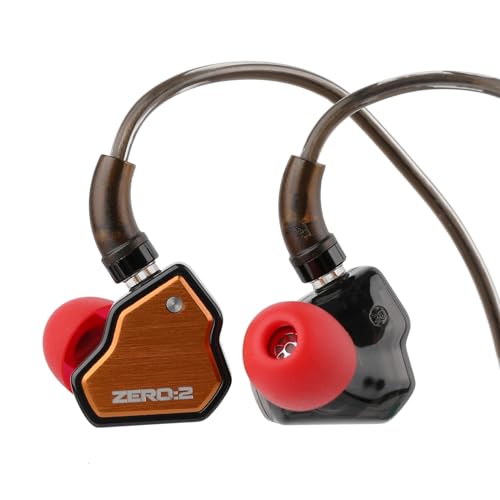
7Hz x Crinacle Zero:2
76% positive of 495 users
Budget gaming pick, but poor cables and polarizing bass.

 48-Cobras