In this review, I'll try to compare the Octave with a few different IEMs (Ziigaat x Hangout Audio Odyssey 2 , Oriveti Lowmaster, BQEYZ Frost, Hidizs MK10 Arcsonic, Kiwi Ears Quartet, Tanchjim FOLA, ddHiFi Memory, Oriveti Dynabird, BQEYZ Ni, Hidizs MP143 Salt Gold Titanium Edition) and dongle DACs (Tanchjim, Hidizs, dd Hifi) that I have in my bag. let's get started.
I've been testing DACs/Amps a lot lately, and the Octave has managed to become one of my favorites in terms of sound character. A Compact Powerhouse
Some DACs impress you with their loudness, brightness, or immediate dramatic effect. The NICEHCK Octave, in my opinion, feels like it was designed by engineers who love long-lasting, comfortable music, not just a test track, but the ability to enjoy full albums to the end.
The Octave's greatest strength is how it maintains the musical tapestry as a whole. Bass lines are felt separately from the kick drums. When the mix intensifies, the vocal texture remains stable and balanced. Treble details are heard without turning every cymbal into a spotlight. I appreciate the Octave for its confident sound without being aggressive.
And this device has a hidden surprise. Especially from the 4.4mm balanced output, it's really powerful for its size. This extra headroom doesn't just boost the sound. It improves grip, transient stability, and dynamic contrast, especially for planar iem's and stream-loving hybrid headphones. Octave feels more like a small, serious portable front-end than a typical phone accessory.
**Technical Specifications and Hardware Overview:**
DAC chip: ESS ES9039Q2M
Amplification: Dual SGM8262 op-amplifiers
Inputs: USB C - Outputs: 3.5mm single-ended and 4.4mm balanced
Output power: 150 mW at 32 ohms from 3.5mm, 550 mW at 32 ohms from 4.4mm
Supported formats: PCM up to 768 kHz 32-bit, DSD up to DSD256
Dynamic range and SNR: 130 dB, listed as class performance
Gain: Low and high gain modes, plus independent hardware volume steps
Controls: Dedicated playback controls, app-based EQ support, and firmware updates
These numbers matter because they describe the listening experience: This dongle is not only clean, but also has enough voltage and current headroom to keep demanding IEM loads under control, and It doesn't produce a forced sound.
**What Does the ES9039Q2M Bring and Why Does It Sound Different Than Normal Cirrus Dongles?**
Many portable dongles in this price range rely on Cirrus Logic chips like the CS43198. These generally offer an easy, smooth, slightly rounded presentation, usually a friendly treble, and a softer starting edge. Octave's ES9039Q2M takes a different approach. In a well implemented design, ESS chips generally deliver stronger edge definition, more pronounced separation, and a higher sense of contrast between quiet and loud micro-events.
Specifically with the Octave, the ES9039Q2M character isn't used to chase brightness or sharpness. Instead, it's used to improve structure. Transitions start and end more precisely. The image feels more locked in, especially in left to right layouts. Low frequency texture becomes easier to read. You hear not just the bass weight, but also the bass articulation. I quite like that.
The main point isn't that the ESS is always better than the Cirrus. It can be explained by the Octave placing more emphasis on control, structure, and dynamic stability, while most CS43198 dongles prioritize flow, smoothness, and comfort. The Octave is still quite listenable, but its way of holding music together feels more like a miniature desktop chain.
This difference becomes very apparent when switching between the ES9039Q2M on the Octave and the CS43198 dongle on a heavy metal track or a planar IEM with sharp transition behavior. The Octave keeps the image cleaner and more stable. You get less blur, more space, and a stronger sense that the device isn't reaching its limits.
**Overall Sound Characteristics:**
Generally, the Octave sits in a neutral to slightly warm region, but with a distinctly controlled backbone. It's not a thick, syrupy dongle. Nor is it treble focused. The bass is tight and well damped, the mid frequencies are clean and realistically weighted, and the treble is extended but rarely sharp. The soundstage isn't artificially large, but it's cleanly layered with noticeably strong imaging.
If I had to describe the emotional feel, I'd say it's the sound of a device that relaxes you because it maintains its calmness. You think less about the equipment and spend more time following the setup.
**Buttons, Usability, and Daily Life:**
The Octave is one of those dongles that feels like it was designed by someone who uses dongles outside the home. The hardware volume control (100-step) is important. The gain shift knob is important. The playback controls are important. App EQ support is important when you want small, subtle adjustments instead of changing equipment.
In practice, the dedicated controls make the Octave feel more like a real component than a fragile accessory. You can keep your phone's volume stable, manage the gain correctly, and keep noise low with sensitive IEMs. Software updates and sound memory behavior also help reduce daily friction.
**Comparisons with Other DAC Amplifiers:**
**Octave (ES9039Q2M) vs Tanchjim Luna (dual CS43198)**
The Tanchjim Luna is a device that captivates people with its smoothness and fluidity. It's built around dual CS43198 DAC chips, and this Cirrus foundation tends to create a smoother treble energy and a more rounded crossover shape. When you switch from the Luna to the Octave, the first thing you'll notice isn't the volume, but the structure. The Octave draws cleaner lines around instruments. The Luna, on the other hand, blends them a bit more, which can give a fuller and more forgiving feel.
The bass on the Luna tends to be a bit softer on the attack, and comes with a nice bloom that makes vocals and guitars feel warmer. The Octave tightens this behavior. It doesn't reduce weight, but it reduces glare and increases grip. In kick heavy heavy metal tracks, Octave makes it easy to follow double kick patterns. In Luna, the same pattern feels more rounded and musical, but not as sharply defined.
Mid frequencies are a matter of personal preference. Luna can make vocals feel more intimate and emotionally rich, especially in vocal centric music and slower rock. Octave keeps vocals honest and stable with excellent clarity and separation when the mix gets crowded. With Luna, you might feel the singer is closer. With Octave, you feel the band is better organized.
The treble also creates a distinct contrast. If you are sensitive to treble, Luna is easier to listen to. Octave is still controlled, but it reveals more upper frequency information and does so with a stronger contrast. In well recorded material, Octave feels more complete. In warm recordings, Luna might be a safer choice.
If you want a dongle that feels like a warm lamp in your room, Luna is nice. If you want a dongle that feels like a clean studio window without being sharp, Octave is the right choice.
**Octave (ES9039Q2M) vs ddHiFi Eye3 (dual CS43198)**
The Eye3 is built on ddHiFi’s concept of portable power and compact elegance. Many Eye3 variants in the family utilize the dual CS43198 design, and the overall sound identity tends to be powerful, vibrant, and instantly engaging. Compared to the Octave, the Eye3 generally feels more eager in its presentation. The leading edges of the bass hits are more noticeable. The sound may feel more lively on first impression.
The Octave responds with calmness and scaling. When you listen for longer periods, the Octave tends to feel more balanced across the spectrum. The Eye3 can emphasize excitement, which is great for energetic pop, EDM, or rock music where you want a little more adrenaline. The Octave feels more linear. It keeps the mid-frequencies centered and avoids forcing treble energy just to appear detailed. In complex music, especially intense metal mixes, the Octave has the advantage in organization. The Eye3 can deliver bigger and more instantaneous sound, but the Octave keeps the layers more separate. If you value the clarity of guitar harmonies, the separation of the bass guitar from the kick drum, and the stability of vocal placement when the chorus explodes, the Octave is generally more reliable.
The treble on the Eye3 can feel more lively depending on the headphones. The Octave, despite being an ESS implementation, remains more controlled with a slightly softer top energy. This may not seem intuitive, but the Octave's tuning prioritizes consistency over showmanship. In short, the Eye3 is a great choice for those who want energy and punchy sound with minimal effort. The Octave, on the other hand, is for those who want a dongle that acts as a stable reference point in a wider collection.
**Octave vs. Hidizs S9 Pro Plus (ES9038Q2M) Comparison**
This is the most interesting comparison because both devices are in the ESS world and present music differently. The S9 Pro Plus uses the ES9038Q2M. It's known for its clarity, distinct details, and very clean, precise presentation. The Octave, on the other hand, uses the ES9039Q2M and, on paper, offers noticeably higher balanced power.
When switching between the two, the S9 Pro Plus generally has a sharper focus. It highlights micro-details, making the edges of cymbals and the texture of strings more prominent. The Octave feels a little more natural in the way it integrates this detail. It doesn't hide the information, but it doesn't force it into the spotlight either. The result is a presentation that feels more musical and less like a review lamp.
Bass control is strong on both, but the Octave's higher headroom gives a more secure hit feel, especially with stream-loving IEMs on 4.4mm. The S9 Pro Plus can deliver an extremely clean sound, but the Octave feels more effortless when the track dynamically gets heavier.
I hear a greater philosophical separation in the mid-frequencies. The S9 Pro Plus can deliver very clear and precise sound, sometimes veering to a cooler tone depending on the headset. The Octave keeps the mid-frequencies stable and slightly more tolerant; this can be a boon for in-ear monitors that are aggressive in the upper mid-frequencies.
The treble is more pronounced in the S9 Pro Plus. The Octave has a softer and more natural damping. If you live for maximum clarity and sharp separation, the S9 Pro Plus will excite you. If you want high resolution with less fatigue and a larger power field, the Octave becomes a more flexible everyday use option.
**Octave (ES9039Q2M) vs ddHiFi Mountain 3 (pair CS43198)**
The Mountain 3 is a small device that often surprises people with its musical weight. Many Mountain 3 designs are based on the dual CS43198, and the typical result is a warmer, fuller tone with easy highs. The Octave, again, takes on the role of structure and grip.
The Mountain 3's bass can feel a bit thicker and more relaxed. It provides intensity, especially in the mid-bass. The Octave tightens this area and increases the sense of speed. In fast rock and metal, the Octave is generally a cleaner and more distinct choice. In vocal jazz and slower acoustic music, the Mountain 3 sounds more intimate and romantic to your ears.
The Mountain 3's mid-frequencies feel fuller and a bit smoother. The Octave feels cleaner and more detached. The balance here is between emotional warmth and analytical organization. Neither is wrong, but they serve different moods. The Mountain 3 invites you to sit back. The Octave invites you to follow the arrangement.
The Mountain 3's highs are generally safer, with less emphasis on the upper end. The Octave covers a wider area and shows more air. If you're sensitive to high frequencies, the Mountain 3 might feel softer. If you want more space and clarity, the Octave is a more complete window.
Power is another practical difference. The Octave's balanced output headroom is in a different league on paper, and listening generally translates to better control and dynamics. The Mountain 3 might be magical for IEMs. The Octave, on the other hand, feels magical and can deliver even more powerful performance when needed.
**NICEHCK Octave vs IEM Pairings:**
**Octave × Ziigaat x Hangout Audio Odyssey 2:**
The Ziigaat Odyssey 2 has a sound character I quite like, naturally offering a wide and somewhat cheerful tone. With the Octave, that cheerfulness has become more disciplined. I first notice the change in the bass.
The Odyssey 2 can sometimes be a little loose or exuberant depending on the source, but the Octave tightens the low frequencies and provides a cleaner start and finish. Kick drums become more prominent, and bass guitar lines gain a clearer pitch instead of becoming a single low frequency blot.
The mid frequencies benefit from the Octave's separation. The Odyssey 2 has a sense of airiness that can sometimes make the vocal placement feel a little relaxed. The Octave brings the vocal image to a more stable center position by cleaning up the surrounding space, rather than aggressively pushing it forward. This makes the guitars more textured and the layering more pronounced, especially in intense rock tracks.
The treble remains open and lively, but the Octave reduces the glare. You still get that airy soundstage, but the cymbals feel more controlled and less bouncy. The biggest gain is how the Octave improves the layering of depth. The Odyssey 2 remains wide, but now feels more three dimensional. Instruments are positioned from front to back, not just left and right.
This pairing feels like taking an already enjoyable IEM and giving it a more mature backbone. It remains fun, but becomes more reliable, more coherent, and more trustworthy in a full playlist.
**Octave × Oriveti Lowmaster:**
The Lowmaster is another IEM I like, entirely designed for impact and rhythm, but when driven correctly, it feels less like just a loose bass toy. The Octave is a surprisingly good pairing as it provides control without sacrificing weight.
The bass hits hard, but the damping remains clean. The sub bass feels deep and confident, but the mid bass doesn't spill over into vocals. This is important because the Lowmaster can sound thicker on warmer sources. Octave keeps it energetic, but not clogged.
The mid frequencies become clearer and more readable. Vocals gain better articulation, and guitars have more impact without becoming sharper. In metal and hard rock, this helps the mix breathe. You can follow double hit passages more easily because the low frequencies remain consistent. Lowmaster retains its identity, but delivers a more serious sound.
The treble is safe and not tiring. If Lowmaster is tuned to avoid harshness, Octave respects that tuning while extracting enough detail to preserve the texture of the cymbals. You don't suddenly get a bright iem, you get a cleaner one.
The soundstage isn't huge, but Octave improves separation and imaging precision within that space. The result is a punchy and controlled feel, like a cramped club space rather than a large concert hall. If you love Lowmaster for its physical structure but want a more structured sound, Octave is a resource that quietly corrects that.
**Octave × BQEYZ Frost:**
The Frost has an airy, expansive character and a treble presentation that can be energetic depending on the chain. The Octave makes the Frost feel more balanced. The bass becomes a bit more solid and distinct, which is valuable because
The Frost sometimes prioritizes clarity over weight. With the Octave, the low frequencies feel more solid. It's not bass heavy, but it sounds more complete. I feel fast and clear beats.
The Frost's mid frequencies can feel a bit weak if the source is overly clinical. The Octave adds a bit of fullness and keeps the vocals stable. This makes vocal centric tracks feel more intimate without crashing the stage. Guitar textures also become more believable, especially in the lower mid frequencies where the Frost can sometimes feel a bit light.
The treble is where the Octave feels more secure in matching. The Frost still retains its airiness and sparkle (thanks to its great micro planar driver), but the energy in the upper frequencies feels less sharp. Cymbals remain clear, but damping feels softer. You hear sparkle and roomy hints without the feeling that the upper frequencies are being forced for dramatic effect.
The soundstage remains wide and open, offering powerful imaging. The Octave helps the Frost maintain its breadth and improve separation. In a dense mix, Frost sounds cleaner and less chaotic with the Octave. The overall effect is a more mature Frost; still airy and detailed, but less likely to tire you out during a long listening session.
**Octave × Hidizs MK10 Arcsonic:**
The MK10 Arcsonic is a fast and resolving IEM that can quickly reveal the personality of the source. I didn't think I would like this IEM this much. It performs great for its price. Combined with the Octave, the MK10 finds its right companion.
The bass remains tight and fast, but gains a density that makes the MK10 feel less thin. You get impact without losing speed, which is exactly what you want in technical in-ear monitors.
Mid-frequency clarity remains excellent. Vocals are clean and instantly audible, but Octave prevents them from becoming sharp. This is important because the MK10 can feel aggressive when paired with a bright source. Octave keeps the upper mid-frequencies under control while preserving articulation. Guitars sound clear, and complex arrangements remain layered rather than collapsing.
The treble feels extended and detailed. Octave doesn't turn the MK10 into a dull listening experience, but it eliminates that glassy sharpness that can appear in some ESS applications. The result is energetic but not piercing. Cymbals have texture, not just brightness.
The soundstage and imaging are strong. The MK10 already offers good imaging, and Octave provides a stable foundation. You get better separation and a more stable center image. This pairing is ideal for listeners who want technical performance but prefer to enjoy the music rather than analyze it. It feels sharp and capable, but surprisingly comfortable for extended listening sessions as well.
**Octave × Kiwi Ears Quartet:**
The Quartet is one of those in-ear headphones whose sound can vary depending on the source. With the Octave, it became more consistent and emotionally satisfying.
When paired with the Octave, the bass gained a more prominent and slightly stronger beat. The Quartet didn't suddenly transform into a sub bass beast, but the low frequencies feel better shaped, which helps the rhythm sections sound more confident.
The mid frequencies became more defined. Vocals sound fuller and more stable, with a clean sense of placement. The Quartet can sometimes feel a little unbalanced when the chain is too hot or too bright. The Octave neither dulls nor screams the mid frequencies, it's right in that sweet spot. It gives vocals believable body and preserves the texture of the guitars.
The treble remains smooth and controlled. The Quartet has enough energy to sound open, and the Octave maintains that openness while keeping the edges clean. Cymbals and strings retain their sparkle, but you don't feel any harshness.
The soundstage isn't exaggerated, but the imaging is orderly. Octave helps organize the Quartet's sound, which is important when the mix gets denser. This pairing feels like a well balanced everyday setup that doesn't require much attention. Genre changes, long playlists, and different listening moods work seamlessly.
**Octave × Tanchjim FOLA:**
FOLA can be a lively and detail-oriented IEM that sometimes benefits from a limited source. Octave delivers exactly that.
The bass remains fast and controlled, and Octave prevents the bass from sounding too weak. You still get a clean effect, but there's a bit more weight, which makes the drums feel more physical.
The mid-frequencies become smoother and more natural. While FOLA tends to be bright in the upper mid-frequencies on some sources, Octave gently calms this area without flattening details. Vocals remain clear, but are less prone to sharpness. Guitar harmonics and string overtones feel more integrated rather than standing out as separate bright elements.
The treble remains extended and clear, while Octave prevents it from becoming tiring. You still hear the micro details, room cues, and the final tones of the cymbals, but the overall presentation offers a more relaxed experience. It's the kind of match where you find yourself not wanting to turn the volume down when you finish an album.
The soundstage is clean and offers good separation. FOLA is capable of delivering very high quality sound, and Octave supports this, while also making it more musical. If you love FOLA for its clarity but want a more forgiving chain for longer sessions, Octave is a very smart choice.
**Octave × ddHiFi Memory:**
Memory has a warm and inviting tone that sometimes risks sounding a little too soft on very soft sources. Octave gives it structure. This headset works quite efficiently with its planar driver.
The bass has become tighter and more readable, and the mid bass region has gained better control. This means you still get warmth, but with less muddiness. I like the bass texture in their planar drivers.
The mid frequencies retain the emotional quality that makes Memory special. Vocals remain intimate and textured, but Octave has increased the clarity around them. You hear more separation between vocal layers and background instruments. Acoustic guitars gain clearer string definition. Piano notes become more distinct and dampen more steadily. I'd say these two get along quite well.
The treble remains smooth, but Octave seems to open up the upper end a bit. You get more air without sharpening Memory. This helps to broaden the soundstage perception and makes the sound feel less closed off. The overall effect is that Memory retains its relaxed identity but gains resolution and organization.
This pairing is perfect for vocal jazz, acoustic sessions, and any kind of music where you primarily want tone and emotion. Octave didn't turn Memory into an analytical monitor, but it feels like it cleaned up the Window, making the warmth feel intentional, not blurry.
**Octave × Oriveti Dynabird:**
The Dynabird is a fairly balanced dynamic driver IEM. It's all about speed, punch, and rhythmic accuracy, especially for instrumental work and metal. Octave fits this purpose perfectly.
With this pairing, the bass is fast and tight. You get impact without blasting. Kick drums are sharp, and bass guitar lines remain distinct even under heavy distortion.
The mid-frequencies are energetic but controlled. Dynabird's strength is keeping guitars clear without thinning them out. Octave reinforces this balance by keeping the lower mid frequencies stable and the upper mid frequencies clean. Vocals stand out in dense mixes, but don't scream. This is important for metal, where the mix can quickly become dense.
The treble is clear and informative, but the Octave prevents it from becoming sharper. The cymbals have sharpness and texture, and the atmosphere around the instruments feels realistic. You get plenty of detail for instrumental music, but the listening experience remains comfortable.
The soundstage is medium sized but very even. The imaging is clear, and the separation remains strong even when the track intensifies. The Octave and Dynabird pairing feels like a focused instrument for fast music. It offers drive and clarity without sacrificing tonal stability, which is exactly what instrumental and metal listeners want.
**Octave × BQEYZ Ni:**
This is a new IEM sent to me for review, and I can say I quite like it. The Ni tends to reward a source that can maintain consistency without softening its character. The Octave does this well.
The bass becomes more disciplined, providing a cleaner transition to the mid-frequencies. You get a solid low frequency foundation, but you never feel like it's pushing the rest of the spectrum back.
The mid frequencies have very good body and clarity. The vocals are natural and centered, while the instruments have a realistic tone. Octave's separation helps Ni handle complex passages without collapsing. This is especially noticeable in layered rock and orchestral pieces where multiple mid frequency elements compete.
The treble is extended and clean. Octave's ESS based structure makes it easy to track micro details without forcing brightness. Ni maintains its open feel while keeping the upper frequencies under control. Cymbals and strings produce a textured sound, not a sharp one.
The soundstage appears orderly with good left and right placement and a respectable depth. This pairing is one of those setups that makes you stop thinking about tuning and start thinking about the music. While Ni maintains its personality, Octave provides the stability and hold that allows that personality to emerge in a more refined way.
**Octave × Hidizs MP143 Salt Gold Titanium Edition:**
The MP143 is a planar iem that loves to work with a source that has headroom and control. The Octave delivers both.
The first thing you'll notice is how well the bass behaves. Planar bass can feel fast, but depending on the chain, it can sometimes feel a little light. With the Octave, the MP143 gains body without losing speed. The bass is tight, punchy, and clean, and remains balanced even in fast passages.
The mid frequencies remain transparent, which is one of the MP143's greatest strengths. The Octave keeps the mid frequencies stable, allowing you to hear subtle layering in guitars, synth pads, and vocal harmonies. There's a sense of effortlessness that emerges when the track intensifies. Instead of turning into a wall of sound, it remains layered and readable.
The treble is airy and detailed. The MP143 can sometimes sound a little dense in the upper region with a sharper source. The Octave keeps this region under control while still providing air and extension. The cymbals and upper harmonics are prominent, not pushed through.
The soundstage is wide enough, but the real gain is in imaging and separation. This duo feels like a portable system that could really replace larger systems for certain listening sessions. If you're using the MP143 for instrumental or technical genres, the Octave makes it feel faster, cleaner, and more secure.
**Pros**
Very high output power from a 4.4mm balanced output for a dongle-class device
Clean, controlled ESS-style resolution without harshness
Excellent layering and rendering for complex music
Useful physical controls and gain options for everyday use
App EQ and software support extend lifespan
Wits well with both warm and technical IEMs
**Cons**
If you want a soft, romantic, very warm Cirrus-style presentation, the Octave may feel too structured
The soundstage focuses on organization rather than artificial breadth
Best performance comes from the 4.4mm balanced output, so the right cable is important
**Conclusion**
The NICEHCK Octave is the kind of device that consistently deserves its place. It's powerful, but uses that power for control rather than brute force. It's detailed, but the kind that refuses to be sharp. With its actual knobs and gain control, it's practical and feels designed for everyday listening rather than occasional testing.
Most importantly, it's scalable across a collection. Whether you're playing a fast planar, a warm musical hybrid, or a clean reference tuned set, Octave does the same thing every time: it refines the music, tightens the bass, balances the mid-frequencies, and keeps the treble clear without turning it into a spotlight.
If you want a single dongle that can sit in the middle of your rotation and make almost everything sound more balanced, Octave is a serious contender.
\* [NICEHCK Octave Official Link](https://www.nicehck.com/products/nicehck-octave-es9039q2m-flagship-portable-dac?srsltid=AfmBOoqNklilBaYBfI-nLoqrQJyJUXayuqSMBOIKbaTQWwVwlpuvfKlS)
**Disclaimer:** I would like to thank **TempoTec** for providing the **V1** for review purposes. I am not affiliated with **TempoTec** beyond this review and these words reflect my true and unaltered opinions about the product.
**\* All Photographed taken by me (Ahmet Derici) from** [**Instagram:** **u/electroaudioworld**](https://www.instagram.com/electroaudioworld/)
**\***
**Used photo Gear : Sony A7 III + Sigma 24–70mm F/2.8 DG DN II Art Lens**
\*
Quartets are a great pair of IEMs, I had a chance to sample them. Warm sound, great mid and sub bass coverage sparkly highs with pretty nice detail. They are fun
Ok, I'll go with my experience, I started with the Kiwi quartet (nice basses), then the Simgot EM6L, then I took the Ziigaat Odyssay and I'll tell you, my best choice falls on the Simgot, the crazy Odyssay, absolute definition of massive sub bass, incredible soundstage width and tonal clarity but what an effort... the Simgot tweaked just on the bass (I use Qudelix 5k DAC) becomes syraordinaria, always enjoyable and precise... in my experience I recommend Simgot, kiwi quartet for bassy electronics, Odyssay for instrumental pieces perhaps without too high-pitched wind instruments or female voices (they break the ears) and not too high volume.
If you are looking for some iems with some more bass on them, the kiwi ears quartets definitely do. Although like other people on here, I would recommend trying to adjust to the zero blue's for awhile before pulling the trigger on a new iem.
I’m new to this hobby I’ll keep it short describing what I like & dislike about the IEMs I’ve tried. I’m aiming for a basshead set for music & single player that can (tho not proritizing) competitive play for COD & PUBG. but comfort is my number 1 priority & DQ’d what was closest to perfect. My budget is pretty loose but
TLDR; I want a comfortable Martilo & don’t see myself, tho not opposed to, spending more than $400 USD
DAC: Apple USB-C Dongle
Source: PC, occasional iPhone
Open to EQ?: Yes
Eartips: KBear 4540 aka Coffee Tips (enjoyed them over stocks)
What my definitions mean
Detail: how well I can hear LR tracks or faint reverb tracks that play after the verse in music.
Separation: how well I can distinguish separated tracks in a busy song or competitive match
Bass Impact: Physical sub bass rumble & bass attack/decay accuracy while not drowning the mids
Peak: my upper treble sensitivity at 14,500 kHz
In order of comfort
Kiwi Ears Quartet: The most comfortable & great seal on the stock tips even (I returned these before getting the coffee ones) but many other issues. These were very hissy without a better DAC. Music is very fun compared to the Darybreak, but the bass impact was much weaker & the peaks were very harsh & wide. It made many music tracks not previously sibilant to me, have sibilance. I had a surprisingly good experience with competitive games for its price.
Arete 2: Also very comfortable, a super underrated feature of this imo. I think my ears tend to hurt with IEMs that have large nozzle bases like the Astrals & Martilos. Honestly even with the bass switch on it fell below the Daybreak & Martilo for bass in impact. It did have the best separation & detail for music, & shockingly great for peaks, but idk why music was still kinda boring to me. So far I’m gonna keep these just for competitive play, it has stupid good performance with great comfort.
Crinear Daybreak: Yeah these definitely needed the coffee tips but after they feel great. I’m ngl these sounded boring for music & was tough for competitive play & was the reason I returned them. But I seriously debated keeping these cuz the bass experience was the best by a noticeable margin, the subbass was very rumbling but not drowning, the overall bass was clean & accurate. These feel like subwoofers in your ears, a huge plus was nothing peaked, these are very pleasant in the higher frequencies on my ears.
Martilo: These were closest to perfect, but that damn comfort, it’s a huge downgrade. The nozzle base felt even bigger than the Astrals & comfort wise were only a slight improvement to those. I actually enjoyed listening to the most music tracks, it was bassy when it was needed to be & was calm when it wasn’t. The peaks were occasional but short lasting & not deal breaking. It was a worthy trade off to the hit in separation & detail to the Astrals & Arete 2, tho Martilos were satisfactory. But as I stated at the beginning, comfort is that important. It made me somewhat sad to return these.
Astral: Music like the Quartet was super fun, still harsh but less peaks. They give great separation & detail to tracks that sound more monotone on lower end sets like the Quartets & Daybreak. But these were super uncomfortable to me, I think my ears hurt with large nozzle bases, not nozzles shapes themselves. Also left channel is slightly hissy with my Apple Dongle. Way less than the Quartet, but I didn’t get any hiss issue with the Arete 2, Daybreak, or Marrilo.
Yeah I noticed Arete 2 is a great improvement as they are on par comfort & sound wise with Daybreak but had way more footstep sense in PUBG. I would go as far to say it is a safe upgrade from the Daybreak. PSA Arete 2 is fully metal so if your room is cold it will be cold in your ear for a few seconds but it was far from a dealbreaker for me.
Well I if I had to keep 1, like I said I’m so far keeping Arete 2 cuz it had great comfort & performance despite lacking “musical fun”. Martilos was the best sound experience, I really wanted to keep them, really bad, but I cannot wear them. I dunno what I can put on the “musical fun” sound that the Arete 2s lacked it might just be the tuning cuz I hear better detail separation than the Martilos.
I had the ULTs but they broke. I’m waiting on the Sennheiser Momentum 5 for over ears, couldn’t justify HDB 630 as the battery isn’t user replaceable. I’m waiting on a good DAC before I test HD 480s again as their comfort was 10/10 & isolated sufficiently. I’ve tried open backs, they weren’t viable as I have a loud AC & loud-ish PC fans.
I’d choose Arete 2 because I can actually wear it comfortably for way longer & is wayy less shouty in the upper treble. It’s still boring to me in music, but during my tests of IEMs I learned I gravitate to comfort over the musical experience, even tho I spend most of my time listening to music & playing single player... Astrals are way more fun for music & single player OSTs, but my ears ache after a couple hours, so comfort will remain my top priority.
I didn’t stress test the Astral for gaming as I DQ’d it for comfort, I literally can’t wear them for an hr & my sessions range from 2-4hrs, sometimes more (plus too shouty for music). For treble I dunno, my footsteps & audio queues don’t rely on brightness. I tried the Arete 2 cuz it’s Fresh Review’s cheapest A tier, & Astrals cuz it’s popular & is also in A.
**Hello Community!**
It’s time to talk to you about my experiences with one of those **Kiwi Ears** monitors that most often go unnoticed for being caught between two worlds: **Quartet.**
**Price:** €95-$110
[Link](https://www.linsoul.com/products/kiwi-ears-quartet?variant=47309169721561)
**Pros:**
\-Fun, energetic and addictive sound.
\-Bass with physical rumble and good slam.
\-The mids do not lag far behind.
\-I never stopped feeling the vocals were well articulated.
\-You will not feel listening fatigue.
\-Four different sound profiles through switches.
\-Competent technical capabilities.
**Cons:**
\-The resolution of the general tonality is simply average, it does not stand out.
\-You may feel like you are missing treble.
\-You may overlook the details in songs.
**Accessories:**
\-Two shells.
\-Three sets of ear tips in SML sizes.
\-Switch pin.
\-Cable with 0.78mm termination and 3.5mm connection.
\-User manual.
\-Carrying and storage case.
**Comfort, design and construction:**
In terms of construction, this Kiwi Ears model presents a set made of resin, properly finished and with a front plate in a colorful purple that catches eyes.
The ergonomics are simply correct and I appreciate not having suffered pressure points that caused pain in my ears, but, be careful, the shells are medium-large in size and may not fit everyone well. Even so, the shape of the IEM avoids edges with softly rounded curves.
The insertion into the ear canal was correct, helped by the stock black ear tips with red bore, which secured the monitors pleasantly, achieving a perfect seal thanks to their sufficient elasticity, avoiding leaks and sound entry.
The cable, a house trademark and one we can find in both lower end and higher end models, is thin, with a cheaper appearance that does not align with what is expected from a set at this price. Nevertheless, it fulfills its function of not bothering, not tangling and, above all, not producing pulls while I was moving. If you have read me more times, over time I have leaned more toward thin cables: they are more comfortable for my daily life.
**Technical aspects:**
\-2DD+2BA configuration.
\-32 ohms impedance.
\-110dB sensitivity.
\-Declared response 20hz-20khz.
**Pairing for the tests:**
\-Switch position 1-1.
\-Warm/neutral source.
\-Gain set to medium.
\-Stock black ear tips with red bore.
\-Stock 3.5mm cable.
**What do the switches do?**
Well, my preference for this set was the 1-1 configuration, where bass and treble are slightly more elevated. Vocals sit somewhat further back than in other configurations.
1-0: darker configuration, where warmth grows and the body of lows and mids increases.
0-1: more general clarity in mids and vocals, which step forward. More sense of openness.
0-0: the mids are the absolute protagonists but the general character is not as energetic.
**Sound signature:**
Starting, as always, with the lowest frequency range, I find a very gratifying sensation, both in enveloping nature and raw punch. Let me explain a bit better: it does not seek to crush your head, but it does have a very measured forcefulness, where liveliness is noticeable, proper texture and, something I appreciate quite a lot, a very clean foundation.
The mid-bass makes itself known, but more with control than invasiveness over other frequencies. When called upon, it responds with great impact, fast, precise, never oriented toward something purely analytical, but feeling satisfactorily addictive, never falling into boredom.
It is an area quite focused on accompanying, with firmness, with very well-thought-out musicality but without being carried away by a pedantic or extremely pleasing sound.
The midrange also shows the personality of these Quartet, where and, against any preconceived idea I had about this IEM set, there is a clarity that stands out for its finesse and a very natural instrumental presentation. It does not sound muted and provides a slight approach toward the analytical where the elements breathe and flow easily. The presence is adequate, without pushing the mids into overly frontal territory, showing itself coherent, revealing the intention of the track but without intimacy, with space that allows layers to flow and separate.
Focusing on the highest area of the graph, the energy is present, but I want to make clear that these Quartet are tuned not to sound aggressive. There is brightness, but I perceive a clear orientation toward offering more space and definition than toward rescuing details.
I definitely like them because they maintain that spark of emotion and openness that does not turn your sessions into something fatiguing or annoying, but, things as they are: it is not a very revealing set. Nor do I want to be misunderstood, I was able to enjoy the treble, they are not shy but rather their value lies in lightness, freshness and a certain relaxed elegance.
Moving into the realm of vocals, the construction of very deep male vocals is solid, with quite a lot of emotional weight and articulation, with a timbre very close to what we can classify as natural, without artificial thickening. Normal male vocals also reach those levels of being appreciated as natural, balanced, close, with proper weight and, regarding female vocals, they shine with good intensity, preserving a register with its own identity.
Technically, the Quartet are competent, where the success of the tuning lies in the order of the stage which, from my perception, neither seeks nor achieves immense size, but is spacious enough so that you do not feel trapped in a box. There is separation and a good distribution from which to perceive a sufficiently close placement of the sound elements and that no layer overlaps another drastically or competes for your attention. In overly complex mixes you may lose orientation a little, but the general and dominant experience has been one of receiving clean, airy and satisfactorily transparent listening.
Recovering details, it is not a marvel, but, as I said above, it is quite far from the aggressiveness and absolutely invasive revelation of information. It is something much more progressive, in a subtle way, perfect for more immersive, relaxing moments, without stopping feeling the music.
**Single-player videogames:**
Always seeking the most cinematic experience possible, tested in narrative and intensive action titles. [Check my blog to see the specific games](https://hifijuegos.blogspot.com/p/como-analizo-el-audio.html) and the audio analysis conditions in videogames.
Putting this set to the test with action games, the performance result obtained is highly satisfactory. The most impactful scenes are sonically represented with all the emotion and forcefulness required where explosions, hits, gunshots and collapses show all their splendor in a clean and effective way.
In matters of immersion, the flavor is bittersweet. Sweet because depending on whether the residual sound elements reside in the midrange area of the graph, they will be well positioned, without getting lost in space but, the finer and more delicate ones, those that almost always go unnoticed such as creaks, birdsong or noises when stepping on dry leaves, were not represented with all the depth and sufficient texture to envelop you in an experience. Of course, it is not dramatic but, understand me, they remain in the background.
Continuing with dialogues, the sensation was one of complete satisfaction. I really like this set for voices of any kind due to its naturalness, presentation and timbre. In loaded moments where conversation lines can get lost among the sound mass, I never stopped receiving their presence.
On the other hand, we are completely safe from annoying sibilance with Quartet. I play a lot of RPGs where crystallized spells and metallic blows abound. I did not feel a cut in terms of enjoyment of the highest frequencies, since they are well separated, but I was able to continue my sessions without discomfort and without having to lower the listening volume at any moment.
As for the soundstage, it is not something expansive. It is in a middle ground in terms of scale representation. I could say it is quite correct and its performance in more open or more closed games was always gratifying. In these types of games size does not matter so much but rather how it positions distances and this set of monitors does a worthy job when it comes to showing correct depth and horizontality of both static and dynamic sounds.
To finish, in totally chaotic moments where many sound layers are found at once, it was able to untangle them efficiently in most cases. Only when many explosions, screams, gunshots and environmental sound came together could I perceive that it struggled a bit but, I cannot say that I felt an illogical sound mass.
**Final conclusions and personal assessment:**
Ultimately, the Kiwi Ears Quartet left me with the experience of being a deeply enjoyable set, designed more to connect with music, gaming or the sound experience from pleasure than from constant analysis. Its sound has that balance so difficult between fun, naturalness and comfort, achieving that your listening feels alive, dynamic and emotionally rewarding without demanding attention or exhausting you. They do not seek to dazzle you with exaggerations but rather to build an honest sensation, with lots of character, where sustained enjoyment prevails.
Its greatest strength lies in how it manages to sound full, expressive and musical without losing composure. It has punch, it has energy, it has clarity, but above all it has a very marked capacity to make you want to keep listening. It is a sound that envelops easily, that transmits emotion in vocals, forcefulness in intense tracks and a general sensation of cleanliness that favors both immersion and relaxation.
There is maturity in its proposal since it knows how to entertain without becoming strident, knows how to offer freshness without falling into coldness, and knows how to maintain interest without needing to be aggressive.
Where it perhaps reveals its philosophy more clearly is that it does not intend to turn every listen into a meticulous dissection nor into an obsessive search for what is hidden. Its approach seems much more oriented toward the global experience, toward letting you feel the work with fluidity and satisfaction before putting every small nuance under a microscope.
Those who pursue an experience more oriented toward hyper-observation, the constant search for microdetail or a more incisive and extreme sensation will probably find here a proposal less aligned with their expectations.
Personally, Quartet seems to me an IEM with a very clear identity: it knows how to enjoy itself and it knows how to make you enjoy. It does not try to be the most spectacular nor the most technical. Its success lies in offering an emotionally satisfying, balanced and tremendously easy to love sound experience.
If you made it this far, **thank you for reading.**
[More reviews on my blog.](https://hifijuegos.blogspot.com)
Social media on my profile.
**See you in the next review!**
**Disclaimer:**
This monitor set has been sent by **Linsoul.** I sincerely appreciate the opportunity to be able to try one of their products at no cost and that no condition has been imposed when it came to preparing this analysis.
Despite this, my priority is to be as impartial as possible within the subjectivity that analyzing an audio product entails. My opinion belongs only to me and I develop it around the perception of my ears. If you have a different one, it is equally valid. Please, feel free to share it.
**My sources:**
\-FiiO K11 for music and videogames on the main PC.
\-FiiO KA13 while I work.
\-FiiO BTA30 Pro + FiiO BTR13 for wireless LDAC listening at home.
\-FiiO BTR13 + FiiO BT11 + Iphone 16 Pro Max for wireless listening on the street.
\-FiiO KA11.
\-FiiO Jiezi 3.5mm/4.4mm
\-Shanling M0 Pro 3.5mm/4.4mm.
\-Tri TK3.
\-Apple Music.
\-Local FLAC and MP3 files.
Top IEMs on Reddit
1
7Hz
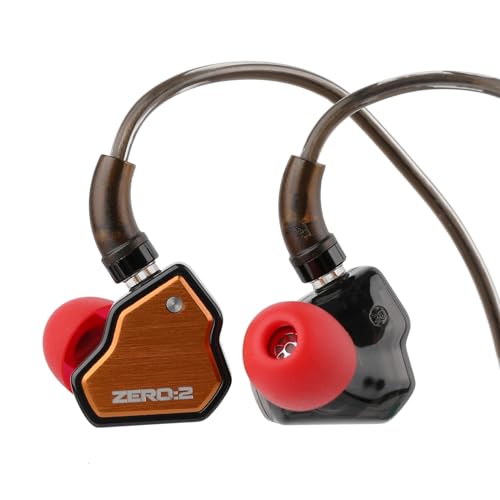
7Hz x Crinacle Zero:2
76% positive of 493 users
Budget gaming pick, but poor cables and polarizing bass.


 Afraid-Bunch6373