damn near every iem or headphone is able to be pushed I believe 14db higher or lower without issues in terms of eq without pushing a driver to far (we are talking about how they respond to frequencies, not total volume)
any modern driver in an iem thats not snakeoil can be retuned to sound like damn near any other iem, the only difference being how clear they are, ill give an example, I had salnotes zeros to test out modern iems, and I had hifiman editions, in terms of tone, they were near identical when I eq'ed them, but the hifi man was just so much clearer it wasn't close.
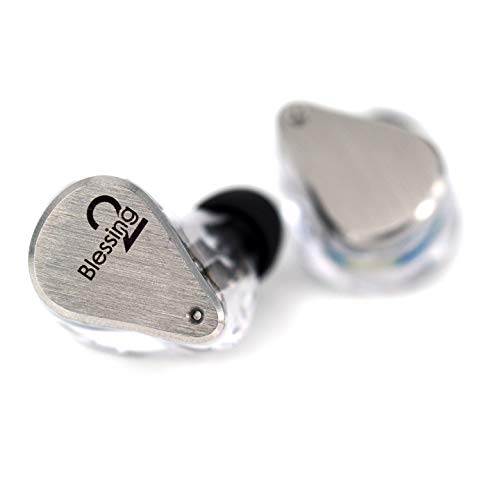
then based off a feeling I got blessing 2's the hifi man had issues where bass would bleed into treble causing a wobble, for reference https://www.youtube.com/watch?v=8b-FEaGJG8Y is what I used to push bass into worst case scenarios, on blessing 2's, that wobble isn't there, this is an absolute worst case scenario but you can hear bass screwing with other frequencies in other songs/games/music, its just not as in your face with that song, megadrive flawless is a good example of song but its very hard to hear.
personally, I would go with truthear pure, just because I know how much stuff costs even at volume prices, and that kz should be impossible to make if they aren't skimping.
For me the point of diminishing returns is the Thieaudio Monarch Mk IV.
Of all the IEMs and Headphones I own it is the only ones I use without EQ.
I have a pair of DCA E3s that I "can" use without EQ, when necessary, and not find deficient, but I prefer a light EQ curve with a bass boost, that really opens them up.
And it is downhill from there. And I have several pair of what many consider "end game". Including HD 800S, HEKU, HEKS, HE6SE, LCD-X, Focal Elex, and others. I pretty much would not use them without EQ.
I also have several pair of IEMs, including the Moondrop Variations, Blessing 2 Dusks (I have also owned the original B2) among others. But I am extremely happy with the Mk IV, since I acquired them. Incredible detail, balanced sound and great bass without EQ. They do require tip rolling and some effort getting just right. And I understand they will not fit everyone's ears (sucks to be them), and I assume that the critics have not taken the time to configure properly or they don't fit their ears. I can do an improper setup with them and achieve the sound they "claim" about them. But just a touch more work, and voila: magic. And once setup you only have to put them on and play music.
My endgame until such time as the Subtonic Storm becomes available to me...
It looks like a fair option with a lot of output for the money and size.
However, the FiiO KA13 has pretty much the same specs for $25 cheaper (along with FiiO build quality and reliability), and the KA15 looks to be a price to performance champ at only $10 more. The reviews (that I have seen thus far) would indicate some issues with the Crinear. But more research should be done before any purchase.
Yes, all of the above would power most over ears adequately, with only power hungry options crying for more (think HE6SE or HD 800S). Maybe not excelling like a monster desktop amp, but certainly enjoyable. I have used less powerful DAC/Amps and had satisfactory performance, with even a DCA Noire (a bit power hungry).
I have the FiiO QX13, which is a great portable option with a desktop mode of almost 1 watt (900 mw). It is a bit larger than other portable "dongles", and a touch expensive ($220 or $240 depending on finish. but comes with its own case and is small enough to use traveling). Other options either have less power (though smaller) or are bulky and expensive (containing a batter to maintain, as well). Over 600 mw with a desktop mode of 900 mw is enough to power all but the most power hungry headphones well enough to enjoy them. So it can act as both a portable and desktop option. I also have the KA5 & KA3.
I do use a (somewhat) pro setup for my desktop (my hobbies include music production, etc.). with an RME ADI2-Pro, Topping A90D and MiniDSP Flex balanced with Neumann studio monitors and sub. Way overkill for your needs, I'd imagine.
I have tried on numerous occasions using a Schiit stack, with my AKG K702 and my Moondrop B2 to see if I can hear the difference. And if I am really concentrating, there are very few moments of transience that are different. Absolutely no practical difference in everyday listening though.
Now, going from 320Kbps MP3 to lossless? Absolutely impossible for me to hear any difference no matter how much I close my eyes and concentrate.
So I actually kinda bought a ton of IEMs to answer this question too. I was trying to find something that works for voiceover, for mixing, for critical editing, and for checking how mics sound in reviews.
If I had to choose under $300, here’s my categories:
* Mixing: Neutral enough to translate well on different setups (HD6xx, speakers, etc.)
* Critical editing: Can it expose bad audio or does it hide flaws?
* Monitoring: How good it is for hearing your own voice accurately.
* Enjoyment: Just how fun it is to listen to.
Letshouer Galileo
Mixing: Excellent
Critical Editing: Excellent
Monitoring: Excellent (voice literally sounds just like me when monitoring)
Enjoyment: Low
Moondrop Blessing 2 / Blessing 3
Mixing: Excellent
Critical Editing: Excellent
Monitoring: Excellent
Enjoyment: Low (pretty harsh, basically MDR-7506s in IEM form)
Zigaat Lush
Mixing: Excellent
Critical Editing: Below average unless you crank the volume on sibilant spots
Monitoring: Excellent
Enjoyment: Good
Etymotic ER2XR / ER4XR
Mixing: Below average (soundstage is too 2D)
Critical Editing: Excellent
Monitoring: Excellent
Enjoyment: Okay
Crinacle Daybreak (surprisingly)
Mixing: Depends—more “Meta” neutral than Etymotic-style
Critical Editing: Excellent (picks up sibilance like crazy, great for catching issues)
Monitoring: Excellent
Enjoyment: High
Xuan NV (big surprise)
Mixing: No, too much bass
Critical Editing: Excellent (vocals are super accurate for both male and female)
Monitoring: Iffy—low impedance can be weird with interfaces like the MOTU M2
Enjoyment: High
Thieaudio Legacy 2
Mixing: Excellent
Critical Editing: Excellent
Monitoring: Excellent
Enjoyment: Decent
Cadenza 4
Mixing: Excellent
Critical Editing: Excellent
Monitoring: Excellent
Enjoyment: Excellent
Orchestra Lite
Mixing: Excellent (surprisingly neutral—not bright like Blessing 2/3, not warm like Dusk or Lush)
Critical Editing: Excellent
Monitoring: Excellent
Enjoyment: Excellent
Basically the Studio4 but more revealing with sibilance instead of smoothing it out.
Hexa
I don’t really recommend it—too many fit issues and inconsistent impressions.
If you do try it, use wide-bore tips (not narrow).
Video explaining why: [https://www.youtube.com/watch?v=9x-T8el9fbs](https://www.youtube.com/watch?v=9x-T8el9fbs)
Hope this helps.
Going to use a grading system:
A, B, C, D, F like in school
A means excellent
B is good
C is average
D is bad
F is absolute fail
**Mixing:**
Going to avoid using the word "neutral" because then every mofo comes in the thread saying, what's neutral. Let's use the word "even-keeled'. Good iems for mixing are generally more even-keeled. If it has way too much bass you'll thin out your mix. If it's way too trebly and bright and shouty you're going to overcompensate. Ideally you want something more even-keeled.
**Enjoyability:**
Subjective. But how enjoyable it is
**Critical Editing:**
This isn't the same as mixing. But it means will it let you know if you have shit audio. If I listen to Kanye's sibilant ass tracks does he sound sibilant on them? If I listen to Lana White Dress is she sibilant on it? She better be. If I watch a DMS video from 6 years ago, does he sound sibilant on it? He better. Because he does. This is important because you need to evaluate your audio and the iem lets you know your audio is shit before thousands of people hear it.
Etymotic ERXR
Enjoyability: C to B to A. Pretty good, depending on who you ask
Critical editing: A+. Very good at letting you know areas of trouble in your audio
Mixing: D. Poor soundstage
Truthear Hexa
Enjoyability: D. I hate it
Critical editing: A+ with wide bore tips
Mixing: C. Imo actually a bit thin on lowend. You'll overcompensate. Also the soundstage on Hexa is kinda eh ngl.
Salnotes Zero Original
Enjoyability: C. I think it's ok. Or mid.
Critical editing: B. Honestly pretty good at letting you know egregious areas. The version 1 is less forgiving with sibilance than 2, so it's better for critical editing. Zero 2 blunts the sibilance out (better for enjoyers; bad for audio engineers)
Mixing: A. pretty neutral imo
Softears Studio 4
Enjoyability: A to A+. Very enjoyable IEM
Critical editing: D. Ironically. It smooths out all sibilance so you won't know sibilance is there. This is why it's so beautiful sounding.
Mixing: A+. Very neutral. I'd even say probably my closest definition of neutral
Moondrop Blessing 2
Enjoyability: D (harsh, shouty, bright, sibilant). Same with Blessing 3.
Critical Editing: A. These are very picky with harshness in vocals. I genuinely think these are the Sony MDR 7506 in iem form.
Mixing: A
Zigaat Lush
Enjoyability: B to A
Critical Editing: C You won't really find problem areas of sibilance. You really really really have to crank it to hear it.
Mixing: A. Pretty even-keeled.
Kiwi Ears Orchestra Lite:
Enjoyability: B to C
Critical Editing: A. Excellent at picking out flaws.
Mixing: A+. Excellent at telling you the whole picture. Excellent for mixing. Very very even-keeled.
If you’re moving from AirPods Pro to IEMs, you’ll get a big jump in sound quality, but it’s a very different experience (no ANC, wires, etc.).
For iPhone + Apple Music (lossless) and a ~$300 budget, I’d suggest starting simple:
Beginner-friendly IEMs that sound noticeably better than AirPods Pro:
• Moondrop Blessing 2 / Blessing 3 – clean, detailed, and very popular for a reason
• ThieAudio Oracle / Hype series – more fun and engaging tuning
• 7Hz Timeless – great clarity with a different (planar) sound style
For DACs on iPhone (very important):
You don’t need anything crazy to start.
• Apple Lightning to 3.5mm dongle (honestly very good)
• If you want an upgrade: FiiO KA1 / KA3 or iBasso DC03 Pro
I’d recommend starting with 1 good IEM + a simple dongle DAC, then upgrading later once you know what sound signature you like.
It’s easy to overspend early in the IEM hobby.
If you want, tell me whether you prefer bass-heavy, neutral, or detailed sound and I can narrow it down further.
Top IEMs on Reddit
1
7Hz
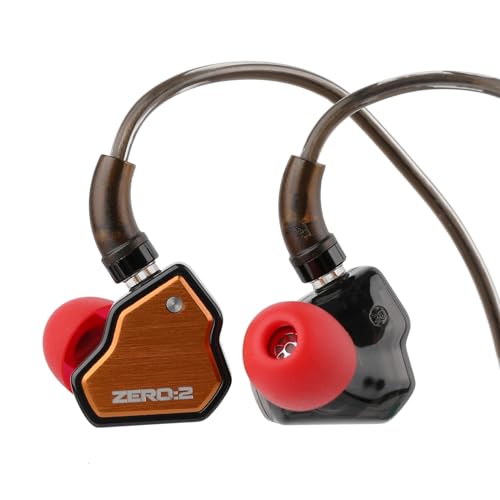
7Hz x Crinacle Zero:2
76% positive of 493 users
Budget gaming pick, but poor cables and polarizing bass.

 alidan