Looking for the one tbh. Currently still digging Hexas most even though having Volume S, Astrals, Pure, Alba, Odyssey and P5+2. Will probably sell Odysseys, Pure, Alba and P5+2 (redundant to Astrals but worse) and try something like Fola/Origin and Dunu Kima 2.
As for why, Hexas are small and light, very comfy, bass is just in the spot quantity, vocals are clear and well presented, somewhat intimate. On busy track they’re not lost and I really like NOT being immersed in the music to the last bite.
(Edit: add “why”)
I don't like the word 'trust' here. But I'll say that there are iem reviewers I'm more in sync with.
I sort of look at reviews sort of like everyone with a map in a forest.
If every damn person says there's a tree next to a lake, there's a 100% likelihood that exists.
But if every reviewer says the birds are in one direction and another, there's definitely some variance.
So here goes:
**JayAudio.** He loves the Zigaat Odyssey v1, Chopin, Truthear Nova, Supermix 4. He loves Hexa and hates Pure. He likes Arcanis. He loves a TON of Simgot iems.
I think his preferences are--> V-shaped and bright. Or Harman.
>!I don't like the Odyssey, Chopin, Supermix 4 or any Harman Iems. I also like Pure more than Hexa. I hate nearly all Simgot iems. Nearly all Simgot iems are super bright, shouty, sibilant and thin with vocals. But hey, that's just me. I also think the Arcanis is ironically bad with vocals, male vocals in particular. That said I hate Harman 2019 iems, imo they make vocals too thin. Also. He called the Supermix 4 "buttery smooth". I assure you it is NOT "buttery smooth"!!!!!!!!<
**Mark (Super Reviews)** \- He likes Hexa. He likes Blessing 3. Ranked it 5 stars. He calls Moondrop LAN an S-tier iem.
I think his preferences are--> Neutral bright. Lean bass.
>!The Blessing 3 isn't a 5 star iem. It's a 2 star iem for me. ;P I like watching his reviews because if he warns about problems with an iem, he's spot on.!<
**Precog.** He leans bright. And expensive. 😃 He values treble a lot. But I can't give a definitive answer because 99% of the iems he's reviewed are above the price of a car. I find that at least with the cheaper iems he managed to review, I agree with him. He has to review more peasant iems. And he needs a shirt.
**Jaytiss.** He ranks Hola, Sivga Que, Etymotic ER2xr as F.
That's all I need to know.
>!To me those iems are not F. I freaking adore the Hola and Sivga Que. So when someone says to me, but Jaytiss reviewed this A, I go..so?! But imo this is important to know.!<
**Zeo Reviews.** He likes everything.>! But you should tread caution with actually buying everything he recommends.!<
**Andy Vault**. He likes everything. >!But imo that's dangerous to a wallet.!<
>!If he was a real estate agent, this is what he'd do.!<
>! If the house was small he'd say 'it's quaint'. If it's a crime scene, he'd say, "It's lively and has character." !<
>!If it's tattered and dirty, 'it's rustic'. !<
>!I legitimately watched his "walkthrough" of Zigaat iems (I already tested all those iems but wanted to hear what he said) and walked away thinking, holy hell, that video told me nothing rofl. !<
**Paul Wasabi.** I find I'm in sync with a lot of his reviews. He never outright says he hates an iem. But you can tell with more subtle things he's doing in his video. If he didn't like the iem he does a ton of eq on it and shows you how he's eqing it. You can tell what he's adding or taking away to know what's wrong with the iem.
**Audio Amigo.** He does an excellent job of describing everything about the iem and I walk away with a good understanding what it'll sound like.>! I'm a bit skeptical now that he's joined the land of the Overseers. (shaking head) We lost a good reviewer 😛 I liked him a lot more when he wasn't owned by Linsoul 😄 !!I also can tell a lot of people who are selling 64 audio iems on Avexchange lost thousands of dollars without them saying they lost thousands of dollars lol!<
**Bangaudio Reviews.** He's another Zeos. He likes everything. >!He's veering towards unreliable.!<
**Akros.** He's too wordy and rambly. Hot take, but I actually use Gemini to summarize his takes because he's all over the place.
PART II
**Prime Audio Reviews**
I like him. He's concise. And he's actually quite honest. I'm pretty calibrated with him. I listen very closely to how he uses the word "lean." If he says "lean" like 7 times on an IEM, I back the fuck off. Because he nailed it 1000% every.single.time. Ie., lean bass, lean mids, lean here. Every single time he calls an iem "lean", he nailed it. I buy it. I hear it. And I think, "Damn. He was right."
There's a certain way he says it. Almost like if you wanted to know about someone and you ask, "Is she cute? or "Is he cute?" and he says, "Well.....(cough)....she's uh....(coughs)...I mean....She's tall."
It's the saying without the saying. And it's VALUABLE!
He's also extremely descriptive and to-the-dot in his reviews. He's, imo, one of the most indispensable reviewers for me. Very few times do I disagree with him on an IEM. He never says it's bad. He says it in a way...where you have to know his lingo.
"Um, well the bass...lacks....authority. Lean. Quite lean......" --> translation: It's bad.
**Passion for Sound**
He's good at telling you about things that are new. He's not the best at telling you what he hates or dislikes. I look at him more like a paper catalog.
**HBB Reviews**
My overall take is that if I were a hip-hop and rap guy, I'd love his channel. Every time I click on one of his videos, I see his gloves and hear some hip-hop song. Problem is, I don't listen to hip-hop. And I don't picture HBB as the kind of guy who listens to Matt Prasty K-pop remixes lol. That said, I love Xuan NV IEM and he tuned that iem.
**Fresh Reviews**
I don't know enough to form an opinion. But he's gaming-focused. So anyone who wants to know about gaming IEMs, I just say go to his channel.
**Practiphile**
I actually like his reviews a lot. Cool cat!
He's entertaining to watch, but he's also pretty clear about what he likes and is good at describing an IEM. I do find his grading confusing at times, ROFL.
He ranks the Cadenza 2 the same grade as the Yu9 Que. And I'm literally bashing my head on the monitor!
But preferences are preferences.
He liked the Celest Pandamon. I liked that.
He liked the Kima 2 and the Pure. I liked those.
He likes the Defiant. I liked that too.
He loved the Misty Blue. I adore that IEM.
He liked the Divine. I liked that too.
He loved the Studio 4, Pilgrim, Astral, Reference, and Volume S (though I returned it because it sounds too much like Pure). I loved those too.
But he also has some outliers. Ie., he loved the Chopin and EA1000, and I didn't like those.
So with him, I view it as maybe 70/30. About 70% of the IEMs he likes, I like. About 30% of the IEMs he likes, I don't.
That's interesting, I've been curious about those for a while. Maybe at some point in the future I'll be able to track down a lightly used pair to see if I get the same effect and if it's a huge jump up from my current best.
I get that sort of effect from the Simgot EA1000 (which we talked about recently). That sort of thing is very recording-dependent though. One that I find is quite good is the Dire Straits live at the Hammersmith Odeon 1983, especially [Tunnel of Love](https://www.youtube.com/watch?v=-3jw0Fjp_fU). Partly for how good the recording of the band is, and also because the crowd sound actually image properly instead of just adding a load of clipped white noise that ruins the recording. Harry Belafonte live at Carnegie Hall is pretty good too, although musically, I'd rather listen to Mark Knopfler.
I also get that same effect to a slightly lesser extent but also with an added "bass blanket" effect and more emphasis on depth/layering in a slightly narrower stage from the Ikko OH300, which is $40. And an even more intimate version from the Letshuoer S08. I used to list the EA1000 and the S08 as my 2 favourite IEMs because of the contrast: the EA1000 is like standing on stage, 2m from the band and the S08 is like being trapped in a cupboard with the band, with the singer 2cm in front of your nose. The OH300 has mostly taken over the #2 spot from the S08 in my rotation, but it doesn't have that same trapped-in-a-cupboard presentation (it's very similar in a lot of ways though).
The thing about imaging/soundstage is that it's mostly faked in production, hence the huge variation between tracks. Live recordings are usually mult-miked rather than binaural, but the positioning is less fictional because it pretty much has to reflect where the musicians actually were on the stage at the time. Especially if they're moving around between different mics.
And then you have things like [Amber Rubarth, Sessions from the 17th Ward](https://www.youtube.com/watch?v=rLgTaL-Q6Ig&list=PL0emVwtw4R9VbtzcZrkMkwXxqPABo9zfE), which is just cheating. It's a fully binaural recording and sounds holographic on just about anything that doesn't have completely whack channel balance, maybe with some slight variation depending on how well that particular headphone/IEM matches your HRTF.
Have you got any good recordings you suggest for that sort of holographic imaging? Anything in particular that stood out on the Andromedas? Especially anything that sounds holographic on them but doesn't on other things? I'm always looking for good soundstage/imaging test tracks, that really show off the good stuff and show up the bad stuff.
Yeah, sorry about that one. I do find it far too bright unless I use Spifit CP-100+ tips, but those bring it down to the right level for me, so that my OG sounds fairly neutral and my 2025 sounds mildly v-shaped.
I guess tip-related fixes don't necessarily translate well from person to person.
But it's likely that you're more treble-sensitive than me too. I don't think I'm the most treble-insensitive person either. I definitely find the S12 Pro and EA500 fatiguing, and I find the Aful Explorer very sibilant, which a lot of people don't seem to notice (probably to do with the amount of 5-6kHz it has relative to the rest of the mids).
Hence, definitely don't go buying an EA1000 at full price, there's clearly a big risk you'll find it much brighter than I do. I'm also using Divinus Velvet tips on mine, which are relatively trebly compared to many tips, so if it's just on the edge there you could almost certainly bring the treble levels down with the right tips. Maybe KB07, Dunu Candy or something like that. Maybe even Final Type E black, but I find they remove so much treble they usually kill a lot of technicalities.
The Simgot metal 1DDs are all very comfortable. You have the EA500LM for a balanced, but somewhat aggressive v-shape, the original EA500 that's very bright and gets fatiguing quickly, but it probably has the biggest wow factor for the price. And the EA1000 might be just in your budget depending on sales/offers and is sort of a more refined EA500 that isn't as bright or fatiguing. The EA1000 is my overall favourite IEM, but the EA500LM is possibly a safer option for more people as it's the bassiest one, and although it also has more treble than the OG EA500, it's more balanced out by the bass and it doesn't sound as bright.
The other notably good 1DDs are the Tanchjim ones, but their ergonomics are terrible. They're small, but have very bad fit stability.
Also the Moondrop Kato, if you can find one, is a great all-rounder 1DD and very comfortable. But it's discontinued. The Kefine Delci is really comfortable, but it's a warm, laid back sort of tuning that's not really competitive with the $100+ stuff when it comes to resolution etc.
If detail is your top priority, you aren't going to beat the EA1000. Also while it doesn't have as much bass as the EA500LM, it has more "kick" to it than any other IEM I've heard, and it is very *realistic* sounding bass, especially for acoustic drums.
QKZ HBB.
Nothing else is tuned quite like it. To give a more expensive set with similar-ish tuning that they sound better than: the Aful Explorer. Although the Explorer is better in a lot of ways (fit is better, resolution is better), vocals sound better on the HBB. Sibilance on the Explorer bothers me, so out of the two, the HBB is the one I'll normally listen to.
Next to better, but quite differently tuned IEMs like the Simgot EA1000, they still hold their own as something completely different. They make a good complementary set as part of a collection. Whereas I have a bunch of other cheap IEMs that I rarely actually listen to, because they don't do anything unique.
Another cheap pair that I do listen to a lot is the Ikko OH300, which has largely replaced the Letshuoer S08 for if I'm in the mood to listen to something like that. The S08 is pretty unique and I wouldn't say the OH300 is flat out better, but it does have better bass. The OH300 sits in a similar category to the HBB and they have quite similar-sounding bass. But whereas the HBB is quite relaxed, with pushed back vocals, the OH300 is quite vocal-forward. The OH300 also has exceptional imaging/layering, which is the other reason why it competes with the S08. The S08 is also exceptional in that regard, but incredibly tip-sensitive, and the S08 has a really tiny soundstage (which is a good thing, in the sense that it's very unique).
Simgot EA1000, mostly. The tonal balance isn't quite neutral though, it has a slight cool tilt to the midrange that I sometimes notice. Some would call them bright, but they don't really sound bright to me, so much as very unforgiving about bright-mastered tracks. For the most part they just sound correct, as long as the track is well mastered.
I think someone who indexes specifically for vocal timbre, might be more bothered by that cool tilt than I am, especially where it's noticeable on male vocals. But I tend to index for things like complex tracks with lots of instruments, being able to still pick them all out, and each of them still having realistic timbre, so across the whole frequency range.
I would say the Thieaudio Legacy 2 sounds the more neutral to me tonally, which can be better at times, because sometimes that cool tilt won't sound as natural. But most of the time, the EA1000 is the one that makes things, especially live recordings, sound more like they're actually real, rather than like I'm listening through transducers. The L2 is good but it doesn't quite have that effect.
I was listening to the Truthear Pure recently and while it's fairly neutral across a lot of the FR (except the midbass/low mids), I would not say it sounds natural at all. It's far too warm, so it's very obvious you're listening through a device of some sort, that's colouring the sound. I have the Hexa as well and it just sounds pretty wonky, mainly because the treble is so peaky, which causes things like instruments wandering around on the stage. And also the lack of bass.
There's one thing that the EA1000 does that I have not yet found any other headphone or IEM that can match, which is how realistically it renders drums, especially kick drums. I'm not sure what it is, but I have a theory it's because the passive radiator simulates the time-domain response of speakers in a room (which would add natural room reverb, that IEMs normally don't do, because they are supposed to be minimum phase). The closest I've heard is the Hifiman Edition XS, which can reproduce most of the decay in the sub-bass, but it doesn't have the same initial transient kick. Real drums at a live gig are really fucking loud. They should sound loud. For the most part, in recordings, they don't, but on the EA1000, they do. But not in a bloated, distorted, beats-by-dre sort of way. In a way that that just makes drums sound like real drums.
I wouldn't say I've found one like that yet, but it's true that there's very little correlation between price and performance, at least in terms of what you like or don't like. Technical performance does tend to increase a bit with price, but also caps out well before you get into TotL stuff. Ironically, if you're very skilled with EQ and have the patience to dial everything in perfectly, some of the best IEMs to use as EQ platforms are some of the cheapest (Kiwi Ears Cadenza / KBear KB01 for instance).
In terms of my collection, I probably spend more time listening to the QKZ HBB than any other single IEM and it's only $15. It's not the most technical IEM out there, but it's tuned to its limitations and does what it does really well, which is to be very warm-yet-natural sounding and easy to listen to for a long time.
My most expensive IEM so far, the Variations, is one that I almost never listen to. Even though it's technically excellent, the tuning isn't my favourite (tucked midbass) and it's not very comfortable. My favourite IEM overall is the Simgot EA1000 which falls in the middle price-wise, but I wouldn't call it endgame because it's not perfect. It does however do some things other IEMs cannot do (at least none that I've heard), and at least keeps up with others in all areas.
Comfort is another big, and often overlooked factor. And the interesting thing there is no only is there no correlation with price, if anything there's an inverse correlation. With the exception of Sennheiser, almost all IEMs get less comfortable as they go up in price, and the cheapest ones are the most comfortable because they're small 1DDs.
I expect that when I do find something I would call "endgame", it'll probably be in the ~$300 price range, technically good, comfortable and stable in the ear, with a tuning that I just happen to like. It's entirely possible it will be a $50 1DD though because there's no technical reason why a well-tuned 1DD can't outperform kilobuck IEMs. Sennheiser's flagship kilobuck IEMs *are* 1DDs, they just put more effort than usual into tuning via 3D printing. There are already 1DDs around $50 with among the best drivers you can get, so cost of parts isn't the issue. It's more a question of when/if the market will start releasing such well-tuned IEMs at that price point. Most IEM pricing doesn't reflect the BOM cost at all, and may or may not reflect R&D investment.
I also expect the EA1000 will be kept around for a long time because if you remove the imperfections, you most likely also remove what makes it so good. I expect I'll find something that I'll eventually like as much as the HBB but is better in every way. But so far I haven't, so there's a good chance that will stick around for a long time as well.
If I had to get rid of my entire IEM collection and keep just one, it would, perhaps counter-intuitively, not be the EA1000. It would be the Moondrop Kato, which is actually slightly cheaper (but now discontinued). The thing about the Kato is it's just a really good all-rounder, that works for all genres of music, both indoors and outside where it's noisy, and has no issues with being listened to all day. The EA1000 easily beats it technically, but the Kato is just a bit warmer and overall I prefer a slightly warm tilt like the Kato to a cool tilt like the EA1000. I can still listen to the EA1000 all day too, but if you have a badly mastered track, the EA1000 *will not hide that fact at all*, whereas the Kato will lie to you a bit and just make it sound good.
*In theory* you can fix anything with EQ, but in practice you can't. Very fine-grained FR features will be almost if not completely impossible to correct with EQ because you can't rely on graphs and have to do it by ear, which is increasingly difficult to do the smaller the features are. The IEM is highly modal then it will be more reactive to whatever ear (or coupler) it's inserted into so ideally you want less of that. You also ideally want the IEM to be as well vented as possible for comfort reasons, but that can affect things like sub-bass extension, especially when BAs are being used to produce those frequencies.
The other factor is pure extension and the absence of nulls. If the drivers can't generate sound past 10kHz, no amount of EQ is going to add those frequencies back in, at best it's going to either do nothing or add distortion. Most IEMs don't actually extend all the way to 20kHz, even though they often make nonsensical claims like 40kHz (which nobody could hear even if it were true). It's always possible to EQ down, but again if the response is very jaggy then it might not be possible to get it where you want it. Nulls are where you get certain frequencies cancelling each other out because of resonances, reflections, or phase issues in multi-driver IEMs. That will result in a dip in the FR that doesn't respond if you try to increase it with EQ, although if you do try, you risk accidentally introducing a peak right next to where you think the dip is.
Here's a good video about how trying to EQ away narrow features can often end up making things sound worse, which is one of the main reasons why AutoEQ often doesn't work as well as expected:
/r/headphones/comments/1ivy4u7/how_measurement_error_hurts_eq/
The general rule of thumb aside from "sounds good to me" is you want the FR to be as smooth as possible, and change as little as possible between different couplers. That way you are really only making HRTF accommodations & preference adjustments rather than trying to "fix" things. One issue about smooth graphs is that the ones you usually see, e.g., on squig.link, are smoothed (usually 1/3 octave I believe), which means there might be features you can't see. Like a slight dip in the FR could actually be a much narrower null, but when averaged out, it looks smoother than it is.
I don't. I'm planning to experiment with that at some point and see if tilting the midrange warmer affects anything or not. Haven't had time yet though. I don't feel like it *needs* EQ and to me it sounds cool-tilted but not bright per se, or at least not excessively so. I think anyone who is more treble sensitive might find it bright though.
I'm also kind of curious to know if the passive radiator introduces any time-domain effects (which are separate to FR). It's one of the reasons I bought my own coupler, but haven't got a measurement process sorted out yet.
This is a matter of some debate, but if you know enough about EQ, you can. The tricky part is knowing enough about EQ in the first place, and having a good enough ear to make those kinds of adjustments. Another way of framing it is: can you fix those things in a *practical* sense?
But it's easy to prove the inverse, because you can absolutely make them worse. And all you're doing is changing the frequency response. So there isn't a magical additional property that they arise from, assuming you're not making big enough changes to push the drivers into audible distortion (which is unlikely on most IEMs unless you're doing crazy things).
Soundstage, details and separation are not physically separate phenomena outside of frequency response, but also frequency response at the eardrum and frequency response on a graph are not the same thing, which is a big part of why confusion arises around this topic. It being possible to do something in theory, and it being practical or easy to do it, are not the same thing. Which is why both sides of the argument tend to end up talking past each other.
The crossover just determines which frequencies go to which driver(s), which in turn affects the final frequency response along with other things like acoustic tuning. Badly designed crossovers can cause things like nulls or other phase errors, which I mentioned earlier, can't be EQ'd away. This is why cheap hybrid IEMs are often bad, although the cost of a reasonably well-implemented hybrid has come down a lot in the last few years.
That's one of the reasons a 1DD is typically better for EQ than most multi-driver IEMs, because there is no crossover to go wrong (and no possibility of phase errors between the drivers). Doesn't necessarily mean 1DDs are automatically better either. In the end, it's the end result that matters, which is almost entirely about the frequency response. That, alongside HpTF, distortion and time-dependent characteristics, although the last 2 are pretty much always below the audible threshold in IEMs, so there's no point in worrying about them most of the time.
Having said that last thing, distortion is one of those characteristics that can't be controlled with EQ, so if it is audible, then it will make a difference. Crinacle actually put some thought into this in the design of the Daybreak, on the basis of "*if*you can hear it, it will sound better like this". He had said he intended to talk about it in the release video, but in the end it's only mentioned in passing, blink-and-you'll miss it sort of thing (I had to re-watch the video to see if it was mentioned at all). The thing about harmonic distortion is that even-order distortion tends to sound good, and odd-order distortion sounds bad. This contributes to why a lot of people like tube amps even though they're objectively bad. They add "good" distortion. Low levels of distortion that don't lead to clipping are typically referred to as "saturation" instead of distortion and are used a lot in mixing & mastering to make things sound fuller. That's another effect that can be added with DSP (not EQ but using the same sort of processing). But you can't *remove* distortion if it's being added by the IEM itself.
As a generalism, distortion is always so low that it's not contributing anything to the sound anyway, but that may not have been the case 20 years ago, which may be where some of the myths about technicalities, and *physically* not being able to EQ them (as opposed to it just requiring a lot of skill), came from.
Yes, it's still good. It's definitely bassy, and I would say the best tuned of the bassy IEMs in that price range (and actually better than a lot of more expensive stuff as well). It's very warm rather than v-shaped, so it's quite laid back at low volumes, but it also scales to very high volume, with a ton of bass (just don't go crazy and damage your hearing).
It's very different to the Gate tuning so it kind of depends if that's what you're looking for or not.
It can take a little while to get used to the bass levels on the HBB, so it can sound a bit muddy at first, but it stops sounding muddy once you get used to it. [Dan's "most important video"](https://www.youtube.com/watch?v=swejkFpZfBM) is about that actually. It's well worth watching the whole thing and listening to the sound demos. It's ostensibly a review, but it's really a detailed study of brain burn-in.
Interestingly, the narrowed soundstage was one of the reasons I returned the LM and kept my original EA500. I've since upgraded to the EA1000, which has all the soundstage of the EA500 but without the harsh fatiguing treble. I've been thinking about getting another LM at some point, if it goes on sale at a low enough price, to experiment with tuning mods though, as it has a lot of potential. You could try experimenting with the tuning nozzles and different tuning foams. I highly recommend watching the Paul Wasabii review of the LM on YT, because his experience with it pretty exactly matches mine and covers a lot of things most other reviews gloss over. He talks a bit about modding the tuning nozzles. There's also an EA500 tuning kit that comes with another spare nozzle and a selection of tuning foams, but it's been sold out for ages and possibly discontinued - you have a spare nozzle that comes with the LM in the box though, so you could keep the one you like the most as-is, and mod the other one.
You could also potentially widen the soundstage with EQ. The usual thing is to add a slight reduction around 1-2kHz and possibly increase the treble a bit, and add a narrower reduction around 10kHz. You may need to experiment a bit until you find what sounds right to your ears, as everyone's HRTF is different.
The EA1000 is the best IEM for metal in my collection, and the EA500 is sort of a mini EA1000 so it gets pretty close. The LM is similar-ish, but the bassier tuning just messes a bit with the soundstage. It still has good *imaging*, but the soundstage is a bit more like a sphere around your head rather than being wide and open like the EA500/EA1000. The thing about these is that they have really fast & resolving drivers for DDs, so they're able to keep up with the transients in metal and other busy/distorted music better than most things, other than maybe some planars (but they often have similar treble-fatigue issues as the EA500). If you want to try going the planar route, I'd recommend checking out one of the new Crinacle ones: the 7Hz Divine/Diablo. The Diablo is the basshead version and I've been listening to that a bit, but IMO it needs EQ not to sound muddy. All reviews of the Diablo say it has a much better stock tuning, but part of the reason I decided to try the Diablo is that it should be easy to EQ one to the other (in theory, one filter) and the Diablo has a smaller nozzle, so will be more comfortable. Also I don't like the mirror finish on the Divine.
One thing I'd add about the EA1000, if it's in your budget, is that nothing renders kick drums quite like it. The EA500 has a similar tuning, but aside from the treble refinement, the other big difference is the bass. Drums sound incredibly realistic on the EA1000 in a way I haven't heard on any other IEM or over-ear headphone. Neither version of the 500 can do it either. The reason I like the EA1000 so much for metal is nothing else has that same combination of incisiveness in the mids & treble, along with that powerful kick to the drums. It's not a basshead style tuning though, it doesn't have loads of extra sub-bass (the LM is much bassier overall), it's just a subtle boost in the midbass that adds a bit on top of the usual "slam" you get from a good DD (which is something you won't get from any planar). It might be the passive radiator that does it, but IDK for sure. I plan to sit down at some point and see if I can replicate it with EQ on another IEM, but haven't had time yet.
Simgot EA500 (the original silver one, not the LM) or EA1000 depending on budget. The EA500 actually sounds slightly wider, but it can get fatiguing because it's pretty bright. It actually sounds wider than most of my flatheads, at least to me - and it's pretty common for people to point out that these sound wider than usual, so I think it'll translate to most people. Bear in mind that soundstage in IEMs is very, very psychoacoustic and not everyone experiences it the same, so YMMV. It's also 100% based on frequency response, so in theory it's something you can adjust with EQ.
If you want something with a slightly safer, neutral tuning that still sounds quite wide then the Thieaudio Legacy 2 is surprisingly open sounding, but not quite at the beats-most-flatheads level.
I also think you can achieve way better sound with budget ones you just have to know your tuning. My kutens sound better than airpod pro 2’s. My explorers sound waaaay better and my aethers and tea pros are in a completely different league. So i think its achievable with budget ones. You also have to appreciate the whole sound spectrum. Some active listening when first trying iems not just passive listening.
Top IEMs on Reddit
1
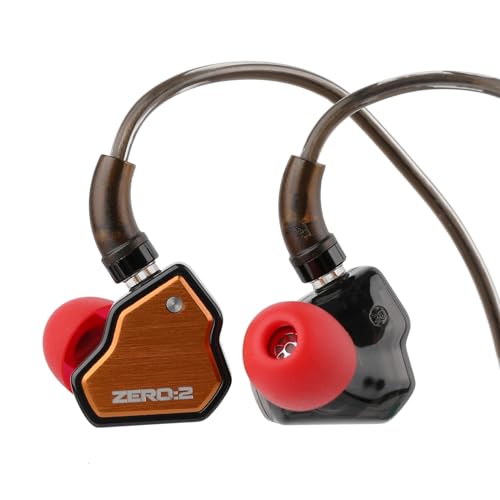
7Hz
7Hz x Crinacle Zero:2
76% positive of 493 users
Budget gaming pick, but poor cables and polarizing bass.


 arnavsmit95