Two possibilities : you find Supermix5 at a very good price. These are the ones I have which provide most basses and sub basses with the BC driver.
I think my second choice would be Waners 2 Red Lion.
Honestly, the Supermix5. The combination of drivers and the tuning is insane. The bc is finally making my throat vibe! Maybe not as detailed as Top Pro but waaaaay more fun!
Hard disagree on the “ iems aren’t specifically tuned for gaming “ they make iems that are catered towards gamers like the simgot super mix 5, simgot eg280 , simgot em6l & there’s others I’m missing.
**Hello community!**
The test subject for today is the **Simgot SuperMix 5**. ***You can find the full review here:***
[Personal Blog](https://hifijuegos.blogspot.com/p/simgot-supermix-5-experiencia.html) (Translation widget available in all languages)
[Head-fi](https://www.head-fi.org/showcase/authors/hifi-juegos.609987/reviews)
**Pros:**
\-Technical capabilities.
\-Speed and technique of the bass.
\-Extreme cleanliness across the entire range.
\-Synergy between different drivers.
\-Highly detailed and energetic upper region.
\-Prominence of the mids.
\-Agile and decisive transients.
**Cons:**
\-Very low male voices somewhat thin.
\-Stock ear tips are not useful.
\-Simgot needs to improve the cables.
\-It may not fit well in your concha and ear canal.
**Technical aspects:**
\-Multidriver configuration 1BC+1DD+2BA+1MP.
\-Impedance 19 ohms.
\-Sensitivity 120 dB.
\-Response 20Hz-20kHz.
**Pairing and ear tip change:**
The stock ear tips do not allow the BC driver to work properly, causing thinner bass and sharper, more elevated treble, which results in an overly analytical sound.
With Dunu Candy tips I found a better balance, adding more presence in the low end and better control in the highs.
Liquid silicone tips such as Dunu SS and Nicehck C04 make the BC driver unleash its full potential, delivering very strong sub-bass and impact, although with some loss of detail.
I got the best results using neutral sources with high gain.
***For my tests I used Dunu Candy for music, Nicehck C04 for single-player games, and stock tips for multiplayer.***
**Sound Signature:**
The Supermix 5 follows a neutral-bright signature focused on clarity, separation, and texture rather than warmth.
* The sub-bass is controlled and well extended, but not dominant. The bass is fast and well defined, with good punch but limited weight.
* The low mids are slightly recessed, which keeps the sound clean but reduces body.
* The mids are clear and slightly forward, making instruments and vocals easy to follow.
* The upper mids provide energy and presence without losing detail.
* The treble is airy, extended, and detailed, though it can be fatiguing for sensitive listeners.
* Vocals are clean and well defined: very deep male voices sound a bit light, while female vocals are bright and airy and can occasionally approach sibilance.
* The soundstage is wide and tall, though not especially deep.
* Imaging is extremely precise and is one of its strongest points.
* Layering is well organized even in dense tracks.
* Detail retrieval is very high, revealing fine textures and micro-details without sounding artificial.
**Single-player video games:**
I got a very cinematic experience thanks to the clarity and separation.
* Explosions and effects are fast and well defined rather than heavy.
* Dialogues remain clear even in busy scenes.
* Environmental sounds are highly detailed, improving immersion, although the presentation feels slightly colder than with warmer IEMs.
* Layer separation keeps music, effects, and voices distinct.
* The stage feels wide and natural.
* Sibilance is mostly under control.
* Positioning is extremely accurate, which greatly enhances immersion and spatial awareness.
**Competitive multiplayer video games:**
Instead of a typical bass-boosted gaming sound, these IEMs focus on clarity and spatial order. The soundstage is wide and tall, making maps feel open.
* In CS2, footsteps and small sounds are well placed, making flanks easier to detect.
* In Apex, even chaotic scenes stay readable thanks to excellent layering.
* In Warzone, the battlefield feels organized, although distant low-frequency cues are weaker than on bass-heavy IEMs.
* Battlefield 6 benefits from the wide, airy, and precise presentation.
They are not “wallhack” IEMs, but their positional accuracy, space, and control give me a real advantage.
**Final conclusions and personal assessment:**
The biggest weakness is the accessories, which do not match the sound quality. While enthusiasts can easily fix this with better cables and tips, average users might not.
However, changing ear tips revealed how incredibly versatile this set is: I can get an analytical sound, a balanced tuning, or a bass-focused signature just by swapping tips. That level of adaptability is rare below 350 dollars.
The Supermix 5 works well for all kinds of music and excels in both single-player and multiplayer gaming, with fast transients, impactful bass, and energetic treble.
Once properly tuned, it becomes one of my top recommendations, and the stock ear tip issue actually helped me realize just how high this IEM ranks for me.
**Disclaimer:**
This set of monitors was sent by **Simgot**. I sincerely appreciate the opportunity to test one of their products at no cost and that no conditions were imposed when making this analysis.
Despite this, my priority is to be as impartial as possible within the subjectivity involved in analyzing an audio product. My opinion belongs only to me and is developed based on the perception of my ears. If yours is different, it is equally valid. Please, feel free to share it.
[More reviews on my personal blog.](https://hifijuegos.blogspot.com)
**My sources:**
\-FiiO K11 for music and video games on the main PC.
\-FiiO KA13 while working.
\-FiiO BTA30 Pro + FiiO BTR13 for LDAC wireless listening at home.
\-FiiO BTR13 + FiiO BT11 + iPhone 16 Pro Max for wireless listening on the street.
\-FiiO KA11.
\-FiiO JA11.
\-BQEYZ Lin.
\-Shanling M0 Pro.
\-Amazon Music Ultimate.
\-Local FLAC and MP3 files.
**Hello community!**
The test subject for today is the **Simgot SuperMix 5**. ***You can find the full review here:***
[Personal Blog](https://hifijuegos.blogspot.com/p/simgot-supermix-5-experiencia.html) (Translation widget available in all languages)
[Head-fi](https://www.head-fi.org/showcase/authors/hifi-juegos.609987/reviews)
**Pros:**
\-Technical capabilities.
\-Speed and technique of the bass.
\-Extreme cleanliness across the entire range.
\-Synergy between different drivers.
\-Highly detailed and energetic upper region.
\-Prominence of the mids.
\-Agile and decisive transients.
**Cons:**
\-Very low male voices somewhat thin.
\-Stock ear tips are not useful.
\-Simgot needs to improve the cables.
\-It may not fit well in your concha and ear canal.
**Technical aspects:**
\-Multidriver configuration 1BC+1DD+2BA+1MP.
\-Impedance 19 ohms.
\-Sensitivity 120 dB.
\-Response 20Hz-20kHz.
**Pairing and ear tip change:**
The stock ear tips do not allow the BC driver to work properly, causing thinner bass and sharper, more elevated treble, which results in an overly analytical sound.
With Dunu Candy tips I found a better balance, adding more presence in the low end and better control in the highs.
Liquid silicone tips such as Dunu SS and Nicehck C04 make the BC driver unleash its full potential, delivering very strong sub-bass and impact, although with some loss of detail.
I got the best results using neutral sources with high gain.
***For my tests I used Dunu Candy for music, Nicehck C04 for single-player games, and stock tips for multiplayer.***
**Sound Signature:**
The Supermix 5 follows a neutral-bright signature focused on clarity, separation, and texture rather than warmth.
* The sub-bass is controlled and well extended, but not dominant. The bass is fast and well defined, with good punch but limited weight.
* The low mids are slightly recessed, which keeps the sound clean but reduces body.
* The mids are clear and slightly forward, making instruments and vocals easy to follow.
* The upper mids provide energy and presence without losing detail.
* The treble is airy, extended, and detailed, though it can be fatiguing for sensitive listeners.
* Vocals are clean and well defined: very deep male voices sound a bit light, while female vocals are bright and airy and can occasionally approach sibilance.
* The soundstage is wide and tall, though not especially deep.
* Imaging is extremely precise and is one of its strongest points.
* Layering is well organized even in dense tracks.
* Detail retrieval is very high, revealing fine textures and micro-details without sounding artificial.
**Single-player video games:**
I got a very cinematic experience thanks to the clarity and separation.
* Explosions and effects are fast and well defined rather than heavy.
* Dialogues remain clear even in busy scenes.
* Environmental sounds are highly detailed, improving immersion, although the presentation feels slightly colder than with warmer IEMs.
* Layer separation keeps music, effects, and voices distinct.
* The stage feels wide and natural.
* Sibilance is mostly under control.
* Positioning is extremely accurate, which greatly enhances immersion and spatial awareness.
**Competitive multiplayer video games:**
Instead of a typical bass-boosted gaming sound, these IEMs focus on clarity and spatial order. The soundstage is wide and tall, making maps feel open.
* In CS2, footsteps and small sounds are well placed, making flanks easier to detect.
* In Apex, even chaotic scenes stay readable thanks to excellent layering.
* In Warzone, the battlefield feels organized, although distant low-frequency cues are weaker than on bass-heavy IEMs.
* Battlefield 6 benefits from the wide, airy, and precise presentation.
They are not “wallhack” IEMs, but their positional accuracy, space, and control give me a real advantage.
**Final conclusions and personal assessment:**
The biggest weakness is the accessories, which do not match the sound quality. While enthusiasts can easily fix this with better cables and tips, average users might not.
However, changing ear tips revealed how incredibly versatile this set is: I can get an analytical sound, a balanced tuning, or a bass-focused signature just by swapping tips. That level of adaptability is rare below 350 dollars.
The Supermix 5 works well for all kinds of music and excels in both single-player and multiplayer gaming, with fast transients, impactful bass, and energetic treble.
Once properly tuned, it becomes one of my top recommendations, and the stock ear tip issue actually helped me realize just how high this IEM ranks for me.
**Disclaimer:**
This set of monitors was sent by **Simgot**. I sincerely appreciate the opportunity to test one of their products at no cost and that no conditions were imposed when making this analysis.
Despite this, my priority is to be as impartial as possible within the subjectivity involved in analyzing an audio product. My opinion belongs only to me and is developed based on the perception of my ears. If yours is different, it is equally valid. Please, feel free to share it.
[More reviews on my personal blog.](https://hifijuegos.blogspot.com)
**My sources:**
\-FiiO K11 for music and video games on the main PC.
\-FiiO KA13 while working.
\-FiiO BTA30 Pro + FiiO BTR13 for LDAC wireless listening at home.
\-FiiO BTR13 + FiiO BT11 + iPhone 16 Pro Max for wireless listening on the street.
\-FiiO KA11.
\-FiiO JA11.
\-BQEYZ Lin.
\-Shanling M0 Pro.
\-Amazon Music Ultimate.
\-Local FLAC and MP3 files.
**Hello Community!**
Today’s test subject is the **Simgot SuperMix 4**, released in 2024. Let’s get to know its performance in depth.
**WARNING!** Lots of words.
**Price:** 150€-170$
[Purchase link](https://www.linsoul.com/products/simgot-supermix-4)
**Pros:**
\-The different drivers work together in an organic way.
\-Scales very well with amplification.
\-Impeccable sound separation.
\-The vocals are a delight.
\-Deep, wide and very clean sub-bass.
\-The upper range is very open, detailed and lively.
**Cons:**
\-The placement of elements is not the most precise I have found in this range.
\-Correct soundstage, but more could be expected.
\-The mid-bass punch does not have much strength.
**Introduction:**
The Simgot SuperMix 4 has become one of those IEMs that constantly appears in conversations among portable audio enthusiasts. From online forums and other communities to videos from specialized content creators, its name usually comes up when talking about interesting models within its category.
Many users highlight the curiosity generated when trying it for the first time and comparing impressions with other listeners. Over time, it has gained a certain reputation among those who enjoy exploring different earphones and discovering new proposals within the world of personal audio.
Today, it is once again in the spotlight due to the recent launch of the SuperMix 5.
**Accessories:**
\-Two shells.
\-A set of ear tips sizes SML.
\-Cable with 0.78mm terminations and 3.5mm connection.
\-Storage and transport case.
\-User manual.
**Comfort, design and build:**
The Simgot SuperMix 4 presents a design that combines a modern and sober aesthetic with a shape designed for everyday use. Its shells have a relatively compact size and an ergonomic shape that allows them to adapt well to the anatomy of the ear, which facilitates a stable and comfortable fit. In this, the ear tips included in the set play a role, which are sufficient to provide that feeling of comfort.
Thanks to its light weight and the rounded edges of the shell, I was able to use it during long listening periods both in music and in videogames without generating too much pressure or fatigue.
Regarding the construction, this set offers a general feeling of solidity despite its lightness. The combination of molded resin and metal pieces allows it to maintain a good balance between durability and comfort. In addition, the detachable cable feels resistant and slides well over clothing but be careful: it tends to adopt uncomfortable shapes if we do not store it properly.
**Technical aspects:**
\-Configuration of 1DD+1BA+1LN+1PZT.
\-Impedance of 7.2 Ohms.
\-Sensitivity of 120 dB.
\-Response 20hz-20khz.
**Pairing for music tests:**
\-Neutral and warm/neutral source.
\-Amplification in high.
\-Stock ear tips.
\-Stock 3.5mm cable.
**Sound signature:**
The sound signature of the SuperMix 4 I perceive as a balanced profile with a U-shaped tendency. It has sub-bass with good depth, fairly clear mids and a slight push in the upper-mids that makes vocals and instruments stand out. The treble is well extended and provides air. In general it sounds clean, dynamic and with quite a lot of energy.
***The low range*** of the SuperMix 4 is something that caught my attention from the first listens. It is not an exaggerated bass nor designed for bassheads, but it does have a fairly well measured presence that gives depth to the music without muddying the rest of the spectrum. What stands out the most is that the sub-bass has quite a bit of prominence. When a song really drops in frequency, that deep rumble appears that is felt more than heard, something I enjoyed a lot in electronic music, hip-hop or soundtracks.
The mid-bass on the other hand is a bit more restrained. The punch of the kick drum or the electric bass is perceived clean and defined, but not especially thick. Personally I believe that this tuning decision helps a lot to maintain clarity in the mix, because it prevents the bass from getting into the midrange and muddying voices or instruments.
It also seems to me that the bass has quite good speed. It does not feel slow or blurry when songs have fast rhythms or complex bass lines. The notes are well distinguished from each other and the decay is relatively quick, which makes everything sound quite controlled.
That said, there are moments when the mid-bass may seem a bit thin if you come from IEMs with warmer or more powerful bass. In certain genres such as rock or metal it may lack a bit of body. Even so, in general it seems to me a very well balanced bass that prioritizes cleanliness and definition before pure quantity.
***The midrange*** of the SuperMix 4 seems quite interesting to me because it tries to balance clarity with musicality. In general I feel it quite clean and relatively neutral, although with a certain inclination towards the upper mids. This makes many things in the mix stand out quite easily.
The lower mids have some body, but I would not say they are especially warm. Instruments such as rhythm guitars or low pianos sound clear, although sometimes they can feel a bit lighter than you would expect if you are used to IEMs with a warmer or more analog profile.
Where the tuning is really noticeable is in the upper mids. There is quite an evident elevation in that area that pushes vocals and the main instruments forward. This makes the music feel very clear and makes vocals stand out quite a lot within the mix.
Something I like a lot is that the separation within the midrange is quite good. Even in songs with many instruments at the same time, I can normally distinguish each element well without everything turning into a sonic mass.
That said, that focus on clarity can also make the sound feel a bit thinner compared to warmer IEMs. It is not something that bothers me too much, but it is a characteristic that is quite noticeable depending on the type of music you listen to.
***The treble*** of the SuperMix 4 seems quite well resolved to me for its price range. In general I feel it clear, extended and with quite a lot of air, but without becoming aggressive most of the time for me.
The lower treble area provides quite a lot of definition to elements such as hi-hats, cymbals or distorted guitars. The attack of these instruments is perceived quite clean, which contributes a lot to the general sensation of detail.
Higher up in frequency, the IEM has quite good extension. This makes the music have a sensation of openness and space that is quite pleasant. It does not feel closed or dull, something I appreciate quite a lot because it gives more life to the recordings.
I also notice that there is a certain brightness in the upper part that adds sparkle to the sound. This can make some small details stand out more in the mix, which contributes to the sensation of resolution.
That said, depending on the volume or the recording, the treble can feel a bit intense for people sensitive to that area. Personally I do not find it problematic, but I do think it is an IEM that prioritizes clarity before absolute smoothness.
Regarding ***vocals***, I think the SuperMix 4 handles them quite well in general. Deep male voices have reasonable body, although not especially warm. Normal male voices sound clear and quite defined. Where they stand out the most is in female vocals, which thanks to the elevated upper mids are heard very present, bright and quite forward in the mix
***The imaging*** seems quite competent to me for its price. It is relatively easy to locate instruments to the left and right and follow different sounds within the mix. I would not say it is ultra precise, but it is sufficiently clear for a good experience.
***The soundstage*** of the SuperMix 4 feels moderately wide to me. It is not one of those IEMs that creates a gigantic stage, but it does not feel claustrophobic either. There is quite a pleasant width and some depth, which allows the instruments to have a certain space between them. In general the stage feels quite natural, although in some songs it can feel a bit centered.
***The layering*** seems to me one of the strong points of the SuperMix 4 within its range. When a song has several layers of instruments, I can normally distinguish them quite well. There is not always super deep separation between them, but the mix remains organized even in complex passages.
***Detail retrieval*** is quite good for the price. The IEM manages to extract small nuances in the recordings without the sound becoming too analytical or fatiguing. Many background details, instrument textures and small variations in voices are perceived quite easily.
**Single player videogames:**
Always looking for the most cinematic experience possible, tested in narrative and intensive action titles. [Check my blog to see the specific games](https://hifijuegos.blogspot.com/p/como-analizo-el-audio.html) and the conditions of audio analysis in videogames. Source used FiiO K11 with filter nº3 (warm/neutral) stock ear tips and gain on high.
In action titles with this set, the general sensation is quite intense and dynamic. Explosions, gunshots and hits have good weight thanks to the sub-bass, which provides that small rumble that makes combat moments feel more impactful. It is not an exaggerated bass, but it is present enough to give strength to chaotic scenes without the sound becoming messy. In addition, the bass responds quickly, so even when a thousand things are happening on screen at the same time, the effects remain relatively clear and do not mix into a confusing sonic mass.
Dialogues are also heard quite well within the game. Voices usually remain centered and slightly forward, which makes it easier to follow conversations during cinematics or narrative moments without the music or effects covering them. Female voices tend to stand out a little more due to the tuning of the IEM, while male voices remain clear and defined, something that helps a lot when the game has a lot of narrative or characters talking while the action unfolds.
In terms of immersion, I think the SuperMix 4 does a good job capturing those small environmental sounds that often go unnoticed but help build the game world. Details such as wind, water, distant echoes, footsteps on different surfaces or environmental noises appear with quite a lot of clarity. This makes the scenarios feel more alive and believable, because there are constantly small sound elements around that enrich the experience.
It also seems to me that the separation of layers works quite well in games. When there is music, effects, voices and ambience playing at the same time, I can normally distinguish each thing without too much difficulty. Everything does not pile up in the center, which helps the game mix remain organized even in intense moments.
The soundstage is not gigantic, but it is wide enough so that environments do not feel closed. There is quite a pleasant lateral sensation and some depth, which contributes to the game world having some space around the player.
Sibilance, on the other hand, is quite controlled. Some bright effects such as metals, sparks or certain high sounds may stand out a bit more, but in general they do not become annoying or fatiguing during long gaming sessions.
Finally, positioning works quite well. It is relatively easy to locate sounds around the character, such as footsteps, gunshots or enemies moving through the environment. This not only helps immersion, but also makes exploring or reacting within the game more intuitive. In general, the experience ends up being quite immersive and fun, especially in games with a lot of movement and action.
**Multiplayer videogames:**
Always looking for the most analytical experience of the stage possible, tested in competitive shooter titles. [Check my blog to see the specific shooter games](https://hifijuegos.blogspot.com/p/como-analizo-el-audio-en-videojuegos.html) and the conditions of audio analysis in videogames. Source used FiiO K11 with filter nº5 (neutral) stock ear tips and gain on high.
With the SuperMix 4 to play competitive shooters, the first thing I notice is that the way it presents sound fits quite well with this type of game. It is not only a matter of volume or impact, but of how it organizes the sonic space. The stage has enough width and air so that sounds do not pile up in the center, and that helps a lot to build a mental image of the environment. It does not feel as if everything came from the same direction; rather each sound seems to occupy its own small place within the map.
***In Counter-Strike 2***, this is especially noticeable with footsteps. The SuperMix 4 tends to keep the bass quite controlled, so important sounds such as footsteps, reloads or small interactions with the environment do not get buried under gunshots or grenades. When someone runs through a corridor or turns a nearby corner, the movement within the map is perceived with quite a lot of clarity. It does not create an ultra holographic sensation, but it does offer a reading of space clear enough to anticipate enemy movements with some confidence.
***In Apex Legends*** the situation changes a bit because the game uses much more vertical space and long distances. Here the treble extension of the IEM is quite appreciated, because it allows distant gunshots, abilities or movements in elevated areas to be captured quite clearly. When combat becomes chaotic with abilities, shields breaking, gunfire from several directions, the SuperMix 4 maintains separation between sounds quite well. Nothing becomes completely blurry, which makes it easier to follow what is happening around.
***In Call of Duty Warzone***, where audio is usually a constant mix of gunshots, explosions and vehicles, the SuperMix 4 manages to maintain a certain order within the chaos. Explosions have enough weight to feel powerful, but they do not dominate the entire spectrum. This allows other more subtle sounds, such as nearby footsteps or reloads, to remain perceptible even in the middle of combat.
In games like ***Battlefield 6***, where the battlefield is enormous and there is always something happening in the distance, the IEM transmits the scale of the environment quite well. Layers of sound can be distinguished: nearby combat, more distant explosions, gunshots lost on the horizon… all of that helps build a fairly convincing sense of depth.
Overall, the SuperMix 4 does not magically turn anyone into a better player, but its orderly, clear presentation of sound with good separation definitely makes interpreting the battlefield easier.
And in competitive shooters, understanding what is happening around you before the enemy already is, in itself, a small advantage.
**Vs. SuperMix 5:**
Facing these models, the general sensation is that both follow a similar philosophy of clear and detailed sound, but each one takes it in a slightly different direction.
In the bass area, the SuperMix 4 seems quite balanced to me. The sub-bass has good presence and appears strongly when the song really drops in frequency, giving that deep rumble that adds weight to the music. In contrast, the mid-bass is more controlled, which makes the bass clean and fast, although sometimes it may feel a bit thin if you come from warmer IEMs or those with more punch. The SuperMix 5 follows that same idea of control, but it gives the impression of being even more focused on precision. The bass remains firm and well defined, but even less centered on quantity and more on keeping everything organized.
In the mids the personality of each is also quite noticeable. The SuperMix 4 has a quite clean and clear midrange, with slightly forward upper mids that make vocals and many instruments stand out easily. The SuperMix 5 pushes that sensation of clarity even further. The mids are super defined and the separation is excellent, but the lower mids feel even lighter, which makes the sound very transparent, although somewhat thinner.
The treble in both IEMs has good extension and quite a lot of air. The SuperMix 4 already has a touch of brightness that provides detail and openness, but the SuperMix 5 raises the level of micro-detail and sparkle even more, something that may delight those looking for maximum resolution, although it can also be a bit intense for some.
Where the SuperMix 5 really stands out is in the technical section. The soundstage is more open, the imaging is very precise and the sensation of order in the mix is excellent. The SuperMix 4 already does it sufficiently well for its price, but the 5 feels more surgical.
In summary, the SuperMix 4 sounds balanced and very enjoyable, while the SuperMix 5 clearly bets on a more technical and analytical approach.
**Conclusion final and personal evaluations:**
Using the SuperMix 4 is like immersing yourself in its own sonic universe. Every time I put it on, I do not only hear the sound: I feel it. The bass has enough depth so that each hit, each rumble, is perceived almost physically, but without crushing anything else.
The mids allow voices and instruments to float with clarity, each with its own space, and the treble provides air and sparkle, making everything breathe and feel natural. It is not only clean or detailed, it is alive, with texture and movement, something that captures you without you noticing.
What I like the most is the sensation of space between notes and instruments, and also its coherence. It does not matter how many sounds occur at the same time, each element has its place. The mix does not pile up, and that makes it easier to interpret each detail with precision while you immerse yourself in the scene. That separation of layers, combined with the extension and air, makes what you hear easy to follow and at the same time exciting: each sound has weight, direction and purpose.
Of course it is not perfect. For those who look for ultra powerful bass or an extremely warm and full sound, it may feel somewhat light in the mid-bass or a bit bright in the higher treble. But those small nuances do not take away the magic of the experience; rather they define its character: an IEM that prefers clarity and detail before exaggerations, keeping everything organized and enjoyable.
In summary, the SuperMix 4 does not only reproduce sound; it creates an experience that is felt, where each hit, each whisper and each nuance has its place. It makes you float inside the music or the game, keeping you connected to each layer and each space, and it does it with a balance and fun that few IEMs achieve.
It is intense, clear, immersive… and just imperfect enough to remain exciting.
If you made it this far, **thank you for reading.**
[More reviews on my blog.](https://hifijuegos.blogspot.com/)
Social networks in my profile.
**See you in the next review!**
**Disclaimer:**
This set of monitors has been sent by **Simgot**. I sincerely appreciate the opportunity to test one of their products at no cost and that no conditions were imposed when creating this analysis.
Despite this, my priority is to be as impartial as possible within the subjectivity that comes with analyzing an audio product. My opinion belongs only to me and I develop it around the perception of my ears. If you have a different one, it is equally valid. Please feel free to share it.
**My sources:**
\-FiiO K11 for music and videogames on the main PC.
\-FiiO KA13 while I work.
\-FiiO BTA30 Pro + FiiO BTR13 for wireless LDAC listening at home.
\-FiiO BTR13 + FiiO BT11 + Iphone 16 Pro Max for wireless listening on the street.
\-FiiO KA11.
\-FiiO Jiezi 3.5mm/4.4mm
\-Shanling M0 Pro 3.5mm/4.4mm.
\-Apple Music.
\-Local FLAC and MP3 files.
**¡Hello Community!**
Welcome to the full review of the **Dunu DN-142**, released in late 2025. Let’s look at my experiences with music and video games:
**Price:** 210€-250$
[Purchase link](https://www.dunu-topsound.com/product-page/dn-142)
**Pros:**
* Energetic character.
* Excellent treble extension.
* Bass texture and impact.
* Clarity and dynamism across the frequency spectrum. -
* Technically excellent.
* Despite being impactful, it is an informative monitor.
* Build quality.
* Very complete and high-quality accessory package.
* In single-player games it is the best option in this price range.
**Cons:**
* The best experience I had was with third-party ear tips.
* Large shells.
* Male vocals lack a bit to sound full.
**Introduction:**
It’s a day I was trying to avoid. Doing the review of the DN-142 means parting with it to continue studying the performance of other IEMs. Setting it aside for a while. I imagine you are guessing that the analysis will be very favorable to Dunu’s blue set. You are right.
I’ve had the chance to try and enjoy two models from the brand before, the *Titan S2* and the *DN-242*, always leaving an excellent impression and, in the case of the former, a very solid recommendation for its price range.
This *142* comes to fill a gap, with astonishing energy, between those two IEMs.
**Accessories:**
* Two shells.
* Three sets of ear tips: S&S, Candy, and Standard, sizes SML.
* Storage and transport case.
* Cable with 0.78mm termination and modular 3.5mm/4.4mm connection.
* Cleaning brush.
* Cards with illustrations.
**Comfort, design, and build:**
The cable is wonderful in terms of construction, hardware, and reliability, that is undeniable, as is its excessive length. It’s not a cable I would use for outdoor activities, whether intense or relaxed. For my taste it is quite stiff. But I repeat, it is an excellent cable, among the best you can find in terms of quality.
In terms of ergonomics, they are large shells. Be very careful with this and if you have oddly shaped ears, you may feel uncomfortable. In my case, that was not so. My auricle has a standard shape that can accommodate the monitors. Even so, they protrude, but they are not annoying since they have a rounded body designed not to cause pressure.
Insertion into the ear canal is sufficient. It is true that the nozzle could be longer, but the ear tips included in the package, of great quality as always, help firmly secure the shells. I never felt like they would come loose, but I did have to use the largest size available.
The construction of the shells is impeccable, with no signs of flawed workmanship, everything is perfectly finished and polished, and when you run your finger over them you only perceive a single piece with no protrusions. The quality control, as expected, is high-level.
The blue color is intense, but it conveys calm, nothing like the sound character. The faceplate indicates brand and model, with an oceanic aesthetic touch.
**Technical aspects:**
* Configuration of 1DD+4BA+2MP.
* Impedance of 37 ohms.
* Sensitivity 107dB.
* Response 5hz-40khz.
**Pairing for the tests:**
Simple dongle DACs like the FiiO JA11 or FiiO Jiezi were insufficient, both in volume level that I consider acceptable and in their ability to squeeze out the capabilities. The best experiences were obtained with devices like the FiiO KA11, BTR13, or higher.
As for the type of source, I liked something neutral or warm/neutral. I tried to stay away from my neutral-bright sources because the 142 lost muscle down low and the high frequencies started to bother me.
The ear tips used for the entire analysis were the S&S, where the stage can feel wider and more logical and maintains a bass strength that is very much to my preference.
However, and as an anecdotal note, with the Penon Liqueur Orange ear tips the experience was better in every way for me, where the midrange felt cleaner and more forward, the treble somewhat more controlled, and the lower frequencies better textured. But I kept the S&S.
**Sound signature:**
Sound with a fun and energetic character: powerful and well-defined bass, clear but slightly recessed mids, and lively treble with lots of air sensation. It offers a wide and detailed presentation, ideal for enjoying without seeking a strictly neutral or analytical tuning.
***The low end*** of the 142 is simply contagious. From the first listen you feel it has personality: the sub-bass goes deep, powerful, and with presence, but without becoming clumsy or muddy. It makes itself felt, envelops you, and gives body to the sound, but at the same time maintains control and definition. It’s not a wild hit, but a firm push that feels natural and makes you want to listen more.
The mid-bass brings balance and clarity. It’s there to support without stealing the spotlight or muddying what happens higher up in the spectrum. It has punch and substance, with a sense of tension and looseness at the same time, as if each note had its own space to breathe. This makes the entire low range feel alive and dynamic, never flat or artificially abundant.
The most fun part of this monitor is how it combines these two bass regions: the sub-bass gently shakes you while the mid-bass keeps things under control. The blend is organic, energetic, and enveloping, with no sense of overload or artifice. It’s a low end that invites you to move, to enjoy the sound in its entirety, but always with precision and cleanliness. In short, the bass of this IEM is powerful, expressive, and elegant at the same time, a balance that is not easy to achieve and that makes it truly enjoyable.
***The mids*** feel lively and balanced, with a naturalness that surprises.
The lower mids add body and a sense of rhythm without becoming heavy; they are there, firm and warm, supporting the sound and giving that sense of fullness that makes everything feel consistent. They don’t steal the spotlight, but they don’t go unnoticed either: their presence is discreet, comfortable, and necessary, as if they were the skeleton of the track that keeps everything in place.
The upper mids are light, transparent, and airy, filling just enough space for everything to breathe. They have definition and detail without being aggressive or fatiguing; every nuance is perceived clearly, but never feels forced.
The transition between lower and upper mids is smooth, creating a midrange that flows effortlessly, dynamic and harmonic, with body and clarity at the same time.
The result is a sound that feels balanced, full of life, and connected to the rest of the spectrum. The mids of the Dunu 142 hit a perfect point: enough presence to make everything joyful, but without heaviness, and airy enough to let everything flow naturally and with fun. It’s a range that breathes, vibrates, and supports the sound elegantly, making listening always pleasurable.
***The treble*** of this set is a true spectacle of space and detail.
The lower treble is present in just the right measure, adding clarity and definition without being invasive, helping everything be perceived with sharpness and allowing the midrange to breathe freely.
The upper treble is extended, sparkling, and very airy, creating that sense of openness that makes the sound feel spacious and alive. Every nuance, every small detail is perceived, without losing naturalness.
That said, if you have very sensitive ears, this range can feel a little bright in moments of high energy, but it never becomes annoying or fatiguing; rather, it’s a touch that adds vitality and emotion to the sound.
The transition between lower and upper treble is smooth, maintaining coherence with the rest of the spectrum and avoiding any sense of fragmentation.
Overall, the treble adds air, clarity, and sparkle, making the music feel open, detailed, and full of life, with enough shine to excite without losing control, but for some, it may come across as aggressive. For me, they are just right.
As for ***vocal performance***, deep male voices sound solid and full-bodied, deep but controlled, natural and defined without being excessively boomy. Normal male vocals are clear and warm, slightly behind the front plane, which makes them pleasant and musical, but they may be insufficiently prominent for some tastes. Female vocals are perceived as bright and airy, detailed, with sparkle without becoming fatiguing. Overall, the voices are balanced, expressive, and well integrated into the sound.
***The soundstage*** of the DN-142 is wide and deep, with a convincing sense of space. Elements do not feel crowded or flat; they are perceived as distributed in all directions, with sufficient height, depth, and width to create an immersive experience. It’s a stage that breathes, where every component of the sound has its place.
***The imaging*** is very solid: each element is clearly located within the space. Lateral separation and distance perception are precise, allowing details to be reliably localized. It’s not overly analytical, at the level of a reference monitor, but it offers a consistency that makes the music feel three-dimensional and well organized.
As for ***layering***, the 142 handles the superposition of elements very well. Different planes are easily distinguished, even when complexity increases, avoiding the sound becoming blurry or confusing. The interaction between layers feels natural and dynamic.
Finally, ***detail retrieval*** is notable: small nuances and textures are perceived clearly, thanks to the extension and definition of the treble, along with the control of bass and mids. Every signal element is perceived with clarity, contributing to a rich and expressive listening experience, without losing naturalness or comfort.
**Single-player video games:**
Always seeking the most cinematic experience possible, tested in narrative and action-intensive titles. [Check my blog](https://hifijuegos.blogspot.com/p/como-analizo-el-audio.html) to see the specific games and the conditions of the audio analysis in video games. Source used FiiO K11 with filter nº5 (neutral), Dunu S&S ear tips, and high gain.
***Action:*** Every explosion and hit sounds like a well-placed punch to the chest. The sub-bass shakes you with force, deep and controlled, while the mid-bass holds the rhythm without losing definition. It’s not deafening chaos: it feels like a choreographed fight, where each impact has its space and doesn’t trample over other sounds. It keeps you in constant tension and excitement, without tiring your ears and filling them with an experience I’ve rarely been able to live with other monitors.
***Dialogues:*** Voices are heard natural, clear, and warm, as if the characters were right in front of you. Sometimes they fall a little behind the action, but that only helps give a sense of distance and realism, without losing intelligibility.
***Immersion:*** The game world envelops you like an enveloping fog you cannot ignore. Footsteps, echoes, and ambient noises float around, creating a living and three-dimensional environment. Every residual sound adds texture, making the experience richer and more convincing: you don’t just play, you enter the scene.
***Layer separation:*** Nothing mixes or piles up. Every effect has its space, every detail its place; even in the most chaotic scenes, you can distinguish what sounds here and what sounds there. It’s as if the 142 dissected the sound and showed and explained it.
***Stage:*** The spatial sensation is wide on any axis. Elements are distributed around you, creating a three-dimensional soundscape, like walking in a world that feels completely realistic and where you can contemplate its entire extent well defined and adjusted on a scale that, if it’s not the most realistic I’ve perceived, it’s very close.
***Sibilance:*** There is a touch of brightness that makes the treble feel sparkling and detailed and may make some metallic effects annoying for some. Personally, the sibilance did not fatigue me but rather feels like flashes of light that guide you, adding texture, information, and energy.
***Positioning:*** The DN-142 allows you to locate sounds with quite good precision, helping you orient yourself in space with confidence. It’s like having an auditory radar that works without being intrusive. It’s not extremely reliable performance, since in dense situations the sub-bass can mask localization perception, but outside of that, it does an outstanding job.
**Multi-player video games:**
Tested in competitive multiplayer shooter games: *Counter Strike 2, Apex Legends, Call of Duty Warzone, and Battlefield*. Source used FiiO K11 with filter nº5 (neutral), Dunu S&S ear tips, and high gain.
In ***Counter Strike 2***, the DN-142 offers a wide and coherent soundstage. Footsteps and gunshots are clearly located, and layer separation allows you to distinguish near and far sources without sounds blending together. The sub-bass has body and presence, and although in moments of intense explosions it can give a small rumble that robs some tiny detail, it does not interfere with the overall perception nor make it difficult to locate enemies.
In ***Apex Legends***, the soundstage feels deeper and more open, generating extra immersion. The combination of its excellent layering and airy treble helps distinguish abilities, gunfire, and environment without confusion. Positioning is not surgical, but it is consistent: one can confidently locate the direction of key elements, while the stage maintains coherence and width.
In ***Call of Duty Warzone***, impacts and distant sounds are perceived with presence and definition, thanks to controlled bass and clear mids. The most powerful explosions can add a bit of extra weight that masks very fine details, but footsteps and critical cues remain perceptible.
In ***Battlefield 6***, with dense and chaotic environments, this set keeps layers well defined and elements positioned within a convincing space. I perceived the scene as dynamic, sound sources are distinguishable, and the experience combines immersion and competitive utility, achieving a solid balance between enjoyment and precision.
**Final conclusion and personal ratings:**
The **Dunu DN-142** is a set that reaches deep, in every sense. Its main proposal is an *energetic dynamism* that will not leave you indifferent, where everything is balanced and measured for full enjoyment and so you don’t feel like you’re missing anything to savor.
From the excellently nuanced, fast bass with just the right amount of body to amaze, through clean and transparent mids where instruments express themselves naturally, to a high-frequency region that is cheerful, impetuous, detailed, and expressive.
*Everything in this set works in harmony*, where the most emotional fun is not at odds with technical conditions that lift you off the ground to transcend beyond the mundane and appreciate the dimension of the stage it represents and capture with your ears all kinds of detailed elements.
Okay, *not everything is perfect*, of course. If I get picky, it bothers me a lot to know that with the Penon Liqueur Orange tips the final result was more satisfactory than with the included tip sets, or that male vocals lack a bit more presence among the instruments, but sometimes you have to make concessions: I prefer to lose a little of something and gain more in other things.
But returning to my final impressions, I believe *it is a mirror in which the market should look*, a new benchmark at least for me. Its ability to connect with oneself so quickly is what attracted me the most.
You may like more analytical, calmer, more instrumental, more vocal-friendly, spicier up top, or more overwhelming down low signatures, but an IEM that manages to bring together the best of each of these types and *concentrate it in a single set* and make you feel so clearly and with its own style that you lack nothing, I don’t know about more experienced reviewers, but I haven’t seen any example at least so far.
As for single-player gaming performance, *the experience is extremely enriching*. Certainly this Dunu, along with another set (*SM5*), will be my rotation depending on the type of game I’m playing.
The environmental richness with which it recreates the scene, the fidelity and proportionality with which it represents it, and the *implicit cinematography* in its technical and dynamic characteristics across all its frequencies make it, surely, the best option if in a generalized way I can infer the personal preferences of the masses who consume this type of content.
For me, *they are very close to perfection*, and if they are not, it is because dialogues sometimes fall behind in scenes tremendously loaded with sound elements.
As for multi-player, they are a *very considerable option*. If you stop to read the complete analysis, you will realize that they have all the capabilities to represent and position sounds in a clear, realistic, and natural way, but having that considerable bass reinforcement, although I have rarely felt it mask other elements, can work against you.
Nevertheless, my recommendation points toward the *Tri-Clarion ear tips*, to calm those frequencies a bit. If you are willing to add those tips for your online gaming, you are going to have a set that will provide you with a lot of enjoyment and a slight positional and dynamic advantage.
If you’ve made it this far, **thank you for reading.**
[More reviews on my blog.](https://hifijuegos.blogspot.com)
Social networks on my profile.
**See you in the next review!**
**Disclaimer:**
This set of monitors was sent by **Dunu Topsound**. I sincerely appreciate the opportunity to try one of their products at no cost and that no conditions were imposed when preparing this analysis.
Despite this, my priority is to be as impartial as possible within the subjectivity that analyzing an audio product entails. My opinion belongs only to me and I develop it around the perception of my ears. If you have a different one, it is just as valid. Please feel free to share it.
**My sources:**
\-FiiO K11 for music and gaming on my main PC.
\-FiiO KA13 while I work.
\-FiiO BTA30 Pro + FiiO BTR13 for wireless LDAC listening at home.
\-FiiO BTR13 + FiiO BT11 + iPhone 16 Pro Max for wireless listening on the street.
\-FiiO KA11.
\-FiiO Jiezi 4.4mm
\-BQEYZ Lin.
\-Shanling M0 Pro 3.5mm/4.4mm.
\-Apple Music.
\-Local FLAC and MP3 files.
Hey guys, doing another fun tierlist/ranking of all the NEW IEMs I've heard from Nov 2025 to June 2026 (listed in order from left to right of picture, to up to down of text post).
***Full Video Breakdown*** [**HERE**](https://youtu.be/wVePREicg7E)
\_\_\_\_\_\_\_\_\_\_\_\_\_\_\_\_\_\_\_\_\_\_\_\_\_\_\_\_\_\_\_\_\_\_\_\_\_\_
**VALUE TIER:**
* XENNS TEA PRO SE (Balanced all-rounder with great tech and timbre)
* THIEAUDIO HPE 4 MK2 (Bright-balanced, boosted but smooth treble at the edge of being too much with endgame levels of technical performance for only $400)
* EPZ P40 (WITH EQ - super smooth FR with great tech)
* KEFINE KLEAN SV (Clean-balanced, great tech and versatility for price)
* TANGZU WANER 2 BASS RED LION (Bassy all-rounder with good vocal/treble extension and best value for $20 when it comes to accessories like tips/cable/packaging)
**RECOMMENDED TIER:**
* IO CIELO (Balanced all-rounder with endgame dynamics & tech while being musical)
* EPZ 550 (Clean, clear, sweet vocal all-rounder, slightly airy/textured in the endnotes - upgraded Thieaudio Oracles OG for vocals)
* KIWIEARS HALCYON (Engaging all-rounder with sub-bass boost and extended treble air, well-implemented MEMS)
* BINARY EP321 (Balanced, clean, natural, neutral leaning, tamer low-end, slight treble boost, very technical, well-implemented MEMS)
* LETSHUOER ASTRALIS (Bassy all-rounder, sub-bass focused, great low-end texture, tamer uppermids/treble)
* KINERA CELEST PHOENIXCALL 2.0 (Refined v-shape with great bass texture and tech, bright leaning but not overly sharp/aggressive)
* DUNU 142 (All-rounder/slight v-shape, very similar to Astrals but less refined/sharper in the treble and vocals but for $50 less)
* KIWIEARS ORCHESTRA 2 (Neutral, clean, balanced, technical, vocal/midrange focused)
* JUZEAR DEFIANT GAMING (95% similar sound wise to OG Defiants but with unit variance in the treble amount - watch for QC)
* TANGZU HARMONIC EMPIRE XIAO QIAO (All-rounder with slight airy/sparkle to female vocals/uppermids, essentially a vocal centric EW300 that's smoother in the treble)
* PUNCHAUDIO PORTAZO (Basshead/v-shape leaning, lots of low-end slam/energy and great texture all-around but not the smoothest and refined)
* TINHIFI T6 (3 tunings from all-rounder, bassy, to vocal boost/brighter)
* KIWIEARS CADENZA 2 (Clean, balanced, very similar to KLEAN SV but without the nozzle/tuning variety and slightly sharper in the highs)
* OOOPUSX OP.22 (2 tunings from bassy all-rounder to clean/balanced)
* **ZIIGAAT RUMBA: Edit - Moved up due to lower pricing. (Bassy all-rounder, wide stock tips makes it very smooth, but overall it's basically a more vocal-centric Vivace - price changed to $35 from $50)**
* KIWIEARS BELLE (Warm, smooth, full, natural, good male vocals, high-volume scaling)
* KZ PHANTOM (Clean, balanced, vocal/midrange centric, essentially the Zenith but with less low-end - watch for QC cuz KZ)
* KZ DUONIC BASS (Goes from sub-bass/low-end focused set to bassy all-rounder while retaining great vocal/treble extension/smoothness, watch for QC cuz KZ)
* KZ VIBE X (Clean, balanced, with sub-bass bounce/echo/reverb, Bone conduction timbre is very prominent and noticeable - watch for QC cuz KZ)
* KZ ELDAR (Bassy all-rounder with good balance/extension elsewhere, essentially a more vocal centric EDC PRO - watch for QC cuz KZ)
**NICHE TIER:**
* MEZE ASTRU (Natural, immersive, balanced, musical, reverb vocals/staging, expensive)
* MYER SLIIVO SL41 PRO (All-rounder with slightly sharp attack/transients, good dynamics/bass texture/technical performance, can get peaky in the uppermids)
* AAV CJ20 (airy, bright, full, great for rock/metal/bands)
* HIDIZS MP145 PRO (Sparkly, bright, technical, great for female vocals)
* TANGZU HARMONIC EMPIRE ZHANG LIAO (Flat, full, natural, scaling, better tuned P8S)
* KEFINE ARNAR (Dark, tame, clear vocals, full but clean low-end, high volume set)
* EPZ P40 (stock no EQ - bright, clean, thin low-end, very smooth treble making it great for metal/rock and EQ)
**SALE TIER:**
* HISENIOR MEGA7 for \~$350 (Clean, balanced, natural, smooth, vanilla, inoffensive, no wow factor musically or technically - similar all-rounders for cheaper like Daybreak)
* LETSHUOER EMBER for \~$300 (Bassy, smooth vocals with airy treble, immersive, direct upgrade to AFUL EXPLORER, but $500 is too expensive for single planar retail)
* YANYIN BAKER for \~$300 (All-rounder with good bass texture and treble dynamics, scales good, less v-shaped Astral/142, tech could be better for $500 retail)
* CRINEAR REFERENCE \~$250-300 (Neutral, flat, smooth, natural, scales great, good vocals with scaling, technical performance not that competitive at $350 retail)
* JUZEAR HARRIER \~$250 (High-volume set, great for midrange and sub-bass, needs scaling or else sounds low-res, tech is not competitive at retail)
* DUNU 242 \~$300 (Neutral-leaning, flat, clean, technical, can get thin in the vocals, treble can come across sharp, lots of similar neutral/flat options available for \~$300)
* AFUL PERFORMER 8S \~$250 (Flat, full, neutral-leaning, basically a slightly more technical ZHANG LIAO with less note-weight and worse timbre/scaling for $100 more)
* TANCHJIM SODA \~$200-250 (Balanced, smooth, natural, all-rounder, inoffensive, needs better contrast/transients/tech for $300 retail, no issues otherwise)
* SIMGOT SUPERMIX5 (Flat, balanced, natural, full, good scaling with bouncy sub-bass texture, should be priced around SM4 since performance wise it's a step down)
* KIWIEARS CHORUS (Sounds/graphs exactly the same as the Belle but now with an open-back design that boost the air by a tiny tiny bit)
* TANGZU XUE TAO (Warm, bassy, tamer energy, smooth, not ideal as a "gaming" IEM as marketed due to poor clarity and separation at retail)
**PASS TIER:**
* DUNU TITAN X (Warm/bassy, smooth, but has a big dip/gap from 4-8K that makes vocals sound hollow, incomplete, and unnatural, can get better clarity, vocal/treble extension for cheaper like Waner 2 Bass, Belle, and CCA Polaris with bass switches on)
* MOONDROP ARMATURE ART 12 (Bass boosted all-rounder, natural, full, good male vocals, tech/treble extension is decent but is more similar to a $300-400 IEM)
* SOFTEARS SE6 LIVE (Bassy/neutral, dark leaning, smooth, natural, high-volume, immersive, enjoyed the sound... but not for $1200 - technical performance is \~$300)
* JUZEAR DEFIANT GAMING (Skip if you already have OG Defiant - 95% the same sound as the OG Defiant with tiny difference in the treble that's more down to unit variance)
* KIWIEARS CHORUS (Skip if you already have the Belles - 95%+ similar to the Belle)
**What are everyone's favs so far for 2026?**
Sweetie, my all-rounder target is literally based off of adjusted diffuse field - Endgame IE 2024 - it's on my database, again why are we straight up lying. Just because not many came out last nov to now doesn't mean I don't like them lol
>you seem to consistently prefer a thicker 1-2khz, a smoothed or recessed 3khz
No. 1st of all, there's no such thing as a thicker 1-2Khz... Boosting 1-2khz moves the vocals forward, not the thickness. 2nd, I've never in my life said I want smoothed out 3khz since I like my vocals - RSV one of my favs vocal sets is a great example, also tuned the Estrella that way. Once again, why are we just straight up lying and spreading false information?
As for the treble, yes a little more treble air is always nice, but that also depends on the IEM since Dark leaning sets are great with scaling, IE - EJ07 is one of my favs
EDIT: Hahaha bro edited his comment and resorted to personal attacks after getting called out. Being obsessed with someone else’s preferences and then self-projecting is a certified Reddit moment
- 𝐃𝐢𝐬𝐜𝐥𝐚𝐢𝐦𝐞𝐫:
*𝐀𝐬 𝐚l𝐰𝐚𝐲𝐬, 𝐰𝐢𝐭𝐡 𝐞𝐚𝐜𝐡 𝐫𝐞𝐯𝐢𝐞𝐰 𝐈 𝐭𝐫𝐲 𝐭𝐨 𝐢𝐦𝐩𝐫𝐨𝐯𝐞 𝐚𝐧𝐝 𝐛𝐞𝐭𝐭𝐞𝐫 𝐝𝐞𝐦𝐨𝐧𝐬𝐭𝐫𝐚𝐭𝐞 𝐦𝐲 𝐞𝐱𝐩𝐞𝐫𝐢𝐞𝐧𝐜𝐞 𝐚𝐬 𝐚 𝐫𝐞𝐠𝐮𝐥𝐚𝐫 𝐛𝐮𝐭 𝐚𝐯𝐢𝐝 𝐚𝐧𝐝 𝐩𝐚𝐬𝐬𝐢𝐨𝐧𝐚𝐭𝐞 𝐮𝐬𝐞𝐫!
*𝐈 𝐭𝐫𝐲 𝐭𝐨 𝐦𝐚𝐤𝐞 𝐦𝐲 𝐫𝐞𝐯𝐢𝐞𝐰𝐬 𝐮𝐧𝐝𝐞𝐫𝐬𝐭𝐚𝐧𝐝𝐚𝐛𝐥𝐞 𝐚𝐧𝐝 𝐞𝐧𝐣𝐨𝐲𝐚𝐛𝐥𝐞 𝐟𝐨𝐫 𝐚𝐧𝐲𝐨𝐧𝐞, 𝐰𝐡𝐞𝐭𝐡𝐞𝐫 𝐭𝐡𝐞𝐲'𝐫𝐞 𝐚 𝐧𝐞𝐰𝐛𝐢𝐞 𝐨𝐫 𝐚𝐧 𝐞𝐱𝐩𝐞𝐫𝐢𝐞𝐧𝐜𝐞𝐝 𝐚𝐮𝐝𝐢𝐨𝐩𝐡𝐢𝐥𝐞.
*𝐈𝐟 𝐲𝐨𝐮 𝐚𝐫𝐞 𝐥𝐨𝐨𝐤𝐢𝐧𝐠 𝐟𝐨𝐫 𝐚 𝐬𝐮𝐩𝐞𝐫 𝐭𝐞𝐜𝐡𝐧𝐢𝐜𝐚𝐥 𝐚𝐧𝐝 𝐢𝐧-𝐝𝐞𝐩𝐭𝐡 𝐚𝐧𝐚𝐥𝐲𝐬𝐢𝐬, 𝐩𝐥𝐞𝐚𝐬𝐞 𝐟𝐞𝐞𝐥 𝐟𝐫𝐞𝐞 𝐭𝐨 𝐥𝐨𝐨𝐤 𝐟𝐨𝐫 𝐚𝐧𝐨𝐭𝐡𝐞𝐫 𝐫𝐞𝐯𝐢𝐞𝐰. 𝐓𝐡𝐞𝐫𝐞 𝐚𝐫𝐞 𝐦𝐚𝐧𝐲 𝐠𝐮𝐲𝐬 𝐡𝐞𝐫𝐞 𝐰𝐡𝐨 𝐡𝐚𝐯𝐞 𝐦𝐮𝐜𝐡 𝐦𝐨𝐫𝐞 𝐤𝐧𝐨𝐰𝐥𝐞𝐝𝐠𝐞 𝐭𝐡𝐚𝐧 𝐦𝐞 𝐚𝐧𝐝 𝐡𝐚𝐯𝐞 𝐛𝐞𝐞𝐧 𝐝𝐨𝐢𝐧𝐠 𝐭𝐡𝐢𝐬 𝐟𝐨𝐫 𝐦𝐮𝐜𝐡 𝐥𝐨𝐧𝐠𝐞𝐫.
*This time, the unit to be reviewed was kindly delivered by Simgot through Ms. Betty Chen in exchange for my honest opinion/review.
*𝐈 𝐰𝐢𝐥𝐥 𝐭𝐫𝐲 𝐭𝐨 𝐛𝐞 𝐚𝐬 𝐛𝐫𝐢𝐞𝐟 𝐚𝐬 𝐩𝐨𝐬𝐬𝐢𝐛𝐥𝐞, "𝐬𝐭𝐫𝐚𝐢𝐠𝐡𝐭 𝐭𝐨 𝐭𝐡𝐞 𝐩𝐨𝐢𝐧𝐭!" 𝐀𝐧𝐝 𝐚𝐬 𝐮𝐧𝐛𝐢𝐚𝐬𝐞𝐝 𝐚𝐬 𝐩𝐨𝐬𝐬𝐢𝐛𝐥𝐞.
____________
- 𝐆𝐞𝐚𝐫 𝐔𝐬𝐞𝐝:
• FiiO K11R2R (NOS), TEMPOTEC MARCH III 2025, EPZ TP35, DUNU DTC800, TRN Black Pearl (Local WAV, FLAC files and Tidal Streaming)
• Motorola Edge 60 Pro (UAPP), (Tidal)
• Notebook (Windows), (MusicBee), (Tidal)
• 4.4 bal. Cable, and High Gain as Always!™
____________
- 𝐏𝐫𝐢𝐜𝐞: $190.99~219.99 USD
____________
- 𝐒𝐩𝐞𝐜𝐬:
• Drivers Config: 1BC+1DD+2BA+1MP (Eletronic + Phisycal - Four-Way crossover w/ an indepedent filter duct for each driver)
• Sensitivity: 108
• Impedance: 19Ω
• Frequency Response Range: 8Hz-40KHz
____________
- 𝐎𝐯𝐞𝐫𝐚𝐥𝐥 𝐁𝐮𝐢𝐥𝐝 𝐚𝐧𝐝 𝐔𝐧𝐛𝐨𝐱𝐢𝐧𝐠 𝐄𝐱𝐩𝐞𝐫𝐢𝐞𝐧𝐜𝐞:
The unboxing is very straightforward, simplistic but still classy and very similar to the SM4.
Medium-sized square box, with a somewhat shiny first sleeve showing part of the SuperMix 5 shell in a transparent way where you can see the entire interior of the shell with its drivers and ducts.
Inside the box we find three compartments. The first and main one is a foam section that holds and protects the shells. These shells are excellently constructed; the faceplate is metal, or at least looks very much like it, and the bottom is made of "translucent black" resin. It's possible to see the inside of the iem with good lighting, and the nozzle is all metal. *The shell is medium to large, but the semi-custom shape offers a great fit, even for my really small ears.
Then there's another small box labeled "Storage Box" containing the case, which is of excellent quality, black, covered with a type of leather or something similar, and has a magnetic closure a lil' small for my tasty but is what it is.
Inside is the cable, a good silver crystal copper-plated cable with an almost white color, modular termination, 3.5mm and 4.4mm balanced. It has good construction both in terms of the cable and the hardware, but the color could match the shell better.
And another small box "accessory" which are the eartips. 6 pairs of eartips that look quite similar to each other except for the color of the stem, one black and the other red.
The red ones have a stiffer stem and flange than the black ones, and that's where the difference ends. They are type 07 eartips but with a slightly more closed bore.
*The SM5, due to its BCD, is very dependent on eartips. I had a hard time with tip-rolling and found three excellent options, all three with deep insertion into the ear canal.
They were: Zhu Rhyme "Bamboo tips", HE Sonic's, and RoseSelsa Soundcocoon's.
All are great options!
*And finally, I decided to change the cable, purely for aesthetic reasons, and it's really a great cable. NiceHifi Red Moon Frost Plume or -20
___________
- 𝐒𝐨𝐮𝐧𝐝 𝐒𝐢𝐠𝐧𝐚𝐭𝐮𝐫𝐞:
Basically, the Simgot SuperMix 5, or just SM5, has a tuning very close to the Harman Target, BUT with a "twist" thanks to the excellent implementation of these drivers, especially the BC.
The words I choose to describe the SM5 Signature/Tuning are ENGAGING and IMMERSIVE!
But make no mistake, I know there are waves of analyses comparing the two sets, okay, that's totally acceptable and perhaps even necessary. However, with the SM5, it's all about immersion and musicality!
A different tuning and drivers implemented set, it wasn't made to be an upgrade from the SM4, maybe it can't even be called a sidegrade. Damn, it's hard to describe, it's a different "category" of IEMs.
___________
𝐁𝐚𝐬𝐬:
Don't expect the same type of bass you get from the SuperMix 4; keep in mind that the two sets belong to the same family but with completely different approaches.
While the SM4 has a V-shaped tuning with a more pronounced bass shelf and therefore also treble, after all, it's a V-shaped set and one has to balance the other, and yes, in a way it has more bass.
The SM5 is more of a mild U-shaped set, presenting a completely different type of bass. The Simgot SuperMix 5 has enough bass to please anyone, however, due to the BCD (perfectly implemented btw) operating from 200Hz to 7kHz, it takes some time to understand this type of bass and the tuning in general.
The subs are present, but without that super extended rumble. The subs is an foundation and support that appears when the track calls for it.
The highlight in the bass area is the mid-bass; it's strong, has an excellent, almost tactile punch, yet still feels like it's some distance away in the scene. This is the BCD at work, and that's where all the magic of immersion and sense of space from the SM5 begins.
Bass Fast enough to keep up with Joey Jordison's perfect super technical double pedals, Weinberg's extremely fast pedals, or Eloy's extreme leg power and time.
____________
- 𝐌𝐢𝐝𝐬/ 𝐕𝐨𝐜𝐚𝐥𝐬:
The mids and vocals on the SM5 are prominent, but not in a "in your face" way. In the mids, we still have the help of the BCD, and together with the balanced armatures, the whole mix sounds very natural and realistic.
The instruments, as well as the male vocals, gain weight and mass; the whole ensemble is very well articulated, separated, and without any kind of "gap." I can hear and distinguish each instrument as well as its positioning.
The same happens in the upper mids; have all the naturalness, realism, and the female vocals perform very well in the mix.
____________
- 𝐓𝐫𝐞𝐛𝐥𝐞:
Smooth! Safe, no sibilance and no harshness at all.
Having said that, the treble is still quite detailed, with a certain amount of brightness and sparkling, but it's not the type of treble that will appeal to trebleheads.
It's very well tunned and controlled!
These are highs and ultrahighs that won't cause fatigue even in long listening sessions, and there's nothing lacking in technicality in this area. The top end fits perfectly into the overall mix/tuning.
____________
- 𝐓𝐞𝐜𝐡𝐧𝐢𝐜𝐚𝐥 𝐏𝐞𝐫𝐟𝐨𝐫𝐦𝐚𝐧𝐜𝐞 𝐚𝐧𝐝 𝐒𝐨𝐮𝐧𝐝𝐬𝐭𝐚𝐠𝐞:
I love it, when I can/or have something more to say about Soundstage than just "OK".
Image, layers, everything is very cohesive and distinct.
The soundstage is the kind that I've personally only found in very few sets, and shown this way, in only one set, which was the BGVP DMA ((It's not in the same league yet!).
I still think it's because of the BCD implementation; it's so big, "holographic and immersive." No, I'm not talking about a soundstage the size of a "club," a small avenue, or a stadium; I'm not one of those who gets that from an in-ear monitor. IDK, probably my ears; I need to work more on that area for sure.
But it definitely gets out of your head, or at least a little bit distant from your head, and with that, along with the musicality of SuperMix 5, you, I, maybe everyone ends up getting lost in the music, and that's the ending I expect from almost any set, after all, MUSIC is the foundation of the hobby, it's the beginning and at least it should be the end for everyone.
___________
- 𝐎𝐯𝐞𝐫𝐚𝐥𝐥 𝐕𝐞𝐫𝐝𝐢𝐜𝐭:
The Smgot SuperMix 5 was made for those who value engagement, musicality, tactile feel, and a different experience from other sub-$250-$300 USD sets.
In other words, yes, the price increase compared to the SM4 is worthwhile (remember that it's not just about tuning but also all the physical aspects involved in developing an IEM).
I highly recommend the SM5, and if I were to give it any kind of rating, it would certainly be a 5-star, 10/10 or anything like that!
There's no such thing as a perfect IEM, but here with the SM5, it's a case where there's no competition with this type of presentation in this price range, period.
___________________
I don't know. Everyone says that the Simgot Supermix 4 is a good IEM, and that is partly true.
At the same time, I tested the IEM6L, which is better for gaming, and I used the Supermix5, which is better for music. So I was not so impressed with the Supermix 4.
Top IEMs on Reddit
1
7Hz
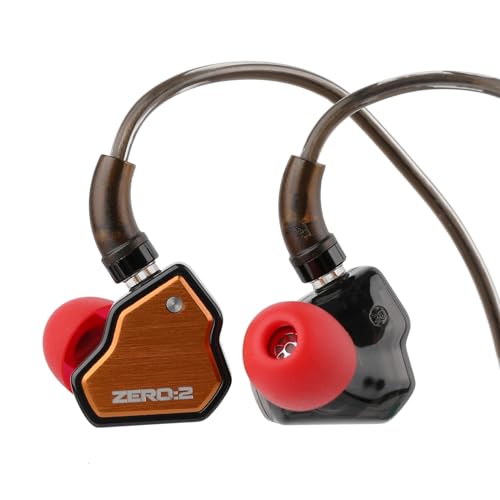
7Hz x Crinacle Zero:2
76% positive of 493 users
Budget gaming pick, but poor cables and polarizing bass.

 a1rwav3