When I first tried these IEMs, I was quite impressed by their small size and amazing performance. How can you expect such good staging and detail from such a small shell? These IEMs, manufactured in Germany and featuring the new 11mm Tesla drivers, have different tuning structures and sound characters, each distinguished by subtle details.
**Attention:** This review is written only for audiophiles with a deep interest in the subject. Each test product is the result of 20 years of experience and passion, compiled from results obtained during listening sessions over several weeks. Please bear this in mind when commenting and be respectful. All photos, including the product description, are my own and the product of hours of meticulous work. Thank you for your respect and the time you took to read this. Thanks to my old friend and musician OCT for his support.
Let's continue where we left off..
**1- DT70 IE (Critical Listening and Vocals) Sound Signature:**
The DT70 IE has a neutral to slightly reference leaning tuning that clearly focuses on mid frequency accuracy and tonal balance.
The bass is tight, linear, and controlled rather than boosted. I normally expected a more neutral bass when examining its graph, but it has a very satisfying effect. However, it's more of a sensitivity prioritized effect than a dominant depth. The sub bass extends well but is disciplined and tight, never authoritarian across the rest of the spectrum. Mid frequency this is where the DT70 IEM specializes.
Vocals are heard with a prominent, clean, and extremely clear presentation. This makes it particularly suitable for critical listening and vocal focused content. There's a natural tone here that feels colorless and consistent. I didn't think I'd like it this much. I guess I was fooled by its small size.
The highs are extended and refined, with excellent detail capture but presented with clear expression without artificial sharpness. It manages to present frequencies clearly without causing fatigue, which is its most important priority. Because nobody wants to get tired during long recording sessions.
The soundstage is quite good and realistic, with strong depth and precise imaging. So good that it might make you feel like you're listening in a larger space than a small recording studio. Overall, the DT70 IE is all about accuracy, consistency, and transparency. Impressive.
**2- DT71 IE (Drum & Bass) Sound Signature:**
The DT71 IE shifts towards a more energetic and impactful sound setup, prioritizing bass and rhythm. It has a slightly V shaped sound signature designed for impact and drive rather than tight neutrality. The bass is more prominent, offering a stronger sub bass presence and more physical impact. You can feel it. It hits harder and gives a more immediate feel, making it ideal for electronic and rhythm focused genres.
I feel the mid frequencies are a little more subdued compared to the DT70 IE, but they are still clear and understandable. Vocals aren't the focus, but they don't get lost either. Quite successful.
The treble is lively and energetic, adding sparkle and excitement without being overly aggressive.
The soundstage is wider but less depth focused compared to the DT70 IE. The overall presentation is more prominent and immersive, prioritizing energy and interaction rather than precision. If you're interested in drums and rhythm, this is the place to go.
**Precision in the 70 IE or Energy in the 71 IE?**
Resource Matching and System Synergy of Two Studio Vision Sibling IEMs:
Beyerdynamic's DT IE series is designed with a very conscious approach. While the DT70 IE is clearly positioned for critical listening, vocal accuracy, and tonal precision, the DT71 IE focuses specifically on rhythm, impact, and low frequency sounds for genres like drum/bass and electronic music.
Both models share Beyerdynamic's discipline regarding control, resolution, and transient behavior, but their personalities differ in meaningful ways depending on the source. What makes them particularly interesting is how they scale and react differently between sources. Let's compare them with a few DAPs I use daily.
**DT70 IE - Source Pairings**
**1- Sony NW ZX507 & DT70 IE (Critical Listening and Vocals)**
This pairing creates an extremely musical yet technically solid presentation. Sony's S Master excellent amplification manages to deliver a silky smooth presentation, bringing a slight analog warmth that complements the DT70's naturally neutral and reference oriented tuning.
The bass is quite soft and sounds more organic. The DT70 IE doesn't emphasize the amount of bass, but with the ZX507, it gains a subtle roundness that makes it more natural without losing tight control. Sub bass is present but never exaggerated. It feels tight and realistic.
The mid frequencies are where this pairing becomes exceptional. Vocals are presented with intimacy and emotional weight. The ZX507 adds a slight warmth that fills the analytical nature of the DT70, making the sounds more human and less clinical. This is particularly noticeable in acoustic and vocal centric recordings.
The treble is smooth and refined. The DT70 IE already avoids harshness, and the Sony pairing further enhances this by slightly softening the edges while preserving detail. Even during long listening sessions, fatigue is not felt.
The soundstage is not exaggerated, it feels natural and consistent. The width is moderate, but the depth and layering are convincing. This pairing transforms the DT70 IE into a musical reference instrument rather than a dedicated monitor built entirely for detail.
**2- TempoTec V3 Blaze & DT70 IE (Critical Listening and Vocals)**
The TempoTec V3 Blaze brings the DT70 IE even closer to its true reference potential with the AKM chips it houses. With dual AK4493SEQ DAC architecture, the presentation becomes cleaner, faster, and more descriptive.
The bass is significantly tightened. The slight warmth introduced by Sony disappears, leaving behind an extremely controlled, fast, and linear low frequency. This is where the DT70 IE shows its studio DNA. The bass is not about impact, it's about accuracy and separation. Tight and clear beats...
The mid frequencies become extremely transparent. Vocals fit perfectly within the mix without any coloration. Every nuance, every layer is clearly defined. This pairing is ideal for critical listening, mix references, and detailed analysis.
The treble expands further. There is more air and more micro detail compared to the Sony pairing. The DT70 IE handles this well, maintaining smoothness while revealing more information.
The soundstage is not wider but becomes more precise. Imaging sharpens and instrument placement becomes extremely accurate. This is a pairing that prioritizes precision rather than emotion.
**3- Hidizs AP80 Pro Max and DT70 IE (Critical Listening and Vocals)**
The AP80 Pro Max offers a more compact and energetic character. With its dual ES9219C DACs, there's a slightly brighter and more prominent presentation.
The bass is a bit softer compared to the V3 Blaze, but lacks the same level of control. The DT70 IE remains disciplined, but the overall presentation feels more energetic.
The mid frequencies become slightly thinner. Vocals are clear and prominent, but the body is reduced compared to the Sony pairing. This creates a more instantaneous but less immersive experience.
The treble is more prominent. There's more sparkle and perceived detail, but also a higher sense of brightness. The DT70 IE handles this well, but the pairing is less forgiving with poor recordings. This is because this is an IEM designed for critical listening, i.e., detail, and the AP80 Pro Max with its ESS chip makes this very clear.
The soundstage remains accurate, but it feels a bit flatter. The depth is reduced compared to top tier sources, but it's still at a respectable level. It's somewhere between analytical and musical listening.
**DT71 IE - Source Pairings:**
**1- Sony NW ZX507 and DT71 IE (Drum & Bass)**
When paired with the Sony NW ZX507, the DT71 IE has a surprisingly balanced presentation. While the DT71 is tuned for bass and energy, Sony adds an additional layer of musical subtlety.
The bass has become full and textured instead of creating a pure effect. The ZX507 softens the aggressive tendencies of the DT71, making it more versatile across different musical genres. The sub bass has become deep and satisfying without overwhelming the mix. It's enjoyable to listen to for fun music.
The mid frequencies have gained warmth. Unlike the DT70, the DT71 has a more subdued mid frequency by design, but Sony improves the balance by slightly bringing the vocals forward. I think this is thanks to the quality of the Tesla Driver. It can deliver source-specific characteristic responses with different sources.
The treble is softer. The DT71's energetic high frequencies are slightly softened, reducing fatigue while preserving detail.
The soundstage feels wider than expected for a bass-focused IEM. Sony helps create a more holistic and immersive presentation. Both detailed and enjoyable.
**2- TempoTec V3 Blaze and DT71 IE (Drum & Bass)**
This pairing highlights the technical capabilities of the DT71 IE. With its AKM chip, the V3 Blaze tightens the low frequencies very clearly and improves overall control.
The bass has become more disciplined. While still powerful, it's no longer as dominant as in the Sony pairing. The planar like velocity in the DT71 IE's tuning becomes more pronounced. A tight and clear presentation.
The mid frequencies lag behind slightly but gain clarity. Vocals are more prominent, but still not the focal point.
The treble becomes wider and more detailed. With V3, the DT71 IE reveals more micro-details, but this can also increase the risk of fatigue for sensitive listeners. I didn't get tired while listening.
The soundstage improves in terms of sensitivity. Imaging becomes sharper and the separation becomes more pronounced. You feel this separation more clearly in instruments because that's the natural character of the AKM chip. The DT71 IE proves itself by responding beautifully to this.
**3- Hidizs AP80 Pro Max and DT71 IE (Drum & Bass)**
The AP80 Pro Max pushes the DT71 IE towards a more energetic and aggressive presentation.
The bass hits stronger and feels more instantaneous. This pairing is quite appealing for electronic music and modern genres.
The mid frequencies are a step back. Vocals are less prominent, making this pairing less suitable for vocal focused listening.
The treble becomes brighter. There is more sparkle, but also more density.
The soundstage feels wide but less layered. The focus shifts to impact rather than depth.
My Thoughts on Source Matching
Although the DT70 IE and DT71 IE are variations of the same idea, they are more like two different German interpretations of how good IEMs designed for the studio can be.
The DT70 IE is all about precision, consistency, and vocal accuracy. It scales with better sources and allows for attentive listening. It's of a quality that can be a reference in this regard.
The DT71 IE, on the other hand, is more assertive in terms of energy, rhythm, and appeal. It adapted well to different sources but always maintained its more dynamic character, which was its intended purpose.
**Comparisons with Other IEM’s in My Collection:**
The Beyerdynamic DT70 IE and DT71 IE clearly exhibit two different approaches, and this becomes even more apparent when compared to a hybrid and, again, a single dynamic configuration IEM from a different brand.
Instead of focusing on a single model in this review, I find it more logical to evaluate both the DT70 IE and DT71 IE against each IEM. Because the contrasting settings reveal different strengths in each pairing, and allow us to take a closer look at what its competitors in a similar price range can do against German studio panzers. Perhaps this can give you more ideas about which model you might want to buy. I hope I have accurately conveyed what I heard.
**1- Ziigaat Arcanis IEM (2xDD + 5xBA) vs DT70 IE & DT71 IE**
The Ziigaat Arcanis is a technically impressive hybrid with dual dynamic drivers handling the low frequencies and five high quality Knowles balanced armature drivers covering the mid and high frequencies. It's one of the strongest IEMs in my bag in terms of price performance ratio. It has a character that draws the listener in with a high resolution, layered presentation combined with solid technical performance. If you ask what to buy for $400 that can offer both detail and enjoyment in high resolution, I would say this is it.
Starting with the bass, the Arcanis offers a more complex and layered low frequency range thanks to its dual dynamic configuration. Both impact and separation are present, but sometimes it can feel a little too engineered. In contrast, the DT71 IE offers a more integrated and natural bass response. It hits hard, but the damping and integration feel more unified. On the other hand, I feel the DT70 IE is finer and more controlled. Arcanis is deeper, DT70 IE is tighter.
The mid frequencies are where the DT70 IE shines. Arcanis is also great in this area. The DT70 IE offers a flawless mid frequency range. Vocals sound natural and continuous. Arcanis has more detail, while the DT70 IE tries to present it more consistently. Arcanis is more analytical, while the DT70 feels more analog compared to Arcanis.
The Arcanis's treble is quite wide and detailed, but due to its BA characteristics, it can sometimes sound a little harsh. The DT70 IE offers a more natural treble, while the DT71 IE adds energy without being overly sharp.
The soundstage is competitive. Arcanis offers width and separation, while the DT70 IE tries to offer a more realistic depth structure. The DT71 IE gives a more intimate but engaging feel. In my opinion, these two German headphones struggle in terms of "technical sound" in this comparison against Arcanis, but I can say that they are quite successful in their respective fields.
**2- Moritz Audio Dragon IEM (1xDD, Beryllium driver) vs DT70 IE & DT71 IE**
The Moritz Audio Dragon is a single dynamic driver IEM built around a beryllium diaphragm, positioned in the $600 range, focusing on natural tone and high level musicality. The sound quality is excellent.
The Dragon's bass is rich, textured, and slightly boosted. It has a natural damping that feels very organic. While the DT71 IE offers more punchy and faster bass, the Dragon feels more natural. The DT70 IE is more controlled and less colorful. However, in my opinion, the Dragon is of a quality that can beat both in every aspect. The beryllium driver makes the difference.
The mid frequencies are where the Dragon excels. It provides a rich and immersive vocal presentation. While the DT70 IE achieves this with higher clarity and accuracy, the Dragon focuses more on emotional interaction. The DT71 IE focuses less on the mid frequencies and cannot match the Dragon in this area.
The Dragon's highs are smooth and refined, but a little loose. The DT70 IE covers a wider area and reveals more detail, while the DT71 IE adds more energy.
The soundstage on the Dragon is immersive and quite spacious. While the DT70 IE successfully delivers in terms of imaging and separation, the Dragon focuses on musicality. The DT71 IE feels more prominent and less spacious.
In my opinion, the Dragon feels better musically than both of them, because that's what it was made for. The Germans seem more inclined to stay in the studio. Technically, they are very good, but not every bird is edible. The Dragon emerges victorious in terms of the primary musical listening experience, without facing a very strong competitor. The DT70 IE and DT71 IE emphasize their expertise in their respective fields. But their prices are still high in my opinion.
**3- Noble Audio Van Gogh IEM (1xDD + 3xBA) vs DT70 IE & DT71 IE**
This comparison is the most interesting one for me, because the Noble Audio Van Gogh, which sells for around $700, and Beyerdynamic's reference series 70 and 71 IEMs have both demonstrated their success in critical listening tests.
**Critical Listening Experts vs. Fun Music Experts:**
The comparison between the DT70 IE, DT71 IE, and Noble Audio Van Gogh is particularly interesting because they represent three different philosophies. While Beyerdynamic focuses on control and studio oriented tuning in these two models, Noble adopts a more expressive, musical approach built around a hybrid configuration consisting of one dynamic driver and three balanced armatures. Two Sonion BA drivers drive the mids and highs, while one Knowles driver is responsible for the mid bass. The sub bass is controlled by a single 8mm dynamic driver, and I would say it's a true expert. Basshead.
**Tone Philosophy and General Characteristics:**
The Van Gogh is clearly tuned for musical fun. A strong bass presence is followed by a U shaped to slightly V shaped signature with slightly backgrounded but quite well tuned mid frequencies and energetic highs. It reminds me of the Fat Freq Scarlet Mini. However, the bass presence is definitely more disciplined. This setting creates an immersive, emotional, and dynamic sound that's enough to put a smile on your face.
As its purpose suggests, the DT70 IE sits on the opposite end of the spectrum from the Van Gogh. It's neutral leaning, mid frequency focused, and extremely controlled. It focuses on its work without extra fun or coloring. Everything is presented as cleanly and consistently as possible.
The DT71 IE sits in between, but closer to fun. It tries to share some of the Van Gogh's energy, especially in the low frequencies, but has a tighter and more disciplined structure.
**Bass Performance:**
The Van Gogh offers the most dominant bass of the three. Its 8.3mm dynamic driver produces a thick, round, and physical low frequency with a strong sub bass presence. This makes it particularly appealing for modern music genres. I thoroughly enjoy listening to it.
The DT71 IE is better than the DT70IE in terms of impact, but its bass isn't as deep as the Van Gogh's. Faster and more controlled. But it's entertaining to listen to. Its tonality prioritizes beat and rhythm over weight.
The DT70 IE is clearly the most controlled. Its bass is linear, tight, and extremely accurate, making it ideal for critical listening rather than pleasure focused listening. Like disciplined German trainers who say, "Everyone do their job."
**Mid Frequency and Vocal Presentation:**
This is where the biggest difference emerges.
The DT70 IE is by far the strongest in mid-frequency accuracy. Vocals are prominent, clean, and completely colorless. It's designed for critical listening, mix references, and vocal analysis.
The Van Gogh is able to present the mid frequencies in a warmer and more emotional way, but it lags slightly behind the bass and treble. Vocals sound rich and textured, but not as precise or prominent as in the DT70 IE. The DT71 IE tries to stay clear by placing the vocals behind the rhythm section, but the focus isn't on the vocals. It's on the entire spectrum.
**Treble and Detail Capture:**
The Van Gogh has an energetic and airy treble designed to complement the bass and maintain the excitement. The Sonion driver does a great job here. It delivers brightness and perceived detail, but can sometimes feel a little high. (I glued a thin metal filter over the nozzle to balance it for myself, and the treble became more controlled.)
The DT70 IE delivers the most natural treble. It has good extension and never overdoes it when revealing details. This makes it more reliable for long listening sessions and professional use. As expected, it does its job well.
**Soundstage and Imaging:** Interestingly, all three perform well in this regard, but in different ways.
The Van Gogh offers a wide and immersive soundstage with strong layering; designed to evoke an impressive and spacious feeling.
The DT70 IE focuses on precision. Its soundstage is adequately wide, but the imaging accuracy and depth structure are superior, making it more realistic.
The DT71 IE feels more prominent and energetic compared to the DT70, placing less emphasis on depth. It offers a fun and balanced presentation.
**Critical Listening : What Really Sets Them Apart?**
If we focus solely on critical listening, the hierarchy becomes very clear.
**DT70 IE:** Best for analysis, mixing, and vocal accuracy; Most neutral and consistent; Holds its place as the most reliable tonal reference.
**DT71 IE:** Not designed for rigorous critical listening. I would say it offers a better experience for rhythm tracking and energy assessment.
**Van Gogh:** You feel from the first minute that it's designed for musical entertainment. While the bass and treble coloration makes it less suitable for reference studies, it offers a better listening experience for enjoyment and immersion.
**Final Thoughts**
In my opinion, a clear pattern emerged in these comparisons.
The DT70 IE consistently stood out with its consistency, mid-frequency accuracy, and natural treble. While it can compete with multi-driver IEMs in terms of realism and tonal balance, it never compromised on quality.
The DT71 IE leans more towards the musical side. It doesn't try to be neutral. While focusing on energy, bass impact, and interaction, it also maintains a level of control that prevents it from becoming overwhelming.
I think what makes both models impressive is that they achieve this with a single dynamic driver approach. While many competitors rely on multiple drivers to achieve technical performance, Beyerdynamic focuses on tuning discipline and driver control.
Both do their jobs properly without trying to replace each other. It's very clear that they are designed to serve different purposes. I think they would be in a much better position in terms of price performance if there was a price reduction.
The DT70 IE is made for critically listening to music down to the finest detail.
[DT70IE Official Link](https://europe.beyerdynamic.com/p/dt-70-ie?srsltid=AfmBOooluhUL4M-MnGZVpGBiLtAOVuxjaS3Lqb2eh6e3wRaYkD-IQheq)
The DT71 IE is here to feel the music and add a little fun.
[DT71 IE Official Link](https://europe.beyerdynamic.com/p/dt-71-ie?srsltid=AfmBOooluhUL4M-MnGZVpGBiLtAOVuxjaS3Lqb2eh6e3wRaYkD-IQheq)
**Technical Specifications :**
|Wearing Style|In-ear|
|:-|:-|
||
|Operating Principle|Closed|
|Transmission Type|Wired|
|Remote|Without Remote |
|Nominal Impedance Headphones|16 ohms|
|Headphone frequency response|5 - 40,000 Hz|
|Nominal sound pressure level|DT70IE (113dB) DT71 IE (112dB)|
|HEADPHONE LAB|✓|
|Sound coupling to the ear|In-ear|
|Cable & Plug|1.4 m cable with MMCX connector and 3.5 mm 3-pin plug|
**Disclaimer:** I would like to thank **Beyerdynamic** for providing the **DT70 IE & DT71 IE** for review purposes. I am not affiliated with **Beyerdynamic** beyond this review and these words reflect my true and unaltered opinions about the product.
**- All Photographed taken by me (ADR) from** [**Instagram:** **u/electroaudioworld**](https://www.instagram.com/electroaudioworld/)
**-**
**Used photo Gear : Sony A7 III + Sigma 24–70mm F/2.8 DG DN II Art Lens**
\-
Arcanis I have compared and I did not like treble and technicals on that IEM, mids are equally good sure. Bass good, not better than top pro. So thank you sincerely, but I do not think it is for me
I found tea pro see to be basically same low end with slight reduction in sub bass, while it boosts upper mids and lower treble - where vocals live + it boosts air region and technical ability (which will open up upper vocals - make vocal sound more open environment rather than sound proofed studio recording)
https://preview.redd.it/28ze4tv3xycg1.png?width=2400&format=png&auto=webp&s=cf95ccd7a18c5052e7146b1696b504c7ab5099d7
I have to disagree sorry, been there tried that. Bass and mids are equally good or close enough to live with, but treble and technicals are less enjoyable than top pro
I don't like the word 'trust' here. But I'll say that there are iem reviewers I'm more in sync with.
I sort of look at reviews sort of like everyone with a map in a forest.
If every damn person says there's a tree next to a lake, there's a 100% likelihood that exists.
But if every reviewer says the birds are in one direction and another, there's definitely some variance.
So here goes:
**JayAudio.** He loves the Zigaat Odyssey v1, Chopin, Truthear Nova, Supermix 4. He loves Hexa and hates Pure. He likes Arcanis. He loves a TON of Simgot iems.
I think his preferences are--> V-shaped and bright. Or Harman.
>!I don't like the Odyssey, Chopin, Supermix 4 or any Harman Iems. I also like Pure more than Hexa. I hate nearly all Simgot iems. Nearly all Simgot iems are super bright, shouty, sibilant and thin with vocals. But hey, that's just me. I also think the Arcanis is ironically bad with vocals, male vocals in particular. That said I hate Harman 2019 iems, imo they make vocals too thin. Also. He called the Supermix 4 "buttery smooth". I assure you it is NOT "buttery smooth"!!!!!!!!<
**Mark (Super Reviews)** \- He likes Hexa. He likes Blessing 3. Ranked it 5 stars. He calls Moondrop LAN an S-tier iem.
I think his preferences are--> Neutral bright. Lean bass.
>!The Blessing 3 isn't a 5 star iem. It's a 2 star iem for me. ;P I like watching his reviews because if he warns about problems with an iem, he's spot on.!<
**Precog.** He leans bright. And expensive. 😃 He values treble a lot. But I can't give a definitive answer because 99% of the iems he's reviewed are above the price of a car. I find that at least with the cheaper iems he managed to review, I agree with him. He has to review more peasant iems. And he needs a shirt.
**Jaytiss.** He ranks Hola, Sivga Que, Etymotic ER2xr as F.
That's all I need to know.
>!To me those iems are not F. I freaking adore the Hola and Sivga Que. So when someone says to me, but Jaytiss reviewed this A, I go..so?! But imo this is important to know.!<
**Zeo Reviews.** He likes everything.>! But you should tread caution with actually buying everything he recommends.!<
**Andy Vault**. He likes everything. >!But imo that's dangerous to a wallet.!<
>!If he was a real estate agent, this is what he'd do.!<
>! If the house was small he'd say 'it's quaint'. If it's a crime scene, he'd say, "It's lively and has character." !<
>!If it's tattered and dirty, 'it's rustic'. !<
>!I legitimately watched his "walkthrough" of Zigaat iems (I already tested all those iems but wanted to hear what he said) and walked away thinking, holy hell, that video told me nothing rofl. !<
**Paul Wasabi.** I find I'm in sync with a lot of his reviews. He never outright says he hates an iem. But you can tell with more subtle things he's doing in his video. If he didn't like the iem he does a ton of eq on it and shows you how he's eqing it. You can tell what he's adding or taking away to know what's wrong with the iem.
**Audio Amigo.** He does an excellent job of describing everything about the iem and I walk away with a good understanding what it'll sound like.>! I'm a bit skeptical now that he's joined the land of the Overseers. (shaking head) We lost a good reviewer 😛 I liked him a lot more when he wasn't owned by Linsoul 😄 !!I also can tell a lot of people who are selling 64 audio iems on Avexchange lost thousands of dollars without them saying they lost thousands of dollars lol!<
**Bangaudio Reviews.** He's another Zeos. He likes everything. >!He's veering towards unreliable.!<
**Akros.** He's too wordy and rambly. Hot take, but I actually use Gemini to summarize his takes because he's all over the place.
PART II
**Prime Audio Reviews**
I like him. He's concise. And he's actually quite honest. I'm pretty calibrated with him. I listen very closely to how he uses the word "lean." If he says "lean" like 7 times on an IEM, I back the fuck off. Because he nailed it 1000% every.single.time. Ie., lean bass, lean mids, lean here. Every single time he calls an iem "lean", he nailed it. I buy it. I hear it. And I think, "Damn. He was right."
There's a certain way he says it. Almost like if you wanted to know about someone and you ask, "Is she cute? or "Is he cute?" and he says, "Well.....(cough)....she's uh....(coughs)...I mean....She's tall."
It's the saying without the saying. And it's VALUABLE!
He's also extremely descriptive and to-the-dot in his reviews. He's, imo, one of the most indispensable reviewers for me. Very few times do I disagree with him on an IEM. He never says it's bad. He says it in a way...where you have to know his lingo.
"Um, well the bass...lacks....authority. Lean. Quite lean......" --> translation: It's bad.
**Passion for Sound**
He's good at telling you about things that are new. He's not the best at telling you what he hates or dislikes. I look at him more like a paper catalog.
**HBB Reviews**
My overall take is that if I were a hip-hop and rap guy, I'd love his channel. Every time I click on one of his videos, I see his gloves and hear some hip-hop song. Problem is, I don't listen to hip-hop. And I don't picture HBB as the kind of guy who listens to Matt Prasty K-pop remixes lol. That said, I love Xuan NV IEM and he tuned that iem.
**Fresh Reviews**
I don't know enough to form an opinion. But he's gaming-focused. So anyone who wants to know about gaming IEMs, I just say go to his channel.
**Practiphile**
I actually like his reviews a lot. Cool cat!
He's entertaining to watch, but he's also pretty clear about what he likes and is good at describing an IEM. I do find his grading confusing at times, ROFL.
He ranks the Cadenza 2 the same grade as the Yu9 Que. And I'm literally bashing my head on the monitor!
But preferences are preferences.
He liked the Celest Pandamon. I liked that.
He liked the Kima 2 and the Pure. I liked those.
He likes the Defiant. I liked that too.
He loved the Misty Blue. I adore that IEM.
He liked the Divine. I liked that too.
He loved the Studio 4, Pilgrim, Astral, Reference, and Volume S (though I returned it because it sounds too much like Pure). I loved those too.
But he also has some outliers. Ie., he loved the Chopin and EA1000, and I didn't like those.
So with him, I view it as maybe 70/30. About 70% of the IEMs he likes, I like. About 30% of the IEMs he likes, I don't.
[**ZIIGAAT Arcanis**](https://www.linsoul.com/products/ziigaat-arcanis?sca_ref=3431839.SsadRUmJUJ) if you love vocals
[**Thieaudio Hype 4 MK2**](https://www.linsoul.com/products/thieaudio-hype-4-mkii?sca_ref=3431839.SsadRUmJUJ)[ ](https://www.linsoul.com/products/thieaudio-hype-4-mkii?sca_ref=3431839.SsadRUmJUJ)amazing seperation and details, all rounder, punches above its price point
[**Ziigaat Horizon**](https://www.linsoul.com/products/ziigaat-horizon?sca_ref=3431839.SsadRUmJUJ)[ ](https://www.linsoul.com/products/ziigaat-horizon?sca_ref=3431839.SsadRUmJUJ)bright, great details
[**Punch Audio Martilo** ](https://www.linsoul.com/products/punch-audio-martilo?sca_ref=3431839.SsadRUmJUJ)bass head sound
[**xenns mangird top pro**](https://www.linsoul.com/products/xenns-mangird-top-pro) out of your price bracket at 400 bucks but def possible on sale. a less sharp and sparkly version of the mk2s also great unboxing experience . just overall amazing all rounder
I'd second the Astral or Odyssey 2. The Astral is my daily driver and I've had a hard time replacing it. I also like the Arcanis, but they get some hate.
Top IEMs on Reddit
1
7Hz
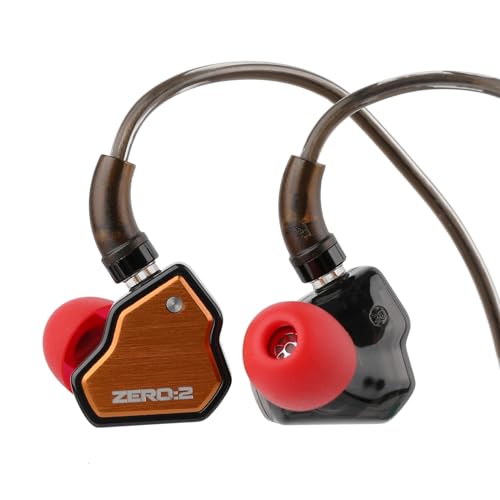
7Hz x Crinacle Zero:2
76% positive of 493 users
Budget gaming pick, but poor cables and polarizing bass.

 Afraid-Bunch6373