Running these analyses costs money. Buy through my links to help keep lights on! I may get a small commission.
Top Pros
Top Cons
Reddit Reviews
Damn… I’ve got the RBR20, 2 RBS50Y, 1 RBW30, 2 RBS20, and 1 RBS50 unit all full green connections covering ~0.9 acres, pool house, and 2 stories plus basement. My internet is 217d/24u. My WiFi never drops out or overloads and I’ve it now for ~5 years. I can honestly say mesh is the best idea ever (when it’s implemented correctly I suppose). Of course I didn’t start with 1 main and 6 satellites. That slowly grew. And trying to find older units that are compatible nowadays is nigh impossible (without *paying* for it). My main unit is 1/3 of the way across my first floor, one foot off the floor. A 20 is in the middle of the entire house, seven feet off the floor. The other 20 is on the second floor, eight feet off the floor. The mini 30 unit is in the middle of the basement plugged into an outlet in the ceiling. Two outdoor units connect to each other through the main, and the pool house 50 unit connects to the outdoor (that’s main to outdoor 1 to outdoor 2 to poolhouse, and the connection is flawless). So don’t let anyone tell you about maximum number or stringed connections. I have three satellites in sequence, and six total satellites.
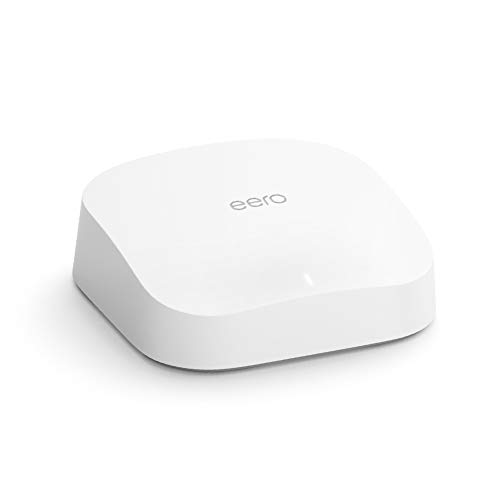
I've had several meshes, all using wireless backhaul. First I had the Netgear Orbi mesh (wifi-5) that worked well for a few months, then Netgear made firmware upgrades mandatory, and put out some really bad firmware. Went to eero (wifi-5) after that, and that one never did work well for me. It worked, but not as well as I thought that it should have. I tried the eero Pro 6 mesh (wifi-6), and that was never stable. After that it was the Asus ZenWiFi AX (wifi-6), which worked really well here. The mesh that I'm using now, the ZenWiFi BT10 (wifi-7) is also working really well...the wireless MLO backhaul is very fast and has been stable. About as close to wired backhaul as I've seen, the speed at the remote node is very close to my ISP's provisioned speed. The latest firmware for the BT10 mesh has been great, but it took a few versions to get the degree of stability that I want. So, for me, yes, there have been ups and downs, but the Asus ZenWiFi meshes have been the best that I've had. Both have worked great with wireless backhaul, which is what I need. And have been stable and have provided whole house wireless coverage.
I went from an old Orbi RB system to the 770 and have loved it! Sorry to hear so many haven’t. But so far it’s been great for me all around.
I hated the WiFi 6 Orbi system I bought. It was lacking so many fairly basic features, such as QoS, firmware updates breaking basic functionality, and a very lackluster app-focused experience. I replaced it with an ASUS WiFi 7 system comprised of a RoG router with two Zen nodes and it’s been a lot more solid with far more configuration options than I’ve ever seen on a residential router. Maybe the Orbi WiFi 7 line has solved their earlier issues, but I’ll never buy one again based on my prior experience.
I’ve used before netgear Orbi mesh WiFi 6 router with two satellites. Worked well. Expensive but I guess was worth. Still use it now in the apartment but with one satellite in the bedroom only just in case
I have to agree on “consumer” grade mesh systems, I have tried Asus and two different Netgear Orbi systems (last one cost me $1800 at the time) and all I get is headaches. They last for a month or so and then lose satellites and devices are always dropping until I reset it and then a week later all over again. So I decided instead of dropping another $1200-1800 on a Wifi 7 Consumer Mesh I would invest in Ubiquiti equipment, now I don’t have it running yet but will be using Mesh on the second floor AP as I don’t care if it’s full speed or not.
Orbi is fine. Your problem is the wireless backhaul between the two access points. The only way to make it better is to run ethernet or add more orbi access points to improve the mesh backhaul. You will add latency and spend more money by adding more acces points. It would be fine for doomscrolling, not great for competitive games. If you have coax cable run throughout the house you can try MOCA adapters or ethernet over powerline.
I’m looking to update my unreliable Orbi system. I have a 2,300 SF 2 story house. House is NOT run with CAT5/6, and I won’t be running cables in this house. I have 1 Gig fiber internet, using the ISP’s modem in pass through/bridge mode. I have enough networking experience that I feel like I’d be able to do UniFi, but not if it’s completely overkill. Here’s what I’m looking for: \-Wireless access points with wired ports to devices in 3 locations (at router, home office, and Movie Room). \-Might as well future proof to WiFi 7, but I heard that no systems “really” support true MLO?? \-True Mesh Network (if they are reliable), I feel like the hub and spoke Orbi system isn’t as reliable. \-Is it possible to have Tri-Band each with separate SSID’s and encryption modes? Some of my IOT devices (looking at you Ecobee) only support WPA2, and will NOT support WPA2/WPA3 mixed mode. I’d like the 2.4Ghz network to be WPA2, and everything else WPA3 or mixed. I have like $2,000 in gift cards at Costco, and see they have the TP-Link Deco 7 Pro BE11000 3 pack system. But not sure if that’ll cut it and be a lateral move from my crappy Orbi system. The price seems suspiciously low. Any advice or suggestions are really appreciated! I’m not sure what brands and systems are well regarded these days…
APs are connected via Orbi’s wireless backbone. I think it’s a 5GhZ signal, hub and spoke. Direct signal from main AP, to each of the satellite APs. Not true Mesh as the satellites don’t connect to each other directly. I try to use CAT6 from AP satellites to certain high bandwidth devices as long as I can hide the cable run. Issues are inconsistent speeds and drop outs. Wireless connecting to the “wrong” AP that doesn’t have a strong signal. Unable to split 2.4 and 5Ghz bands with separate security, so need to default to WPA2. Tons of weird issues if I need to reboot the system (I suspect devices connect to the first AP that reboots, and stay stuck to that one). And other pairing issues. I think a lot of the issues stem from Hub and Spoke, rather than True Mesh.
I currently have my main ISP modem/router in pass through/bridge mode, wired with CAT6 to my Main Orbi Router/AP which is doing all the routing and DHCP. This router then has a wireless backhaul that uses a dedicated channel to connect to each of the 2 satellites. The satellites do not mesh with each other. It’s a bidirectional communication from the main router to each of the two satellites. It’s not “true mesh” because of the satellite nodes do not interconnect, they only connect to the central node. ie less redundancy, single point of connection, more dead zones, more limited zones. I’m wondering if a true mesh network might solve some of this problem. I very much understand that I should connect each of the APs/satellites with a wired backhaul for best performance. That’ll require running a ton of wire up and down walls into the attic, which I’m fully capable of doing. I did this with a ton of speaker wire a few years ago. It’s just a pain in the ass, and idk if it’s worth the squeeze right now. I was wondering if there is a solution that will: 1. Replace my current system. 2. Improve performance 3. Allow me to not be stuck fully on WPA2 due to some IOT devices not compatible with WPA3 or WPA2/3 mixed mode 4. Allow for “some” future proofing and scalability. I could be completely wrong, but my thinking was a true mesh network (where each node connects to each other, rather than hub and spoke) would at least fill the gap until (or if) I ever get around to running cables. If there is no better solution than what I currently have, then I can accept that as well.
I’ve always had some issues with it. First of all, the system/software seems too dumbed down and not enough control. AP satellites are connected to the main AP through a dedicated 5GhZ wireless backbone. But satellites don’t talk to each other. It’s a hub-and-spoke rather than a true mesh, which I think causes issues. I have devices connecting to the wrong satellite, dead spots that come and go, you can Google tons of issues and I see the same thing.
Thanks for the input. I didn’t know if what I head about WiFi 7 was true or not. I figured if I’m going to upgrade, I might as well do the latest and greatest, if it makes sense. ISPs are giving the option to upgrade to 2-3 gig in some parts of town for a fairly reasonable price, so had that in the back of my mind. I’m perfectly fine saving money and getting a good WiFi 6 system! I “could” and still “may” run cables, but it’s a pain in the ass and I have a ton of other house projects more important right now. We may be selling and moving in the next year anyway.