There are lots of good choices, For your environment, you indicate you'd prefer not to run ethernet cables, and with a 1G connection, my opinion is you should go for a tri-band consumer mesh system with two or three nodes. Tri-band will give you far better speeds at your satellite nodes than any dual-band wireless mesh. If you could wire for ethernet, it's much more cost effective to get dual-band units and they'll perform about as well when wired in.
The nice thing about mesh systems is that most are scalable, so you could start with 2 or 3 and buy/add additional nodes very quickly and easily, if your needs dictate.
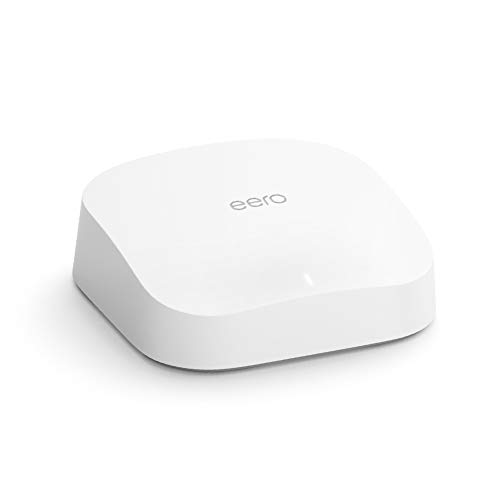
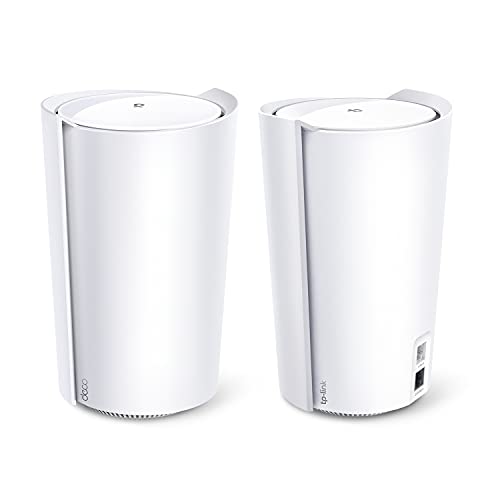
Examples of this are: Eero 6 Pro, Asus XT8, TP-Link Deco X90, or Amplif Alien. Also there are several iterations of Netgear Orbi and Linksys Velop.
Orbi systems and the Asus XT8 use a dedicated backhaul arrangement. Just my opinion but I think Eero's mesh is superior in that it uses multiple bands simultaneously to maintain the mesh and clients can connect to all bands, which is not the case with any tri-band Orbi, or Asus XT8 while the XT8 is in wireless mesh mode. You can free up the XT8's dedicated backhaul band for clients IF nodes are connected via ethernet.
Wifi 5 systems are now being sold at significant discounts, wifi 6 systems are kind of the "mainstay" now, and 6E systems are on the market (6 GHz) which are quite expensive and really don't offer a lot of benefit since there are few 6GHz clients on the market right now.
Amplifi Alien has quite good reviews and reputation, but it's quite expensive for even a two-node system. I prefer not to buy systems with one router + one satellite, because if the router craps out on you, you can't swap nodes around - so if getting Alien, I'd strongly recommend getting two routers vs. the router + satellite kit.
Orbi kits are all router + satellites, so would avoid those for that reason.
Eero 6 Pro, Deco X90, Asus XT8, Velop, etc. all come with identical units in their multi-packs. I used two Eero 6 Pros and muy house is 1200 sq ft (main level) and 600 more sq ft (basement), and my lot is 85' x 135', or 11,475 sq ft for the lot, and two 6 Pros covered it all with >100 mbps everywhere ooutside and >300 in the house.
My walls must be something special. I have x90 mesh network and it has crap range. I really do think my walls are special, they’re incredibly hard to drill into and the house is 100 years old. Home is only 1200 sqft and I can’t get any service if I’m more than 15 ft away from a deco.
I quite like the base model Deco sets and they do fine for lower/moderate speed setups.
The M4 is dead cheap or the x something-or-othet is only about £180. Plus they're happy to be wired or mesh!
When I say I like, I've installed them for a good few clients as a siple solution to good feedback and no issues to be honest!
Wifi boosters are a waste of time in my opinion. Mesh Wifi on the other hand can work very well. A great trick is to use the mesh stations as "ethernet extenders". I recommend a 3 unit mesh system for your house. Put one beside the modem and plug directly into the modem. Put one behind your TV and use an ethernet cable to connect your console (and possibly your TV) to the mesh unit. Put the third unit upstairs in a central location or in an office/study room if you have one. You need to disable the wifi signal coming from your modem to avoid wifi conflicts. If you have Sky internet and Sky TV this can be tricky to do because Sky TV force enables Sky wifi. There are work arounds such as making sure the Sky TV box is connected with ethernet rather than with wifi.
I have used TP Link Deco mesh for years and find them excellent. Others recommend Asus. A wifi 5 system is cheap and good for 300MBs or so wifi speeds. I currently have a three unit wifi 6+ system and we are getting 700MBs+ wifi speeds and over 900MBs on devices plugged directly into the mesh units. I assume Wifi 7 is even better but it costs more. Just try to make sure you get a tri band mesh system so that you can use all three wifi bands (2.5, 5 and 6 GHz.)
To get the benefit of mesh you need two units. Plug one into your modem and put the second beside your PC and plug the pc into it with a short ethernet cable. Be sure to disable your modems built in WiFi and use the mesh WiFi instead to avoid clashes.
Note if you have fibre to the premises you might not even need the modem. You can plug the master mesh unit directly into the ONT if you have the correct login details.
The mesh units talk to each other and establish a very fast wireless link between units. It's not as good as a wired connection but it's the next best thing.
Top Mesh Wifi Systems on Reddit
1
eero
Pro 6 Series
82% positive of 175 users
Easy, reliable, smart home ready; but paid features.

 AdhamRasulov