I’m running TPLink Deco x95… I grew tired of the app only interface (NO WEB BASED BROWSER FOR SETUP)…
So they are now just wired backhaul access points to a TPLink archer AX6600. They are solid hardware wise… the deco software is a let down however.
For reference I run home assistant with a heap of devices including cameras and a Plex server.
I use HomeKit via a hard wired ATV4K and 6 HomePod minis through the house. Home assistant serves up alle devices and cameras to HomeKit without issue.
Such a huge upgrade from my w7200. No drops, no connection headaches, no issues with smart devices (save for a weird issue connecting local network to my pool equipment), and my wife was losing her mind as her WiFi was horrid and intermittent in her office with the last units and replacing them at same locations and she is now a solid 400mbit clean
I run my 85s in Access Point mode with my own firewall/router in front of the 85s. Hence the 85s just have to worry about serving up WiFi. They have been great.
My firewall gets regular updates and hence I am not as concerned about update frequency. I was in the NETGEAR camp for about a decade and their update frequency was no better. I ultimately went Voxel with my NETGEARs.
The rub with the 95 was that it splits the 6ghz band in 2 losing one of the wide MLO channels. My 2 downstairs I hardwired and hence I did not need dedicated wireless backhaul. I do have another upstairs over the garage, but that is for the kids, and I am not as concerned. So long as they can watch TV, and do their homework - they don’t need full bandwidth.
I quite like the base model Deco sets and they do fine for lower/moderate speed setups.
The M4 is dead cheap or the x something-or-othet is only about £180. Plus they're happy to be wired or mesh!
When I say I like, I've installed them for a good few clients as a siple solution to good feedback and no issues to be honest!
Wifi boosters are a waste of time in my opinion. Mesh Wifi on the other hand can work very well. A great trick is to use the mesh stations as "ethernet extenders". I recommend a 3 unit mesh system for your house. Put one beside the modem and plug directly into the modem. Put one behind your TV and use an ethernet cable to connect your console (and possibly your TV) to the mesh unit. Put the third unit upstairs in a central location or in an office/study room if you have one. You need to disable the wifi signal coming from your modem to avoid wifi conflicts. If you have Sky internet and Sky TV this can be tricky to do because Sky TV force enables Sky wifi. There are work arounds such as making sure the Sky TV box is connected with ethernet rather than with wifi.
I have used TP Link Deco mesh for years and find them excellent. Others recommend Asus. A wifi 5 system is cheap and good for 300MBs or so wifi speeds. I currently have a three unit wifi 6+ system and we are getting 700MBs+ wifi speeds and over 900MBs on devices plugged directly into the mesh units. I assume Wifi 7 is even better but it costs more. Just try to make sure you get a tri band mesh system so that you can use all three wifi bands (2.5, 5 and 6 GHz.)
To get the benefit of mesh you need two units. Plug one into your modem and put the second beside your PC and plug the pc into it with a short ethernet cable. Be sure to disable your modems built in WiFi and use the mesh WiFi instead to avoid clashes.
Note if you have fibre to the premises you might not even need the modem. You can plug the master mesh unit directly into the ONT if you have the correct login details.
The mesh units talk to each other and establish a very fast wireless link between units. It's not as good as a wired connection but it's the next best thing.
Top Mesh Wifi Systems on Reddit
1
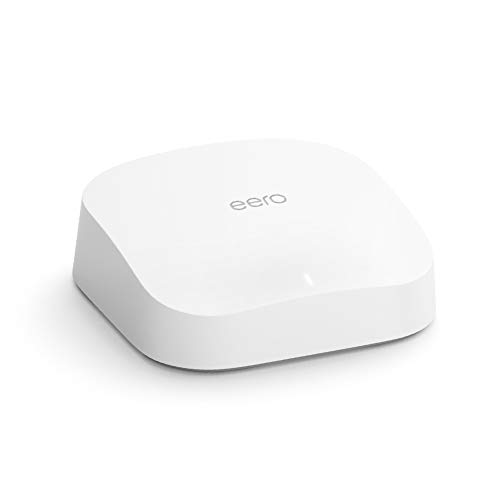
eero
Pro 6 Series
82% positive of 175 users
Easy, reliable, smart home ready; but paid features.


 Present_Standard_775