I had a TP-Link BE85 setup before this and returned it because of constant disconnects which is a known issue with them. I felt like their speeds were higher than Eero but the disconnects and the complexity of three separate SSID’s versus a single one made Eero a better choice. Prior to that, I owned an AMPLIFI Alien setup that I really liked. One of my units started having issues and needed replaced after several years. AMPLIFI has decided not to continue supporting the Alien product anymore so that was stuck on WiFi 6. Before the AMPLIFI setup I owned a Linksys Velop system and it was absolute trash. I don’t think there is a such thing as a perfect mesh system because if there was I would have bought it. That being said, I am sharing the same frustrations as you with the recent firmware updates.
There are lots of good choices, For your environment, you indicate you'd prefer not to run ethernet cables, and with a 1G connection, my opinion is you should go for a tri-band consumer mesh system with two or three nodes. Tri-band will give you far better speeds at your satellite nodes than any dual-band wireless mesh. If you could wire for ethernet, it's much more cost effective to get dual-band units and they'll perform about as well when wired in.
The nice thing about mesh systems is that most are scalable, so you could start with 2 or 3 and buy/add additional nodes very quickly and easily, if your needs dictate.
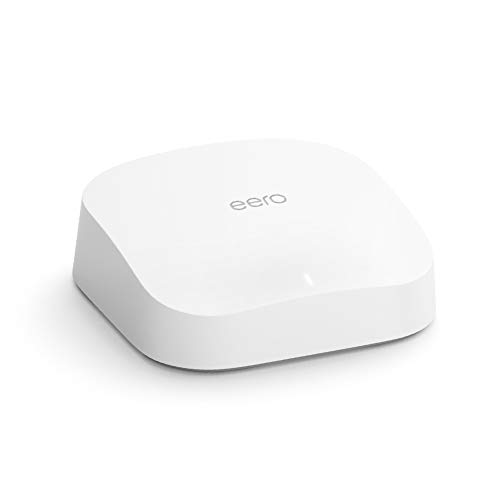
Examples of this are: Eero 6 Pro, Asus XT8, TP-Link Deco X90, or Amplif Alien. Also there are several iterations of Netgear Orbi and Linksys Velop.
Orbi systems and the Asus XT8 use a dedicated backhaul arrangement. Just my opinion but I think Eero's mesh is superior in that it uses multiple bands simultaneously to maintain the mesh and clients can connect to all bands, which is not the case with any tri-band Orbi, or Asus XT8 while the XT8 is in wireless mesh mode. You can free up the XT8's dedicated backhaul band for clients IF nodes are connected via ethernet.
Wifi 5 systems are now being sold at significant discounts, wifi 6 systems are kind of the "mainstay" now, and 6E systems are on the market (6 GHz) which are quite expensive and really don't offer a lot of benefit since there are few 6GHz clients on the market right now.
Amplifi Alien has quite good reviews and reputation, but it's quite expensive for even a two-node system. I prefer not to buy systems with one router + one satellite, because if the router craps out on you, you can't swap nodes around - so if getting Alien, I'd strongly recommend getting two routers vs. the router + satellite kit.
Orbi kits are all router + satellites, so would avoid those for that reason.
Eero 6 Pro, Deco X90, Asus XT8, Velop, etc. all come with identical units in their multi-packs. I used two Eero 6 Pros and muy house is 1200 sq ft (main level) and 600 more sq ft (basement), and my lot is 85' x 135', or 11,475 sq ft for the lot, and two 6 Pros covered it all with >100 mbps everywhere ooutside and >300 in the house.
Nothing you said is wrong, but mesh networks in 2026 are a far cry from mesh networks of 2016. They can be solid and fast these days. The extra ms or so of latency doesn’t have any meaningful impact to most users.
Get something with a dedicated 5GHz (or higher) backhaul. Even my Ubiquiti Amplifi from 6 years ago has this. I still go cat6 for my 4K video editing rig, but I have had zero problems working remotely or streaming or even gaming on a remote mesh point.
Obviously quality matters. Don’t buy some fly-by-night Amazon GRJFIRAHLY brand.
I switched from Amplifi mesh to Linksys mesh several years ago and have been very happy with it. I put a tp-link ER605 switch/router in front of it to provide the vpn connectivity and boost my throughput.
Access Point(s).
There is a reason businesses choose access points over mesh.
I moved from an Amplifi (Ubiquity) mesh setup to Firewalla router > Aruba 1930 (managed switch) > Aruba AP22 (POE access point).
Visit https://www.reddit.com/r/firewalla to learn more. Your timeline is serendipitous as they will release an AP in July ;)
Top Mesh Wifi Systems on Reddit
1
eero
Pro 6 Series
82% positive of 175 users
Easy, reliable, smart home ready; but paid features.


 butterwm