This makes sense. Do the modeling. The AP placement really needs to factor in your home shape.
I have a 3,700 sq ft three level wood frame home. Back in 2020 I installed two nanoHD APs on the ceiling to the top floor (about 12’ from each end of the house) and they did a pretty nice job of covering the main areas on both floors below. I added a couple of FlexHDs on the lowest level to boost signal in some odd corners down there. 6GHz won’t cover as well as 5GHz and certainly not as well as 2.4hz, so more APs would likely be needed to have good 6GHz coverage. For outside, you will want an AP located outside of your aluminum siding, of course. The outdoor APs are pretty nice. I installed a U7 outdoor at a vacation house and it really lit up the yard nicely. Just know that you will only cover one side with a single AP due to your siding being aluminum.
I do a lot of security/networking for work - so I have a strong bias and risk associated security on my devices and accounts. And the vulnerability landscape right now is insane.
Microsoft's October 2024 analysis identified thousands of compromised TP-Link routers used to attack government agencies, defense contractors, and civil society — that's the CovertNetwork-1658 / Quad7 botnet. But that problem isn't isolated to just TP-Link. But I would avoid any companies who are (from top to bottom) beholden to a hostile foreign government. If they control the software AND the hardware side, it's harder to protect yourself from becoming a vector.
I also have subscription fatigue and hate the idea that a cloud compromise could impact my home network.
All in one boxes will keep setup simple, but IMO, won't do anything well. If you are talking just APs, not router/firewall:
If you don't want to tinker or have time to mess with security stuff: Ubiquiti and Ruckus are solid options.
If you like to set your own stuff up:
A free to use, pay to get support/extra features firewall like OPNSense is awesome. PFSense is another but I liked OPNSense interface better. You can run it on a repurposed mini-pc or old desktop.
Then you can buy a managed switch or something retired from a corporate network off ebay for cheap. This isn't required, but can help if you want to wire other things like cameras, additional APs, etc.
Then as far as APs go, you can turn an old router into AP only in a lot of cases, or go down the OpenWRT rabbit hole if you want. I have no idea if OpenWRT can handle mesh networks.
Factors that may change your concerns:
If you have kids you're trying to keep an eye on.
If you want to control where your traffic goes, and how invisible you want to be as a target.
What you do for work.
If you have guests or share wifi with others.
How well you can muddle through online documentation, and how well you can keep helpers like Google and AI chatbots from giving bad advice.
I should add: running an ethernet cable and putting your wifi router in a more central spot is the best bet for a place that size. Know that the 5ghz band doesn't travel through walls/pipes/electrical wires well.
With the specs you ask? None. At least no “real” mesh (wireless backhaul).
Centrally managed Access Points system and direct wring of your gaming machines at least.
Best is UniFi, followed by Grandstream, Omada,….
Professional installer
It's really not a lot worse that something like Asus, who has a decently robust interface (lots of consumer stuff hides everything behind "simplicity"). The payoff is reliability and a long service life (my oldest UniFi AP is 7 years old, still supported, and still working great.)
In consumer world - Asus and TP-Link are the better choices. Eero is great hardware has a subscription model for some needed (IMO) features. I would avoid Netgear, D-Link and Linksys - they are not what they once were and have subscription models, sometimes poor support, and varying reliability and quality. You could also consider gl.Inet Flint devices if you're looking for an all-in-one router, they have gained a very good reputation.
I agree that a better choice than any of the above would be Ubiquiti UniFi and TP-Link Omada is also decent - it's different than the consumer gear. Reliability is one of the major points of these prosumer setups. I've been running UniFi for 7 years, it's great.
A single good point in the middle of a 1700 sq ft home might be just fine. You could hardwire one up from the basement to the middle of the main floor. I'd try that first before buying anything more - even the iSP wireless router might be fine for that size. Eeros are good if you want to plug it in and just work. Unifi best if you want to adjust a lot of settings. For home wired I like InstantOn the best as it's less maintenance work than Unifi and hardware is really solid.
> Mesh seems to offer some nice benefits like a single SSID, roaming between nodes, and what looks like easier management.
Mesh means two things:
1. An access point with wireless backhaul
2. An over-used marketing term that might mean some of what you said, might not. Marketing has made it mean everything and thus it means nothing now.
The second one is the source of most confusion.
The upside of wireless backhaul is it's super-easy to install. Plug in the "satellites" or "pucks" in a spot with a decent signal, and they extend your wifi network.
The trade-off is performance. You take a huge latency and jitter penalty, and every one actually increases congestion, chances of problems and ultimately lowers performance and available bandwidth. Especially if you're in a dense area with lots of other wifi.
Basically: if you can do wired networking, do it. It's _so_ much better than wireless backhaul. That goes for devices too, like PCs, TVs, game consoles. The more you have wired, the better wifi experience you'll have on the stuff that has to be on wifi.
> nice benefits like a single SSID, roaming between nodes, and what looks like easier management.
- Single SSID is just a matter of configuring the same SSID. You can do this using basically any access points (whether it's "mesh" or a "router" or a dedicated "access point"). How devices switch between APs is up to the devices though, and some are more aggressive about going to a better signal than others.
- "Fast roaming" (802.11k,v,r) is really the big upgrade with multiple APs. It allows devices to _seamlessly_ switch, and provides signal strength data to allow them to make smart decisions. In a good setup you can walk around on a video call and as roam between APs you don't even drop a frame.
- Single management pane often does come with the systems sold as "Mesh systems" (meaningless marketing term sense of the word), as well as higher-end systems like Ubiquiti Unifi.
> PS - regardless of any advice and answer, if someone can, do, throw in several actual model recommendations .. would be great. (not the average user , so i'm ok with playing settings but stability is #1..)
You might like Ubiquiti. The gear is solid, and long-lasting. Single pane-of-glass config. You can do VLANs and multiple SSIDs (great for IoT, Guest, Kids networks with different restrictions). You can do piecemeal upgrades (eg: my original 9-year-old AP still functions and is configured alongside the one I bought 2 years ago, just the newer one supports newer wifi standards and faster speeds). You can also do security cameras with it.
Hardest part is there's a lot to choose from, and you have to kind of predict your needs for the next couple years to hit the balance between getting something you'll outgrow and paying more for something way overkill for what you'll use.
> CAT7
Yeah -- you don't need it. In fact it might even be fake cable that is really Cat5e or worse. https://dlaycable.com/is-cat7-a-real-ethernet-cable-a-d-lay-cable-expert-explains/
Cat6 and 6a can do 10Gbps to 55m/100m respectively, and Cat5e/6/6a can all do 2.5Gbps to 100m. It's been out for 20 years and there's still no real market for 10Gbps (eg: all the gear is still _way_ more expensive).
If you are just using some random APs, you individually manage them. Each has their own IP and you'd log in one-by-one. Hopefully name them something useful so you know which one is which.
Then you have to manually copy the SSID(s) and PSKs. You'd typically set channels to be non-overlapping. A lot of the other settings don't necessarily have to be aligned -- eg it is possible to run a mix of Wifi5 and Wifi6e APs and those have different settings.
If you're using a "Mesh" system, you probably have a single spot to manage all the APs, but may still have to worry about not overlapping channels. If you're using a higher-end system like Unifi it's also all managed from one spot.
From a device point of view, you can't really see which one you're connected to and that's kind of the point. You can probably guess based on signal strength. There's apps (eg Wifiman) that will show you all the BSSIDs (individual APs and frequencies) and which one you're currently connected to.
Top Mesh Wifi Systems on Reddit
1
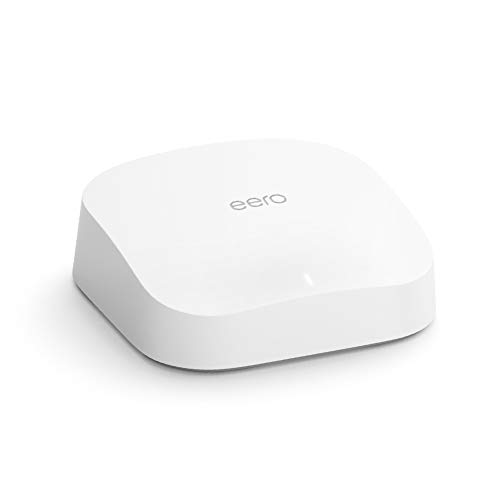
eero
Pro 6 Series
82% positive of 175 users
Easy, reliable, smart home ready; but paid features.


 AncientGeek00