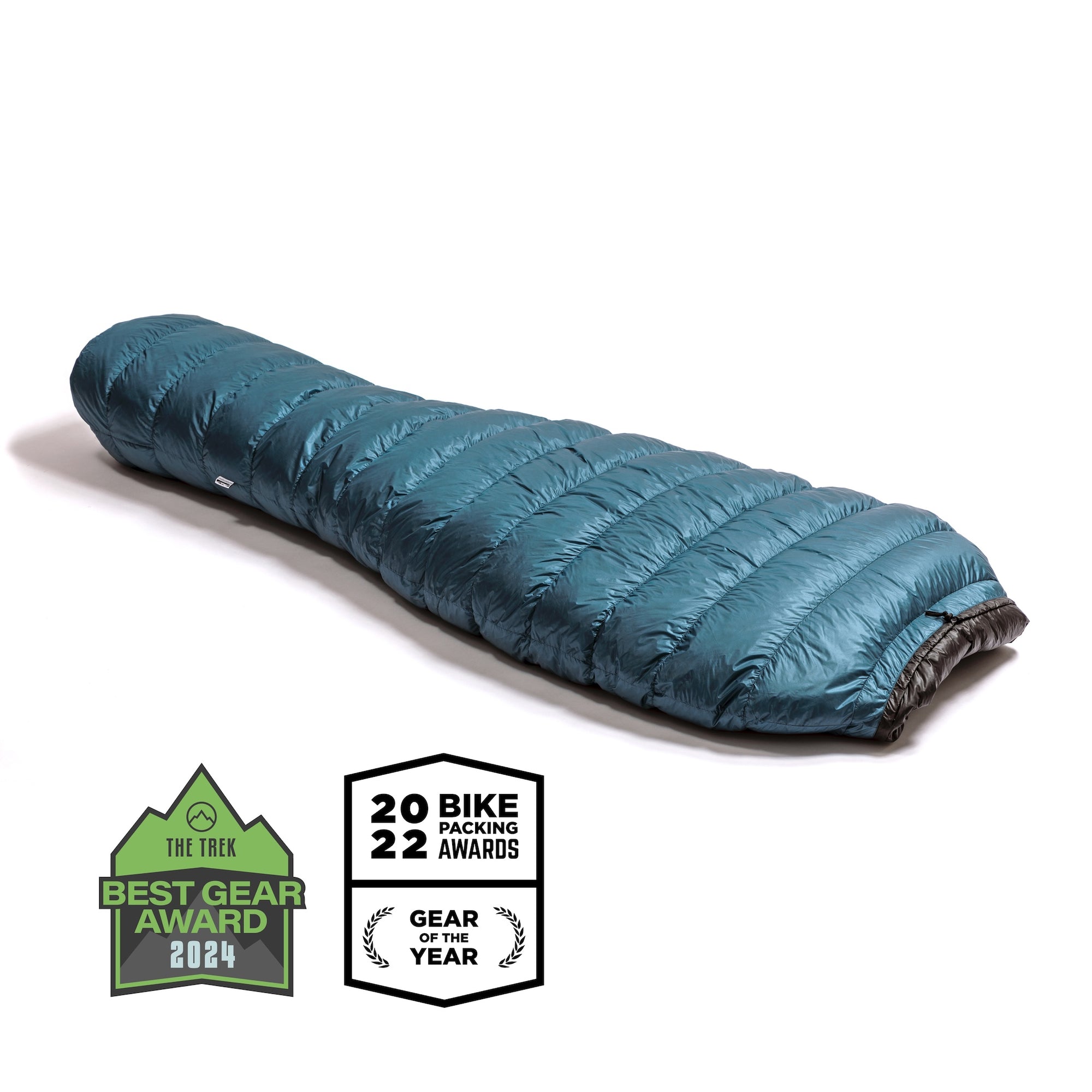
Without knowing much, I'd almost always favor the colder rated bag. You can always vent if you get too warm, but once you get too cold, it's hard to recover.
That being said the Greystone is down so much lighter and packs smaller, very useful if you're backpacking and space/weight is more limited than car camping.
Echo does have a cotton/poly blend internal lining which would also be more comfortable compared to straight poly like the Grey.
If you can deal with the weight/packed size of the Echo it gets my vote.
Shelter - the Big Agnes Copper Spur HV UL2 paired with the Big Agnes Greystone 20°F down bag
Make sure you pair that bag with a high-end insulated sleeping pad like the Therm-a-Rest NeoAir XLite NXT to block the ground too
For the rest of your kit, pack zero cotton! bring a $10 mosquito head net and keep a can of bear spray clipped to your hip at all times as well. These [30 essentials for winter](https://alaskanarrows.com/30-essential-items-for-winter-hiking-and-camping/) could come in handy for the trip as well, cheers
Moving from a \~15 kg beginner setup to a proper UL kit – looking for feedback before buying
I got into wild camping around two years ago and, like most beginners, I started with very budget gear just to see if I enjoyed it. Within the first year I picked up the basics from Amazon (stove, cookware, sleeping bag, sleeping mat), a £15 tent, and a 65L pack.
Since then I’ve replaced a couple of things, including upgrading my tent to the Robens Boulder 2 Tent, my pack to the Osprey Rook 65 and my sleeping bag to the Big Agnes Greystone 20 but in hindsight I still didn’t make the best choices in terms of weight or packability.
My current base weight is roughly \~15 kg, which I realised very quickly was far too heavy during a hiking trip in Madeira last year. Carrying that weight for multiple days really made it clear that I need to rethink my setup.
This year I’m planning a trip to Andorra and want to use it as motivation to finally build a lighter, more dialled-in kit. I’m trying to avoid the cycle of constant small upgrades and instead invest in lighter gear that will last.
I’ve spent hours reading threads here and elsewhere, but it seems like almost every product I’m considering has strong praise from some people and serious criticism from others (especially sleeping pads), so I’d really appreciate some feedback before committing.
Planned upgrades
Tent
• Durston X-Dome 1+
Sleeping pad
• Big Agnes Rapide SL Insulated Sleeping Pad – seen comments saying the R-value may be optimistic
• NEMO Tensor All‑Season Ultralight Sleeping Pad – heard about insulation bunching issues on newer models
Stove
• SOTO WindMaster Stove (but open to alternatives for a lightweight canister stove)
Cook pot
• TOAKS 770ml Titanium Pot
Future upgrade
Once I’ve mentally recovered from buying the Osprey pack, I’m hoping to move to something like the Liteway Biggie Pack Ultra 45L.
Goals
• Reduce my base weight significantly from \~15 kg
• Build a lighter setup suitable for multi-day hikes
• Use it for upcoming trips, including Andorra this year
Questions
1. Any real-world experience with the X-Dome 1+ yet?
2. Rapide SL vs Tensor All-Season — which would you choose for warmth, durability, and reliability?
3. Is the Soto Windmaster still considered the best UL canister stove option, or are there better alternatives now?
Any advice or experiences with the gear above would be hugely appreciated before I start spending again.
I have a Big Agnes single I LOVE so I’m jealous of all the folks here with the double. We have a flatlands fleece double bag and the Klymit double pad because they were the easy buttons through our wedding registry. The bag packs large for my taste but the pad is perfect. We sleep on top of each other at home and love snuggling all the same in the wild. Unless your trips are all ultralight backpacking, it’s quite cozy and romantic!
What you are describing to me just sounds like a poor quality fabric. Not all sleeping bags created the same. I love my big agnes also because of that inner fabric. Maybe try another brand?
Otherwise a liner could help as well
Top Outdoor Sleeping Bags on Reddit
1
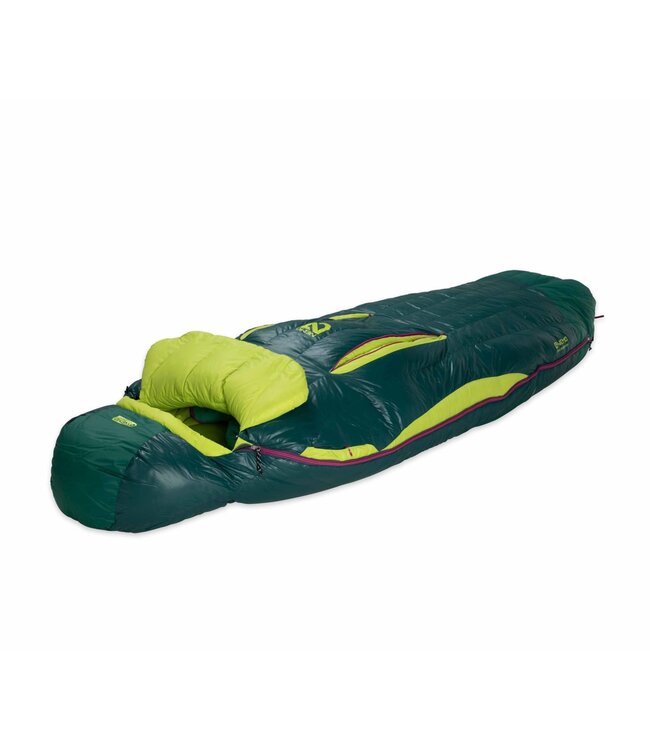
NEMO
Disco 15 Series
79% positive of 114 users
Spacious for side sleepers; bulky, temp rating optimistic.


 Agerak