Running these analyses costs money. Buy through my links to help keep lights on! I may get a small commission.
Reddit Reviews
Another vote for Feathered Friends or Western Mountaineering bags. They’re supposed to last for a decade or more and are very warm. I have a FF petrel and love it so much.
Absolutely great advice. I have a Feathered Friends Petrel and loooove it. I frequently camp at a National Park in my town. The campground is over 8000’ in elevation and is cold in the winter even though we live in a desert. My FF bag keeps me warm and toasty when other campers are freezing.
Before you buy, I'd read through Dan Timmerman's blog: [https://timmermade.com/blog/](https://timmermade.com/blog/) He says it better than I will. But it comes down to wrapping yourself with the right thickness of insulation for the least amount of weight and money, which means you need a bag that fits your body and sleeping position, and uses the right amounts of top-notch materials. **Keep in mind insulation is a complete system**. It includes sleeping pads and shelters. \-A thin CCF pad under an air pad boosts R-value for cheap. Decathlon's foam roll is 210g and 9 Euro. GG thinlite is half the weight and double the price, which is still cheap. \-A bivy bag can easily add 5C to your warmth because it prevents wind from stealing your warmth. You can find them on aliexpress for \~30 Euro in the 250g gram range, or from cottage makers in US for more $ and less g. Keep in mind, you do still want good ventilation to prevent condensation. Feathered Friends is gold standard. Quality is top. The price reflects that. Any of the FF 10F (-12C) or 0F (-18C) bags could work. Don't get confused by names. Just look at the girth specs, and fit to height. **Maybe** in your price range with the USD being cheap right now. I think the Cumulus Panyam and Teneqa series check all the boxes at a fair price. Choose the weight you need, add an extra 60g of down, and size it to fit yourself. Good options on website. You'll come in right around 400-500 Euro. Cheaper than that is Aegismax. \-G is the 850 FP goose down UL winter series, Choose your weight and length. Is it totally dialed in? No, but it's a really solid choice. \-D is the 650 FP duck down budget series. Adequate, not ideal but worth mentioning though My best personal experiences have been with \-Feathered Friends Flicker 20 (-7C) for general 3 season use, which I like for versatility. It works down to actual rated temp with the right shelter, pads, campsite selection, clothing. \-Aegismax Mini 6C which is good for summer use (which is half the year where I live), but was impressed with brand.
Same family size with similar ages and ranges with the kids. Biggest trip we've been able to do so far is 6 nights, 7 days, no resupply, with the longest days about 15km/10 miles. Youngest was 6, eldest 13 at the time. But that built on years of scouts stuff, a fairly large number of 2/3 night family trips since they were very young, and a variety of bikepacking trips (starting the youngest at age 4 on the bike trips). The way to make that longest trip work was to have each kid carry a day's worth of food and eat it from youngest to eldest, ending with me, so lightening their load as you go and saving the biggest days towards the end when their packs were lightest. Taking into account a rule of thumb of at most 15% of their body weight in the kids packs, that means drastically cutting back on what else the kids, especially the younger ones can carry. The amount they can carry is further impacted by using kid-specific packs for the kids, which are framed and certainly aren't ultralight but something we felt necessary to protect spines and growth (at least based on what we've read about it). Kids carry Deuter Kids Climber (680g), Deuter Fox (1152g), Gregory Wander (1247g) and an Osprey Jib (1540g), all excellent. And it's further complicated by the fact that you need to pack a bit more clothes for the kids, especially the younger ones, knowing that the likelihood that they stay dry and relatively clean is essentially zero. All of which means that you really overload the adults, adding progressively a bit more in the kids' packs as you move up through the older kids. This makes going ultralight on other things absolutely essential to avoid adult injury, but with the caveat that space in the packs (or on bikes) is absolutely at a premium, so you need gear that is both light and has the smallest possible pack size: sil-nylon/poly shelters vs DCF, for instance; high fill-power down in bags (pretty critical for squirmy kids to be in bags) or quilts; air pads not CCF; bidet not toilet paper. And it means really taking into account some of the ultralight principles around calorie-dense foods (kids will love being slammed with peanut butter and nutella!). But in doing that recognizing that you do need to overdo it somewhat so you can constantly feed them treats to coax them along. And you need to be looking at group cooking recipes like the famous Skurka beans more than the standard freeze-dried backpacking meals, which are inefficient in terms of bulk and time when you have a big group. This might mean a bigger stove and pot than you will normally be recommended in an ultralight forum. Bags/Quilts are a challenge. As I say, I think bags are essential for small squirmy kids. But getting kids bags in high-fill power down is near impossible (feathered friends has it, but that's way out of my price range). Most kids bags are synthetic making them very bulky. Short down women's bags are easier to find and given that you have four girls and that girls typically have their growth spurt earlier than boys you might be in a good spot to spend good money now on your two eldest girls and be done with it. The trickiest thing to work out is the shelter. I do understand that you feel you need freestanding tents given your environment. But those are crazy heavy when you realize that you might be carrying two three-person tents! What we found was that the best option was to look at the big 4-person mids as they can have very good space-to-weight ratios. There are options in sil-nylon/poly that are designed for and used in 4-season conditions, including above tree-line, that also have optional inners if its buggy (e.g. Black Diamond Megalight, SlingFin Cinder Cone, MLD Supermid, Locus Gear Khafra). You can then have a very light regular 2-person to cover the other two family members. There are a couple of other benefits to this: during the day the mid allows you to throw up a family-sized shelter to get out of inclement weather; and at night you can create a fun kids-shelter and a separate adult one to allow you and your partner to have some alone time. Ultimately, it is all very doable. We progressively added in the more expensive ultralight stuff, starting with standard cheaper stuff and just making it work in the lead-up to the longer trips. So there's no need to go straight for the perfect setup. Trial and error is the key. It's also an amazing thing to do with your family. Have fun!
CCF is pretty much how all of us grew up, I presume. But it's literally just a space issue for my family of 6 as I say. Some of the small kids packs don't have external straps to carry CCF pads. And when you're overloaded, additional CCF pads are not easy at all to deal with. Added to that, the extra faff in making sure they're properly strapped on and stay attached when going through overgrown areas, and they just are an extra hassle. Where we have it now, once the food is gone from their packs, the smaller kids pack themselves up, shoving pads, sleeping bag, etc. into a packliner just like everyone else and we're done. Bags closed, off they go. Everyone blows up their own pads and if the smaller ones have trouble, the bigger ones help, so that's not a parent problem! In other words, we've tried CCF, and didn't find it a great option. Just as with a DCF shelter, while it might seem ideal on paper, it just simply doesn't work out well when dealing with four young kids because of the bulk (not weight). I think it would be a good option for smaller families. But once you hit six, and while there are at least two who are under 10, you ***really*** want to avoid as much faff and bulk as possible. One thing that we have done is use an exped multimat duo strapped onto the Osprey carried by one of the older kids as the seating for the entire family. This is a fairly useful multipurpose thing. Sit pad for all the family, a place for the kids to hang and stay relatively clean/dry in sandy/dusty/wet places, replacement if any pad has a puncture to quickly get kid back to sleep at night (R-value of 1.2 unfolded, and folds over creating a very comfortable single sleeping pad with a theoretical R-value of 2.4), can be strung up as a tarp for excellent sun and some rain protection. Just overall an incredibly useful thing. But 524g, which is why I didn't mention it initially. In terms of "gamifying their weight" the challenge really isn't in getting them to cut down their weight. It's in progressively transferring the weight over to them as they get older and getting them used to distance with weight. They are otherwise very easy to keep ultralight (e.g. their clothes are smaller and weigh less). Once they're out of diapers (a big challenge as your carried weight gets heavier, not lighter as you progress through the trip with all the full diapers!), there's not really much else you need to bring you wouldn't bring for yourself. We put these little mini stuffed animal keychains on their bags in lieu of their standard stuffed toy in bed. We carry a deck of cards and a mini-magnetic chess set to keep them occupied at camp, though they are rarely used because nature and their imagination (and all candies/bars!) provides all the fun they need and we keep them busy setting up camp, cooking, etc.
I'm not sure if you meant to respond to me here? Frankly, I'm not sure that a lighterpack would have much value here, especially as an increasingly narrow and product-focused mindset appears to have taken hold in this sub versus experience-centered discussion. Ultimately, what OPs asking is a very specific question needing answers from people who have genuine experience with the various challenges that come with a large and young family and for which there are genuine ultralight "paradigms" (in OPs words) that are useful here, but for which the standard weight-only focus is not the best, as there are some specific things that come with kids and large families that need to be taken into account, especially when you have two kids 5 and 7. Yes of course kids can carry "volumetrically large but lightweight items". As I say all of my four kids carry their own clothes, pads, bags (again, quilts are very much suboptimal for squirmy kids, another example of a purely lightest thing approach isn't really great), etc.. But again, they need to be highly-compressible to fit kids bags especially when food also need to be carried. And somethings, like sleeping bags designed for small kids, are very much not that (which is why I discuss that in my initial post). And yes, they can also carry some other light commonly-used stuff. For example, we usually distribute small things like 1st aid kit, gear repair, maps & compass to the kids. But for longer trips, like I discuss, there needs to be some moving around of gear, with food distributed and gear moved around once food is eaten, and you need to be very conscious of space and bulk. One week of food for a family of six, with kids as young a 5, plus water, plus at least two shelters for six, plus all sleep systems, plus clothes, plus large pot/stove, etc, is no joke, and ultimately everything takes up so much space that you have to be ***very*** conscious of bulk, in both your gear and your food. And the adults also need to be conscious of weight on their backs because one injured adult can make for a difficult time (an experience I've had). So things do need to be carefully distributed and well thought-out. Honestly, until you experience what it takes to coax four young kids across relatively long distances over the course of a week with no resupply, I don't think you can truly understand how much of an impact bulk has. There's just a lot of stuff, even if you can easily get the average base-weight for the group down to well under 4.5kg/10lbs each, especially when you are talking about some pretty small packs for the younger kids and you generally need to carry group-sized shelters. As I say, my experience has shown me that the optimal setup in this circumstance consists of gear that is both light ***and*** highly compressible or volumetrically small (It has strong similarities in this regard, frankly, to bikepacking). So ultimately for OP's question everything is not just a pure function of weight for which a lighterpack discussion can get you answers.
Western Mountaineering, Feathered Friends or Marmot for bags. Enlightened Equipment, Hammock Gear or Katabatic for backpacking quilts. Not cheap but quality and comfortable.
I've been a quilt user for years, but if I were looking for sleeping bags, I would go with either Western Mountaineering or Feathered Friends. You absolutely get what you pay for with either brand. Awesome quality.
There isn’t really an absolute best, but I like Katabatic for a quilt and western mountaineering or feathered friends for a bag. I prefer quilts down to around the low 20s, bags below that. Having a pocket in your quilt for a sleeping pad seems silly to me.
Really high end would be Feathered Friends or Western Mountaineering, basically life time bags. If you are in Europe Cumulus is a great alternative.
The ratings are not always reliable so you are right to be uncomfortable with them. One good baseline is ounces of down at the same fill power. Comparing bags that way gives you a better comparison point. Western Mountaineering and Feathered Friends are generally reliable in their ratings. That should give you an excellent place to start.
At those temps you don't want to be messing around with some (relatively) unknown brand. I would also go insane if I had to deal with some fiddly hood that let in drafts around my neck in the winter. As far as I'm concerned, in the winter you have two options -- feathered friends or western mountaineering.
Rankings by Use Case
Top recommendations from others in the same boat
Best for Air travel and carry-on

Top pick
Kelty - Cosmic 20 Series
Best for Car camping

Top pick
Kelty - Tru.Comfort Doublewide 20
Best for Damp or humid climates

Top pick
Carinthia - Defence 6
Best for Plus-size and tall people

Top pick
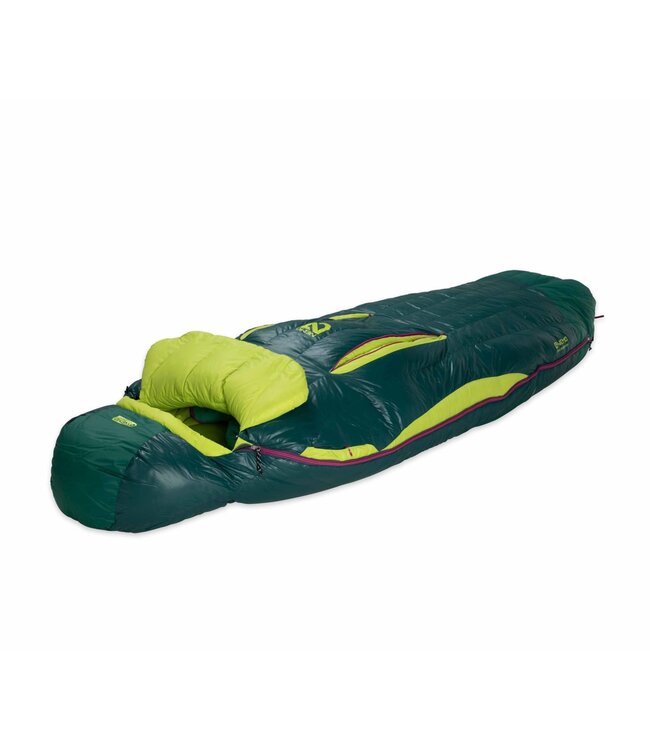
NEMO - Disco 15 Series
Best for Short or petite people

Top pick
Feathered Friends - Egret YF 30
Best for Side and restless sleepers

Top pick
NEMO - Disco 15 Series