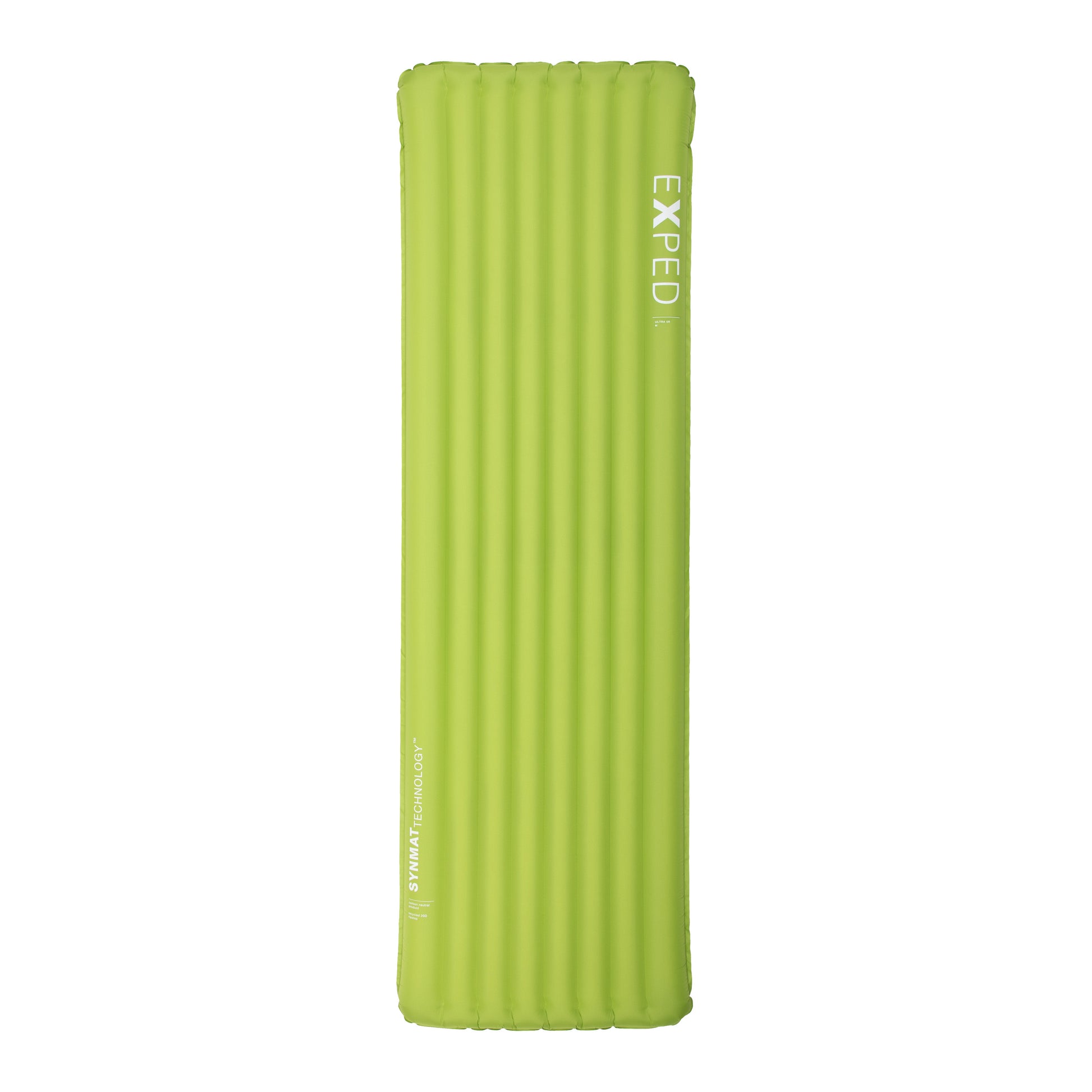
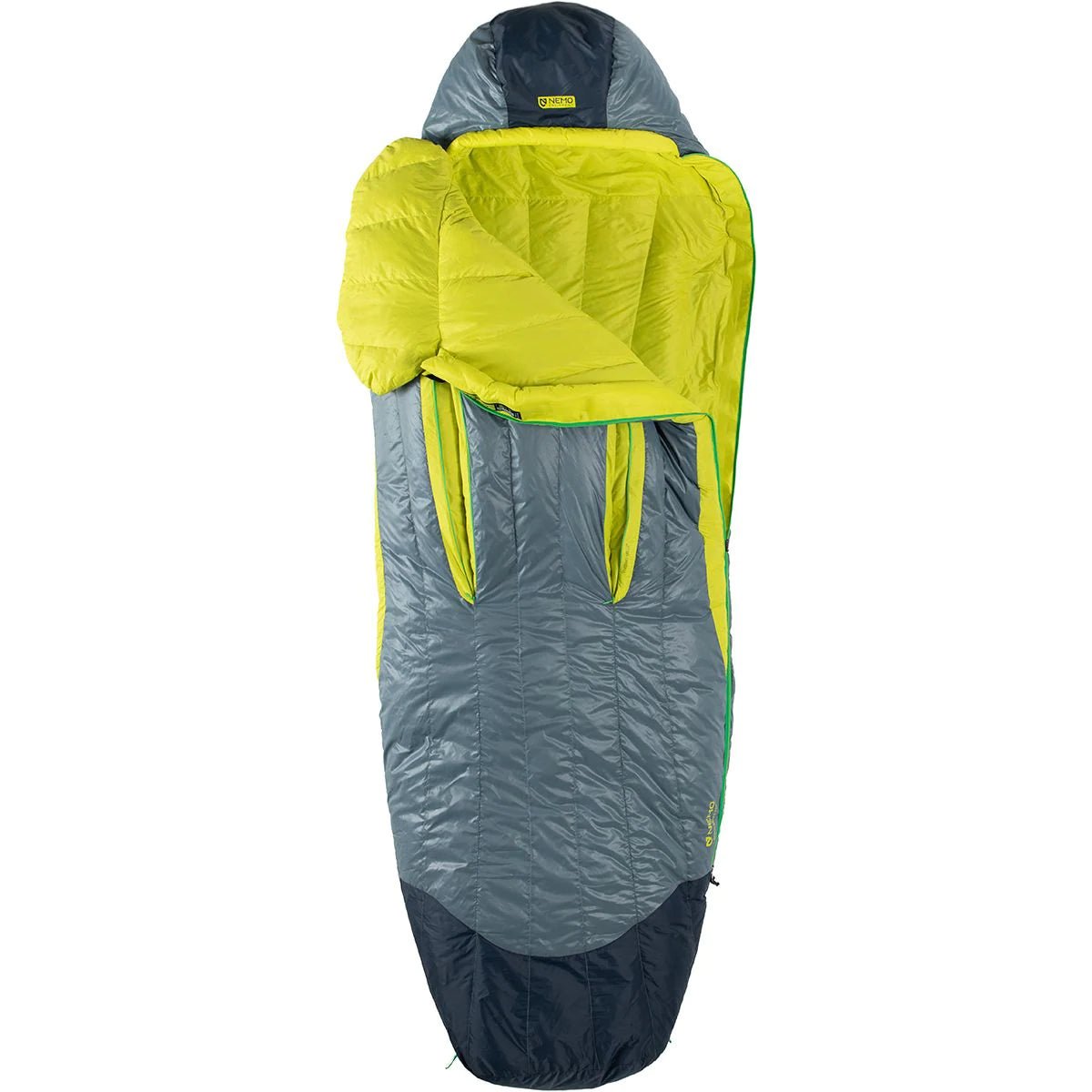
NEMO

Switchback Ultralight Sleeping Pad

NEMO Switchback Ultralight Sleeping Pad

Running these analyses costs money. Buy through my links to help keep lights on! I may get a small commission.

Overall

#25 in

Sleeping Pads

according to Reddit Icon Reddit

Sentiment score65% positive
33
8
10

Top Pros

Top Cons

Last updated: May 3, 2026

Reddit Reviews

Reddit IconGoSox2525
3 months ago

I think if you're going foam-only, then it's a great opportunity to shed weight. You can do a lot better than 600 g. My Switchback cut to torso length is 167 g

3 months ago

My most common setup these days is: - Sleeping pad: 6 panels of Nemo Switchback -- **167g** - Quilt: 30F limit-rated 875 fill power -- **464g** - Pillow: melamine sponge pillow -- **49 g** Total **680 g** > so I wonder if it is a good idea to get the 1kg mattress. No

3 months ago

> I'd like to not have to buy a whole new pad just for winter, and my understanding is that a high r value pad won't cause you to overheat. Nobody on /r/ultralight here can tell you to use a winter pad in the summer. In UL, we use the lightest pads that can keep us sufficiently warm at a given temp In either case, both of the pads you mention are heavy. > My budget is $200, if there is another sleeping pad that's durable, comfortable, and light in that range I'm happy to consider it You're in luck. A piece of foam (Nemo Switchback or Thermarest Zlite) is $50 or less, weighs between like 5 and 14 oz depending how much you cut it down, and is infinitely more durable than any inflatable. As for comfort, that up to you to decide. And you can't decide that just by looking at it. Get a foam pad out for a few nights and try it, just as any budding UL hiker should. Inflatables are an overwhelming dominance in backpacking, but it really shouldn't be that way.

3 months ago

> lighter and higher r-value than a comparable-length ccf pad A few points here. First, having a higher R value is only a benefit if that higher R value is actually needed. If I'm backpacking in conditions where an R 2 foam pad is sufficient, then the R 4.5 of an Xlite providies no benefit to me. Second, there is no reason to constrain ourselves to comparing these pads at the same length. In UL, "foam pad" almost always means "torso-length foam pad". My 6 panels of Switchback weighs only 6 ounces, which really no inflatable can compete with. Sure you could also cut down an inflatable to even the playing field, but then you introduce a big height differential from one end of your body to the other, which foam doesn't do. and I think that at any temps where a torso pad works, nothing more than R2 is needed, so it may as well be foam. We should also consider that very light inflatables are also fragile. IMO the decision to take such a critical component of a sleep system that can also fail so spectacularly should be made with more care. I would not carry something so fragile unless it was really worth it, and it only becomes worth it at high R value (like 4-5 and above). > OP will likely sleep much better on the inflatable pad You don't know that though. I sleep very well on foam, and so do many others. Maybe OP wouldn't find that to be true for themselves. But torso-length foam has so many benefits over inflatables (lighter, way more durable, way cheaper, more multi-purposed) that all UL hikers should at least try it for a few nights before deciding against it.

4 months ago

The JMT is the perfect trail for some good old foam. I carried 6 panels of Nemo Switchback in July for a net 6 oz. No more carrying patches, never worry about leaks, never waste time deflating or inflating, plus you get a huge sit pad/yoga mat for free. Both cheaper and warmer (and lighter) than an Exped Ultra 1R.

4 months ago

Only one way to find out! I think it's plenty comfy

2 months ago

Your use case, plus the fact that you're asking on /r/ultralight, screams torso-length foam. Get a Nemo Switchback, cut it to length from your shoulders to your thighs, and it will be like 6 oz. Way cheaper than an inflatable, lighter than an inflatable, will never pop or leak, much faster to deploy and pack away, also serves as a stretching surface and a luxury sit pad and a wind block for your stove, and a framesheet for a frameless pack

4 months ago

It's all about the density. Cheaper foams are less dense, meaning that they'll collapse under weight and be less effective and insulating when laid on. They may have the same R value as a denser foam when they're uncompressed, but that doesn't matter. I have a super cheap sit pad from Amazon, and it's about as dense as a piece of bread. That's generally speaking though. I wouldn't be surprised if you could find a cheap foam pad with a density comparable to a Zlite or Switchback. They're not exactly cutting edge technology. Fwiw, I find that at temps near freezing or below, a GG Thinlight layered on top of a torso-length switchback, with my pack under the Thinlight for my legs, is luxurious

Reddit IconMattOnAMountain
16 days ago

I started May 4th and after getting a few leaks in air mattresses during the first weeks I used a Nemo Switchback foam pad the entire way. I only switch back to an air mattress if I’m out really late where the ground gets cold. But that’s generally November.

7 months ago

Air mattresses are a bit more comfortable especially if you have to set up on roots or some minor rocks. I haven’t found it to be worth all the issues with air leaks though. I’ve been able to get away with the switchback for pretty much March to October and often more. Also nice to be able to use it as a seat cushion during the day

3 months ago

I used a switchback for the entire trail after I had multiple air mattress leaks in the first hundred miles. Even being a side sleeper I managed just fine and I continued that for all my other hikes. I did a May 4th start date.

Reddit Iconshinysquirrel220701
7 months ago

The R-value of the switchback is super low so won’t provide much insulation plus, if you’re a side sleeper, it’s probably not going to be comfortable at all. Based on the temperatures in your post, you might want to allocate a bit more toward a warmer pad. Edited to add: That bag is crazy heavy if you’re backpacking.

Reddit IconTarget880
4 months ago

The drawback of high R-value sleeping pads when you are out camping is the bulk and weight of them, not that they get to warm. The other potential drawback is higher cost when you purchase them. R-Value is alos additive. So an option is to get an inflatable pad with a lower R value and add an extra closed cell form pad in the winter. Multiple inflatables can be used too if you get them to stay on each other Tensor™ Extreme is at 710g with R 8.6 at $250 Tensor™ All-Season is at 522g with R 5.4 at $200 Switchback™ Ultralight is closed-cell foam at 415g with R 2 at $60 A tenso All-Season and a switchback have a combined R value of 7.5 at 937g. The mass is 227g more then the Extreme, but if it is not neede the All season is 188g lighter. The prices are from Nemos own websight So an option is a bit lighter sleeping pad for most of the year, but in the winter it is a bit heavier with a bit less R value. Multiple closed cellfome sleeping pads can be used. Multiple of the folfing bumpy one will get a reduced R value because air pockets will get remobed but the flat one you roll will keep the same R value

Reddit IconVickyHikesOn
16 days ago

For me as a side sleeper, CCF works well. All the benefits of not having to deal with an inflatable. If you have spots that are sore, create impressions in the ground. I do use a pillow so my shoulders do well with the CCF. I use a short Switchback.

8 months ago

Despite the comment below, I'm with you. I used a S2S inflatable pad on the PCT and it was fine (needed one replacement). I have since experimented with just taking the Switchback for longer and longer trails. And it's fine, especially after I hacked the pillow attachment so it stays put ... love it. Just back from a 3 day trip where I though I should try my Nemo Tensor Insulated pad again ... and regretted it. I didn't sleep any better, the moving around is more difficult (to stay on it) and of course the setup is more difficult (and more susceptible to damage). So, back to the Switchback it is!

5 months ago

This. Switchback cut (or short one bought). You can learn to like it!

about 2 months ago

Also some of us bring short torso pads (while not being as tall as you) so consider options that don’t fully cover your height because I have found it’s not necessary. I have a short inflatable and a short switchback.

about 2 months ago

Understand. So good sleep with less weight is the goal and for me the shorter pads work. It’s worth a try! Also the pillow does not have to be on the pad. I attach mine with shock cord above the Switchback. Doesn’t go anywhere.

Reddit IconZ_Clipped
4 months ago

The thermodynamic properties of CCF have nothing to do with name brands- it's just about the density of the foam, and the shape its cast in. Comfort, weight, and warmth are going to have a triangular relationship. CCF is weight-competitive with inflatables up to about R4, which may or may not be an option for your use case depending on your personal needs. If you want an R4 foam pad, check out Oware's 1/2" thick CCF pads. It will be bulkier and less comfortable than a Z-Lite, but if you cut their 80" pad down to the standard 72", you'll come in at about 14oz, which is about the same as a NeoAir X-Lite. If you're shorter or taller than average, the fact that you can cut it to the exact length you need is a bonus. Any warmer than R4, and an inflatable is going to be better in terms of warmth-to-weight. At that point, it's worth it to go for an R7-8 pad and use the increased bottom insulation to go a little lighter on your quilt, as each oz of extra weight you pay for the pad makes it 10F warmer compared to about 3 oz. of down for top insulation. (This tradeoff obviously has limits, but works for a difference of about 10-20F in most cases.)

4 months ago

>R-4 for that half inch? Color me skeptical… It's not a bold claim. The insulation of CCF is directly proportional to its thickness when compressed under load. There's not much "technology" going on. Thermarest claims the Z-lite is ".75 in. thick" but most of that style of pad is actually 1/4" foam, cast into an egg-crate design that compresses flat when you lay on it so it's more comfortable. (That's why 14 layers of it are only 5 inches high when stacked) The Oware pad is *solid* 1/2" foam that doesn't really compress much when you lay on it, so it's essentially as warm as two Z-Lites stacked. (But as I said, this also means it's firmer and less comfortable.)

4 months ago

It's always going to be ball-park and results are always going to vary with environmental factors that are hard to control for, personal sleep experience, and sleep system proficiency, but I can report anecdotally that my quilt is *definitely* comfortable at lower temperatures on my wife's 8.5R Tensor Extreme than on my older R4.5 Tensor Insulated. As in, I was woken up by cold at 12F in a 10F HG Burrow, switched pads with my wife (who sleeps warmer than I do) and was pretty much immediately toasty warm and slept comfortably until morning. That's about as close to a controlled result as I can get on the trail. Her pad was only 3oz heavier than mine, and if you had put me back on my pad and added 3oz of down and the accompanying loft (which is about the difference in weight between a 10F and 0F), I doubt I would have been anywhere near as comfortable. I also noticed that I couldn't tell from *how* I felt cold that it was specifically the pad that was the weak link. It's wasn't like my back felt specifically cold. But it clearly WAS the pad. There is obviously going to be an intersection where the quilt's heat loss dominates over conductive loss to the ground and the pad's rating becomes wasteful. I don't think you can be comfortable in a summer quilt on a high-R pad at freezing temps or anything. But I personally believe that most UL hikers overestimate the quilt's impact, skimp on their pad, and use less size- and weight-efficient systems than they could be using.

about 1 month ago

You can attach a quilt to a CCF pad, but you probably won't need to. Quilts are usually sized to work with thicker inflatable pads, and a CCF is only about 1/4" thick when compressed. At your size, the quilt edges will probably be on the floor of your tent, even when you move around in it. I personally toss from one side to the other all night, and even on a 3" thick inflatable, I never use pad straps and never get drafts. You won't get the full 20F rating out of your quilt with an R-2 pad. You'd want at least an R-5/6 for that temp- that's the pad your quilt was rated in combination with. You'll probably be good down to about freezing, provided you choose your campsite well. Personally, I'd bite the bullet, and buy a good pad. It will be worth it in the long run, especially if you run cold. My wife slept on Z-lites for like 15 years before buying a Tensor Extreme, and now says she should have done it a long time ago. It's 3oz more, and 4 times as warm and comfortable. And you can partially deflate it in warmer weather for even more comfort. Whether an R-2 is warm enough for the JMT will depend on when you go, and what the weather does. I saw temps in the 30s most nights in late-July to early August two summers ago, with two nights in the Lyell Canyon area dipping down into the teens. YMMV.

Reddit Icon0dteSPYFDs
3 months ago

You literally said people in this thread are trying to defend existing purchases, so you’re kind of telling people to buy a new pad. It’s just not a worthwhile upgrade for me when I have a Tensor, Switchback and X-Lite. I don’t need a 4th sleeping pad at home on the shelf lol

8 months ago

Comfortable, I have one now. Before I had a Nemo pad I returned and honestly, kind of wish I had kept it. Only downside was it took forever to inflate. Also, these things go on sale/get returned all the time. I’d look for one second hand if possible.

Rankings by Use Case

Top recommendations from others in the same boat

Other Reddit Recommendations: