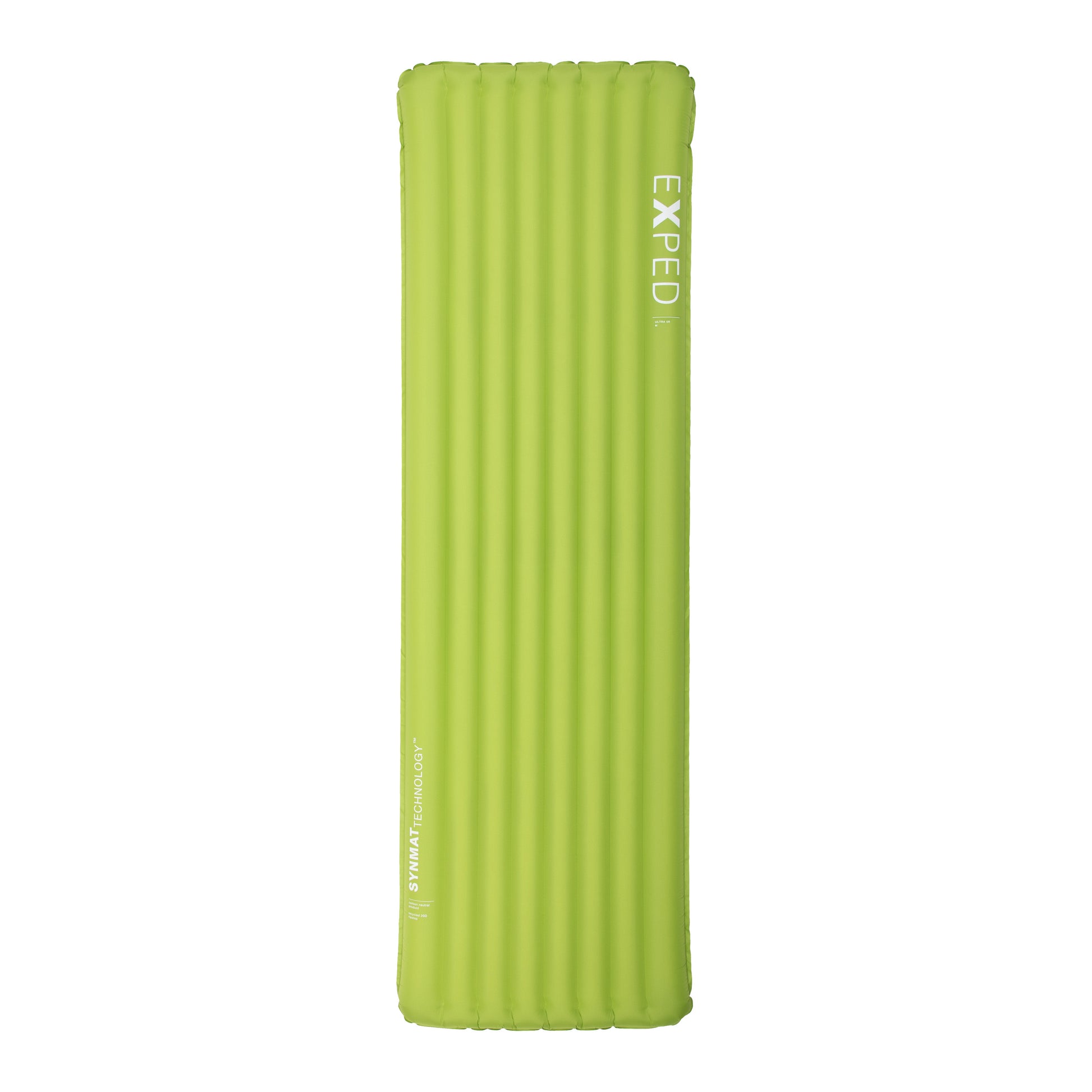
Sleeping better is worth the additional 4.5 oz's all day long. Not every thing can be measured with weight. If you're more rested, an additional 8oz's is worth the tradeoff. More rested = more energy = more miles = more efficient = more happy. Stupid Light vs. Smart Light. Of course this all assumes you'll sleep better on the Tensor. I have both, but only just got the Tensor (25 x 72). I can tell you the NeoAir XLite NXT (20x72) isn't quite warm enough for me here in Montana's summer highcountry. I also dislike coming off it at night since it's so narrow. I'm migrating back to ccf pads or wider inflatables.
If you're in the states, [this](https://shop.sportsbasement.com/products/neoair-xlite-nxt-r-l-curry) is a killer deal for a great pad.
I'm a quilt users myself and used an El Coyote 20 for my O. Small cottage brand in the US, amazing quality.
I’m a side sleeper and used an EE 20° quilt and NeoAir XLite NXT short on the CDT. My buddy had the Tensor All-Season. The Tensor is probably a little more comfy but not enough to justify the extra weight in my opinion.
The noise level is about the same but I think the Tensor is probably a bit more durable. Both pads are super easy to patch with tenacious tape but my NeoAir did have some baffles delaminate the last couple of weeks of my hike. I think I might have slightly over inflated the pad sometimes, eventually leading to the ruptured baffles. All things considered, I will continue to use NeoAir XLite pads due to the weight savings.
I have an EE Revelation, 850 fill, 20° that is toasty at 15° and I have an EE Enigma, 950 fill, 20° that is barely warm enough at 30°. I use a therm-a-rest neo air xlite that is R4.5 and am comfortable on it down to about 15°.
> Is the extra 4.5oz and 20$ worth the increased R-Value of 0.9?
Nah. People spend hundreds to save 4.5 oz. The XLite is the standard inflatable in UL for a reason
> I’m trying to avoid the cycle of constant small upgrades
From a UL perspective, that's still what you're doing. You're beating around the bush with incremental changes that will save you *some* weight, but will get you nowhere near a UL kit. Only this time, you're wasting tons of money in doing so.
Why make such conventional choices? Why not think outside the box and make more radical changes?
- You do not need a freestanding double-wall "1P+" sized tent. The XDome is categorically not ultralight. Be more radical. Consider a shaped tarp, or at least a floorless tent.
- don't bother with heavy, conventional sleeping pads. If you're interested in UL, then this really isn't a hard decision; get thermarest. But you should really take this opportunity to experiment with lighter, cheaper options like foam
- you don't need 750 ml of pot for one person. You could try the much lighter thin-walled Toaks Light 550 no-handle. But again, you should take the opportunity to experiment with cold soaking before you spend more money
- don't wait to swap out your pack. So long as you have that much volume, you *will* find crap to fill it with. Get a smaller, frameless pack *now*, as it will force you to make compromises and come up with a light kit
> Any real-world experience with the X-Dome 1+ yet?
There are plenty of reviews out there that will tell you it's a great tent. And I'm sure it is. Durston makes good stuff. But that fact should be *entirely irrelevant to you*, because this is a heavy, excessive shelter, which you do not need.
> Rapide SL vs Tensor All-Season — which would you choose for warmth, durability, and reliability?
Neither. They are both heavy. Xlite or foam.
> Is the Soto Windmaster still considered the best UL canister stove option, or are there better alternatives now?
For an ultralighter, it never was considered the best stove, because it's not that light. Get a BRS3000T, or try cold soaking. No reason not to at least try the lightest option first.
If you make heavy decisions from the outset, then you might not go back to the drawing board and achieve a true UL kit for years. Why waste all that time? If you're investing now, then just commit.
> Some people just don’t feel comfortable in a tarp or floorless shelter. If thats the case, I’m still with you in not recommending the Xdome.
I totally acknowledge that. But nobody knows if they're in that camp until they try it
> But if OP can sleep on a foam pad, that’s definitely most cost and weight effective choice.
Yup. They gotta find out for themselves.
> Buying a new pack first is not great advice
I'm aware that this advice goes against the grain, which is a conscious decision on my part. I actually think that the common advice of upgrading the pack last is the worse advice of the two, *if* OPs goal is to become ultralight. As I said, it forces you to adapt and problem-solve. It provides a very helpful constraint (pack volume, but also structure) in achieving a UL kit. I bought a 37L frameless pack before I'd ever even really rocked an ultralight kit before, and that pack is what enabled me to break through a mental barrier (which OP clearly has).
> Recommending a frameless pack here is...spicy as well
It's really not. This is the ultralight sub, and frameless packs are vanilla ultralight.
> If you have a 15kg (!!) base weight, the problem isn't just heavy stuff. It's bringing the kitchen sink
I agree. And a small pack forces you to confront that problem.
> Plus where are they supposed to put their 2lb+ sleeping bag, 5.4lb tent, and whatever else they aren't upgrading in their frameless pack while they save up for their next purchase(s)?
If their basic necessities like their sleep system physically cannot fit in something smaller than their 65L Osprey, then yes, that needs to be addressed. No way around that really.
But I'll note for OP that this doesn't necessarily need to be a matter of saving up and investing. Depending on the temperatures they are expecting, UL gear is cheap. Apex quilts, foam pads, and tarps are all cheap.
I think the argument about efficiency is overblown. If we had the ability to carry *exactly* the amount of fuel we need, then yes the more efficient stove would mean carrying less fuel, potentially to the point that it offsets the extra stove weight.
But we don't have that ability practically speaking. We only get a choice between 2 or 3 canister sizes.
So the more efficient stove is *only* worth it if it allows you to carry a smaller can than you otherwise would with the BRS.
For a 2-week trip like yours, I'm not surprised if it makes the difference. But 2 weeks is a very long carry by thru hiking standards; most people are resupplying every week or so, at least for the major US thru hikes.
Therefore, the choice is usually between a BRS+110g can, or Soto+110g can. With the Soto, you'll get to resupply (or arrive back home) with more fuel left in the can. But that's the only difference. So in effect, it means that you've actually carried around more weight in the form of the stove *and* in the form of fuel.
Also FYI the Amicus is even heavier than the Windmaster with the triflex support. The more appropriate option for a BRS clone with icnreased robustness is the Fire Maple FMS300T:
- BRS: 0.92 oz
- FMS 300T: 1.55 oz
- Windmaster+triflex (no igniter): 2.4 oz
- Amicus (no igniter): 2.6 oz
I see no application for the Amicus given that the Windmaster is both superior and lighter.
> Anyway, you DO have the ability to bring only the amount of fuel you need. Transferring fuel is easy and safe as long as you don't heat the donor can.
If we're talking about a thru-hiking context, the amount of fuel saved then needs to surpass the weight difference of the stoves *and* the weight of the fuel transfer device.
For a BRS, Windmaster with triflex, and a [FlipFuel](https://www.litesmith.com/flipfuel-fuel-transfer-device/), that's a net (2.4 + 1.25 - 0.92) = 2.73 oz = 77.4 g.
So if the options are:
1. Carry a Windmaster, triflex, and FlipFuel. At resupply, use another donor can to top off our can with precisely the amount of fuel needed until the next resupply
2. Carry a BRS, buy full fuel cans at resupply
then Option 1 *only* beats out Option 2 if it saves us *more* than 77.4 g of fuel, which is an entire 77.4/110 = **70%** of a 110g fuel can. The BRS is *not* so bad that it uses that much more fuel. So the math doesn't really work out in the Windmaster's favor.
If we're talking about trips from home, rather than thru hiking, then the transfer device can be left at home. In that case, the weight in fuel needing to be saved to make the Windmaster worth it reduces to (2.4 - 0.92) = 1.48 oz = 41.9 g, or **38%** of a 110g fuel can. You're more likely to get that kind of efficiency discrepancy between these two stoves, but I'm not sure when. Probably in consistently windy conditions. If you're able to reliably block wind, then I doubt it. But I could be wrong. A GearSkeptic deep dive might have the answer there
Hmm, interesting. Definitely worth looking into. But also I'm very skeptical of R 6.9 being 0.5 oz lighter than R 4.5, especially with the warmer pad being from a company that's known to have overestimated R values... just sounds too good to be true. Although some of the weight rain might just be coming from the more aggressive mummy cut
Admittedly, it was only an anecdotal statement
> My personal experience has been their pads sleep as warmer or warmer than most other pads rated to similar R-values
I hear the exact opposite pretty frequently
> Here on r/ultralight, I realize I should use a CCF pad and like it (I've tried and it doesn't work for me) so I guess any discussion about inflatable pads should probably go somewhere else anyway lol.
I think that's true at like R 3 and below. At R 6, foam is pretty untenable.
All depends on the context. Some will carry it in the height of summer in warm places, which obviously isn't optimized. But for a context that genuinely requires the R value, it's about the lightest you can get.
Maybe. There are lots of places where "summer" still means nights below freezing.
Although I find that during the summer (where daytime temps are high, and the ground retains some of that heat throughout the night) if the nighttime lows are dropping that much, it is still possible to get by on foam. But I'm a warm sleeper.
I think for a 3-season cold-sleeper at altitude on something like the CDT, an Xlite could still fit in a UL kit.
Top Sleeping Pads on Reddit
1
Exped
MegaMat Series
92% positive of 454 users
Car camping comfort champ, but some side sleepers find it thin.



 bradmacmt