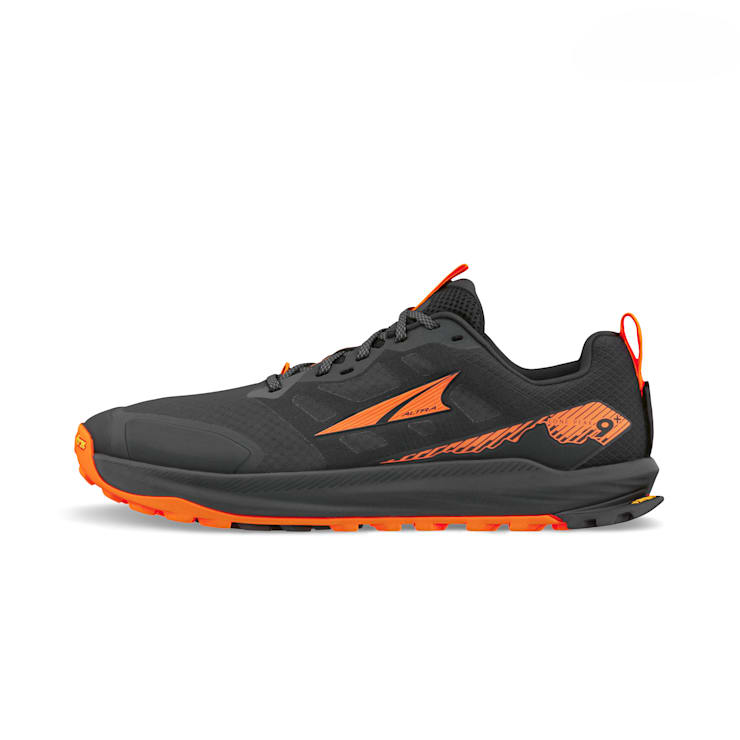
I'm looking for something to get me through a 75km ultra, very technical but not much elevation (~1500m+). I'm aiming at ~5:30-6:00min/km pace average over the course.
I've stumbled upon a couple of people talking about these Pumas and I'm very interested but the lack of reviews is putting me off...
I have the Agravic Speed 2 non-ultra and I love them but the comfort is garbage, I feel like I wouldn't be able to wear them for so long.
Also I absolutely love the Evo SL for long runs, so the news of a proper trail version got me instantly interested.
Do you think the Pumas would better fit my needs? Stability is not a concern at all, I actually prefer some ankle freedom. So I'm also a bit concerned the Pumas might be too restrictive. That's basically the only thing I hate on my otherwise amazing Velocity 4...
So I have the Speed (1 and 2) non-ultra and I love them. Although you mentioned the ultra as comparison, I'm wondering how it compares to the non-ultra. It seems like the only difference is a bit more stack? (35mm vs 39mm)
Spoiler: For €160, this might be everything I’ll ever need in the trail-running space.
I’m genuinely excited about this shoe.
These are my first impressions after an 8 km (5-mile) run that included roughly 4 km of tarmac, two strides at 2:30 min/km (4-minute mile pace), a 36-second 200 m on the track, and the rest on mountain bike trails and gravel paths at an easy pace.
For context, the shoes currently in my road-to-trail, gravel, and trail rotation are the H1, Aero Glide 3, Prodigio Pro, Agravic Speed Ultra (ASU), Kiprun Summit Race, and Cascadia Elite. Honestly, I can already see myself reaching for the Agravic SL over all of them, with the exception of the Cascadia Elite.
**Ride and Performance**
First and foremost, this is a real trail shoe. It has much more in common with the Agravic Speed Ultra than the EVO SL. That said, it runs surprisingly well on the road thanks to nearly 40 mm of Lightstrike Pro foam in the heel. You do notice the sticky Continental rubber and the 3.5–4 mm lugs a little on pavement, but never to a distracting degree.
The shoe feels excellent whether you’re standing, walking, running easy, or picking up the pace. It even handled my brief track excursion without any issues.
The rocker reminds me of the Speed Ultra, although it is less aggressive. In my opinion, that’s a good thing. It feels more natural while still delivering a very quick transition. The lateral sole flare helps roll you onto your big toe and creates a fast, efficient toe-off.
What really stands out is the stability. The heel is wider and more planted than the Speed Ultra, allowing you to comfortably heel strike on steep descents and still enjoy a smooth and quick transition. Alternatively, you can take advantage of the wide, stable forefoot and thick slab of Lightstrike Pro to bounce your way downhill.
**Upper and Fit**
It is slightly large in true to size and weighs 308 grams in a US11. For daily to medium long runs I would go half a size down (US Size Chart), it feels more nimble and performance fitting but I plan on using it on longruns and Ultras and like a bit more room all around so I stuck to TTS.
The upper is excellent—comfortable, secure, and unlikely to retain much water. The only area that may hold some moisture is the padding around the heel. The half-gusseted tongue works very well and contributes to the overall comfort.
Fit-wise, I’d describe it as:
Roomy forefoot
Medium-width midfoot
Medium overall volume
This is probably the best Adidas upper I’ve used in a long time.
**Durability**
Continental rubber has a well-earned reputation for durability and Lightstrike Pro tends to hold up exceptionally well over time.
With my typical use case—where roughly one-third to one-half of my mileage is on tarmac or hard-packed gravel—I expect the lugs (3.5-4 mm) to be significantly worn down after 500–800 km. At that point, traction for more technical trail running may be reduced, but I suspect the shoe will effectively become a more stable EVO SL and remain perfectly usable for another 500 km or so.
I also don’t see the upper failing anytime soon.
**Who Might Not Love It?**
I’m a relatively strong and heavy runner, so the weight doesn’t bother me at all, and the Lightstrike Pro felt good from the first run but usually needs 30-50 miles to get a bit softer.
Lighter runners may need this break-in time before the foam really comes alive, and they may also wish the shoe were a bit lighter overall.
A potential drawback for runners who need substantial medial support is the shoe’s quick, medially biased heel-to-toe transition. The rocker and lateral forefoot sole flare work together to guide you toward your big toe at toe-off, which may feel a little too directive for some runners.
Other than that, I’m struggling to find any faults and can not wait to get more miles in.
Only can compare to Speed 1 and it’s a very different shoe: SL has Better foothold, more comfortable upper, more stack, bigger rocker and sole flare that controls your foot strike, less nimble. Maybe the foam is firmer in the SL. I don’t have the speed anymore to test it out.
Spoiler: For €160, this might be everything I’ll ever need in the trail-running space.
I’m genuinely excited about this shoe.
These are my first impressions after an 8 km (5-mile) run that included roughly 4 km of tarmac, two strides at 2:30 min/km (4-minute mile pace), a 36-second 200 m on the track, and the rest on mountain bike trails and gravel paths at an easy pace.
For context, the shoes currently in my road-to-trail, gravel, and trail rotation are the H1, Aero Glide 3, Prodigio Pro, Agravic Speed Ultra (ASU), Kiprun Summit Race, and Cascadia Elite. Honestly, I can already see myself reaching for the Agravic SL over all of them, with the exception of the Cascadia Elite.
**Ride and Performance**
First and foremost, this is a real trail shoe. It has much more in common with the Agravic Speed Ultra than the EVO SL. That said, it runs surprisingly well on the road thanks to nearly 40 mm of Lightstrike Pro foam in the heel. You do notice the sticky Continental rubber and the 3.5–4 mm lugs a little on pavement, but never to a distracting degree.
The shoe feels excellent whether you’re standing, walking, running easy, or picking up the pace. It even handled my brief track excursion without any issues.
The rocker reminds me of the Speed Ultra, although it is less aggressive. In my opinion, that’s a good thing. It feels more natural while still delivering a very quick transition. The lateral sole flare helps roll you onto your big toe and creates a fast, efficient toe-off.
What really stands out is the stability. The heel is wider and more planted than the Speed Ultra, allowing you to comfortably heel strike on steep descents and still enjoy a smooth and quick transition. Alternatively, you can take advantage of the wide, stable forefoot and thick slab of Lightstrike Pro to bounce your way downhill.
**Upper and Fit**
It is slightly large in true to size and weighs 308 grams in a US11. For daily to medium long runs I would go half a size down (US Size Chart), it feels more nimble and performance fitting but I plan on using it on longruns and Ultras and like a bit more room all around so I stuck to TTS.
The upper is excellent—comfortable, secure, and unlikely to retain much water. The only area that may hold some moisture is the padding around the heel. The half-gusseted tongue works very well and contributes to the overall comfort.
Fit-wise, I’d describe it as:
Roomy forefoot
Medium-width midfoot
Medium overall volume
This is probably the best Adidas upper I’ve used in a long time.
**Durability**
Continental rubber has a well-earned reputation for durability and Lightstrike Pro tends to hold up exceptionally well over time.
With my typical use case—where roughly one-third to one-half of my mileage is on tarmac or hard-packed gravel—I expect the lugs (3.5-4 mm) to be significantly worn down after 500–800 km. At that point, traction for more technical trail running may be reduced, but I suspect the shoe will effectively become a more stable EVO SL and remain perfectly usable for another 500 km or so.
I also don’t see the upper failing anytime soon.
**Who Might Not Love It?**
I’m a relatively strong and heavy runner, so the weight doesn’t bother me at all, and the Lightstrike Pro felt good from the first run but usually needs 30-50 miles to get a bit softer.
Lighter runners may need this break-in time before the foam really comes alive, and they may also wish the shoe were a bit lighter overall.
A potential drawback for runners who need substantial medial support is the shoe’s quick, medially biased heel-to-toe transition. The rocker and lateral forefoot sole flare work together to guide you toward your big toe at toe-off, which may feel a little too directive for some runners.
Other than that, I’m struggling to find any faults and can not wait to get more miles in.
Favorite brand for trail shoes is Saucony. Their overall approach seems to work best for me across shoes. The Peregrine line has been the best do-it-all shoe for me, and I like it on long runs even though it seems marketed as a light and speedy type. The Endorphin Edge was great in so many ways, only severely bottlenecked by an outsole that was aggressively frail (I had large chunks missing after 30 miles on tame terrain).
That said, my favorite trail shoe is the Terrex Agravic Speed. I haven't tried any of the other Terrex shoes, but grabbed this one on sale once and it's very fun. It's definitely heavily geared for non-technical courses. The tread depth is pretty shallow, it's light, bouncy, and very fast if you are on runnable terrain. No rock plate but enough stack that it's not an issue. I've taken it up to HM distance very comfortably, and would consider it for longer if the terrain was appropriate.
How could they get to production with that design? I have the Speeds (same upper as Ultras) and they destroyed my ankles. Wore them twice. Want to send them back to Adidas and ask them what they were thinking.
I suspect they work for no one. Everyone I know who has/had them has problems. One friend developed a major Achilles issue after using them a ton. People just put up with the pain because the shoes are fast. Even my Speeds felt super fast. But the speed wasn’t worth the effort.
I love the weight and running experience of my new Adizero EVO SL shoes. (My Nike Vomero 18 are pretty comfortable but my new fave is the EVO SL)
I have been hiking and backpacking in Altra Lone Peak for years but I’m starting to RUN long runs (10-20 miles) on flatter hard-pack desert trails and I’d like to find something with cushioning yet is super light. I would like enough grip for small gravel rocks. Any suggestions? (I need a wide toe box.)
UPDATE: I ended up buying Mount to Coast H1, Salomon Aero Glide 3 GRVL,, Hoka Challenger 8 and Adidas Terrex Agravic Speed. I ended up keeping only the Hoka Challenger 8.
Here are my thoughts:
Adidas Terrex were interesting but too flat and didn't fit my foot at all. They are a unique shoe. I think they would be good on rocky, somewhat technical trails. Women's 8. $60 (Deal! too bad they didn't workout for me.)
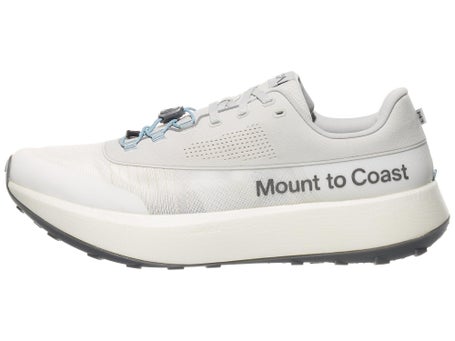
Mount to Coast H1 is sturdy, the rocker is not overly pronounced, I liked the shoe BUT the upper material is really thick and made my foot hot just walking around the house for an hour. Actually, the lugs were the least pronounced of all the shoes. Women's 8.5. $153 with slight discount.
Salomon Aero Glide 3 GRVL is the lightest but felt sluggish running around the house but comfortable. A negative for me would be the deep cutouts in the sole, which could get gravel stuck. Women's 8.5. $150.
Hoka Challenger 8 feels more like a road shoe but the lugs are the largest. It seems the most flexible of all the shoes as far as comfort is concerned. Women's 8. $105 because they are white. (My shoes look like crap after a few runs anyway.
The Challenger doesn't seem to be as durable as either Mount to Coast nor Salomon but they felt the lightest and most comfortable overall.
Thanks for the great details! Do you have any feedback or experience with Hoka's Challenger 8? I tried them on in the store before I really started trail running and I liked the fit & feel, but not sure if they can really last on trails. (I know people really love the Speedgoat but it didn't fit me well and felt really stiff.)
Top Trail Running Shoes on Reddit
1
Mount to Coast
H1
85% positive of 177 users
Versatile road-to-trail, but struggles on wet, technical downhills.


 fizzybubbler