I’m so you think the eero 6e pro is a good choice? I have a few matter smart plugs and the new Apple TV that has thread and three HomePods and three minis, and two thread smart Schlage locks.
I went with the eero 6e pro. So far so good. Set up
Was incredibly easy. But having a small issue setting up a couple smart devices.
I got everything set up fairly simply. But I’m having trouble getting a smart plug with matter from Kasa hooked up to my HomeKit app as well as my Samsung sound bar. I’m figuring out I believe it has something to do with the smart plug and soundbar are on one band while my phone might be on the 6ghz band. Most of this stuff is over my head and I’m learning a lot as I go. I was wondering if you’ve come across something similar with your eero? I don’t know how to make so my phone can be on the same band as the devices. The smart plug and soundbar work fine in their native apps. And actually worked fine in Homekit with my old router. So it has to be something about the triband that my new eero network offers. Any of this make sense to you?
Well, when it comes to eero, they do have other systems that are a step above the one I mentioned which are the WiFi 7 based systems.
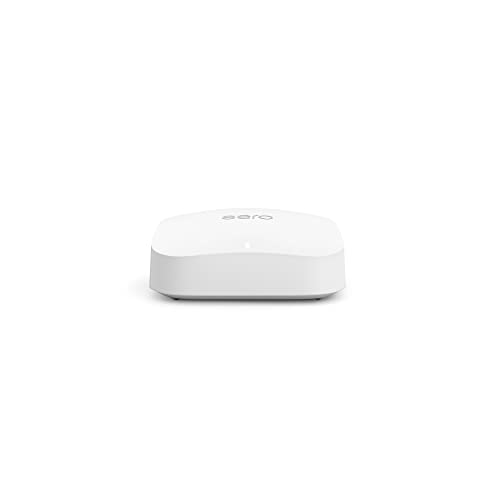
As far as it being the best in the world, really it’s all relative because everyone will have a different opinion but based on my personal experience with eero, it has been rock solid for me and it’s crazy simple to setup.
Literally after taking it out of the box, hooking it up plus downloading the eero app, you should be up and running in less than 10 minutes.
Go over to the Amazon website and type in eero.
Then just tap the link going to their website and you’ll see what I mentioned.
I’ve got an eero pro 7 with two 6e pros with wireless backhaul. I actually game on my pc connected via lan cable to the furthest wireless node and feels like it’s connected directly to the router as far as packet loss & jitter go. Reading any history of this sub almost makes it seems like a requirement to go wired backhaul but wireless has been exceptional for me for gaming concurrent with streaming 4K on 3 different tvs. Granted my gaming pc won’t max out my fiber connection in terms of MB/sec but the only drawback of that is waiting a few extra minutes on 100gb+ steam downloads.
If it matters, here’s GeForce Now (notoriously sensitive) network test from the wireless backhaul
https://i.imgur.com/1TRNSUf.jpeg
Locally installed online games have seen <10ms ping so. Idk, if you don’t live in a crowded apartment building or microwave shop, wireless is sensible from my anecdotal experience. 👍
Mine is $12 per month ($3 discount on the gateway fee, and a $5 discount for a “free” range extender) for a 2 pack of the Eero Pro 6E. I was debating buying it but at the time it was like $530 on Amazon (including tax). Works out to be about even over 3 years. And my cat broke one and Altafiber just gave me a new one.
Look up EERO 6 ProE on Amazon sold in kits of 2, 3, 4, etc. Easy setup wireless mesh once you connect up the first one at the modem, the app is user friendly and EERO lets you bridge the network to your modem/ISP reouting IP making it easy for ISP to still handle the routing capabilities. THe Pro6E utilizes a 6mhz band as the wireless backhaul for fastest speeds.
I install these all the time with customers.
Top WiFi Routers on Reddit
1
GL.iNet
GL-MT6000 (Flint 2)
91% positive of 197 users
OpenWrt enthusiast's choice; good value, but lacks 6GHz.


 Aanstadt