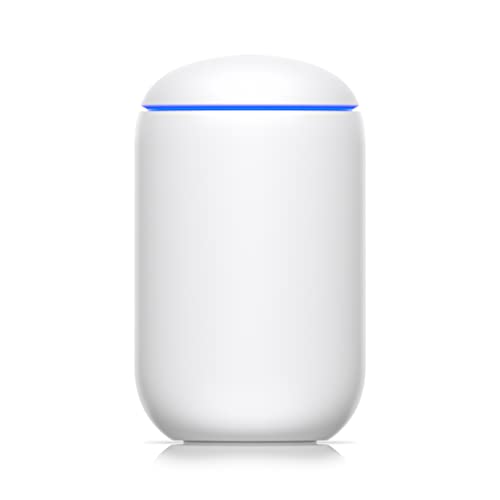
I have a Gen1 Google Wifi. Never had problems, but recently something SUPER weird happened. It lost all connections to internet... except the ONE device that was streaming, that one kept working as if nothing happened.
I had to factory reset all mesh devices to make it work again.
My 1st gen Google Pucks have been solid for the last few years. House is 2300sq-ft, two floors plus it reaches out to my backyard which is nice if I want to have my phone and a speaker outside.
Only recently have they started to have problems and drop connections, but I'm thinking that might be more because of their age.
I started buying some Ubiquiti gear to replace them. My router is a little Intel NUC running PFSense with the Ubiquiti controller running in a Jail. Although I may just buy a Unifi Express or Cloud Gateway and consolidate everything. That's one thing I liked about the Google system was that all my options (limited as they were) were available in the app. No fuss, no fighting. If I wanted to setup stuff in a sandbox, it was kind of a pain although my cable modem has multiple LAN ports so segregating was easy.
My Google WiFi decided to die on me a few days ago. Trying hard resets but nothing works. Really want a Ubiquiti system but it aint cheap for a big house. Right now every old router and access point I found in my garage are humming away to give some sort of coverage, but I am soon running out of ideas for new ssid’s… well… ehh…
It's in double NAT because the original Google Wi-Fi don't support VLAN, I don't have that option in the Google home app. You've got it because you have the PRO version.
It's not a problem and actually solves one problem I was having with Pi-Hole.
With Pi-Hole in the Google network all the DNS requests came from the Google router, even when Google DHCP was configured to provide the pi-hole address.
Now, with the pi in the other network it works as expected, router does DHCP and gives clients the pi address as DNS and they use it.
It allows me to tell the family that if they want ads they can use one network and if they don't, use the other.
I just ditched my old Google wifi system for a Dream router 7, got it Wednesday and set it up last night, and so far it's great. Google wifi was far too restrictive and I needed an environment that I could learn on and break shit on with an isolated network while leaving the rest of my network working.
If you aren't a big networking nerd, TP-Link Deco or Eero are fast, easy to set up and good. I have the Google setup and its been completely fine, but Deco and Eero are better for adding new nodes and seem to be faster overall.
Top WiFi Routers on Reddit
1
GL.iNet
GL-MT6000 (Flint 2)
91% positive of 197 users
OpenWrt enthusiast's choice; good value, but lacks 6GHz.



 AlexLema