Running these analyses costs money. Buy through my links to help keep lights on! I may get a small commission.
Top Pros
Top Cons
Reddit Reviews
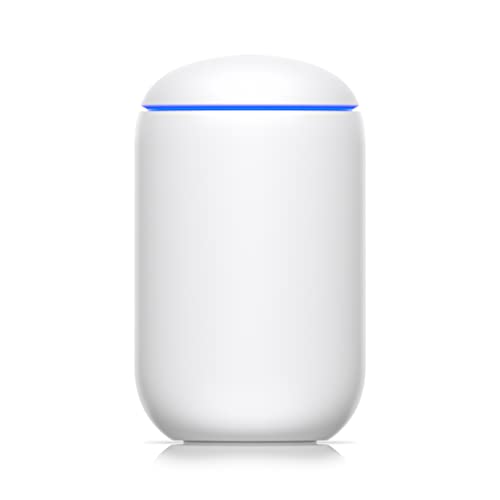
Pretty much any consumer router made in the last 10 years will work, but id recommend the unifi express (149.99) or unifi express 7 (199.99), I would go with the unifi express 7 as its a bit more value and is more future proof, Unifi routers also have great IDS/IPS. And then an 8 port unmanaged gigabit switch, pretty much anything will do the trick as long as it says gigabit and has at least 8 ports.
Unifi routing and APs have been solid for years for me. No regrets. Have even installed it in my mother in laws home (Unifi Express). Easy remote management via phone app for both my site and hers. Can you do it cheaper? Sure, but would you rather spend your time doing the network vs. the other good stuff you probably got into homelab for?
The Ubiquiti Unify Express 7 is pretty reliable with long firmware support. Pretty fast internals too. Gotta buy a separate switch if you wanted multiple Ethernet connections though but that's dirt cheap.
UniFi Express 7 is best bang for the buck if you all you think you’ll need is network and not planning get into their security camera systems. Unifi has a detailed firewall you can setup, custom VLAN support, ability to to a guest WiFi with portal page, built in IPS to detect and block suspicious traffic, logging, and VPN support (teleport and/unifi travel router). It will work out of the box easy peasy and you can just set it up with your existing SSID and password and everything will automatically work connecting to it. From there you can really dig into leveraging the more advanced features.
If your devices aren’t WiFi 7 then it’s not going to be any better. I’d buy the unifi express for $150. It’s prosumer and probably better than most. And if you need more WiFi coverage you can add an access point later. I’d also recommend getting an unmanaged 1gb switch from someone like tplink or netgear and then wire your ps5 via Ethernet.
Same here, with a little UniFi Flex breakout switch. It does everything a home network needs, with the benefit of also having an easy setup of an isolated work VLAN for my company laptop when working from home.
UniFi, hands down. I don't know what you consider "similar nonsense", - prosumer and a lot of business will use a controller that manages the configurations and statistics. The Cloud Key is a somewhat older implementation of the UniFi setup where it performed as the controller and an NVR for cameras. They've split that off - you can get gateways (router/controller) that does not have the video incorporated any longer. The "cloud" in some of their hardware doesn't mean it's run from the cloud or whatever, it's simply part of the model name. You can run it all standalone without being tied to their servers (though it's pretty convenient at times). Similarly, they have "mesh" in the name of some of their APs - but all of them can be wirelessly uplinked. It's a matter of them associating through marketing to the massive consumer "mesh" marketing. But it's still prosumer stuff and uses the same controller as the rest. My favorite feature is reliability. It's been rock solid for me through 6 years (I've moved through three upgrades and it's just stable. I love it. Look at the Dream Router 7, UniFi Express models, and Cloud Gateway models for some pretty darned good home solutions. The Dream Machines are great also, they are rack mount though and tilt towards having the video features. Should you choose one of the simpler offerings and want to go video later - there are standalone DVRs - including the Cloud Key+, which is still popular - that you can add. There is other prosumer gear, but Ubiquiti UniFi and TP-Link Omada are the only ones I know of with the unified management.
Better routers are not going to overcome "lots of concrete and walls". You would be better served by working on a plan to get some ethernet run around and access points connected with it. "I'd really like to avoid..." says to me that you *could*, you just don't want to. The effort and expense would be worth it, your wifi experience would be so much better by using access points connected via ethernet. Mesh is just wifi via wifi, so the same signal issues getting to clients also applies to getting signal from router to mesh points. Placement will be key - the mesh point needs to be in a spot where it receives good signal from the router *and* is able to provide good signal to the clients you want to serve. The UniFi Express is more of an entry level device. The Dream Router 7 is meant to compete with the consumer all-in-one devices. The DR7 is *probably* going to do a better job with wifi. Nobody can predict how wifi will work in any house, but since you mentioned lots of concrete and walls, that makes wifi a challenge. What I will say is that UniFi will likely be more reliable and it's definitely more expandable with a wide range of APs and switches.
Do you have wifi 7 clients? If not, wifi 6 is cheaper. Do you have a ton of devices? If not, triband is not really necessary - most average consumer routers will handle a reasonable amount of clients. (Triband usually just adds a second 5 GHz radio, making a total of three.) I'd suggest you consider UniFi - for a single unit (combo router) the UniFi Dream Router 7 ( yes, if has wifi 7, but you get a lot of bang for the buck with the device and you'll get a bit of future proofing.) If you need more coverage, you can easily add another access point that would be managed within the same ecosystem. UniFi access points can be wirelessly uplinked (that's all mesh is) if desired. The UniFi Express (or Express 7) may be a budget-friendly choice as well. [https://store.ui.com/us/en/category/all-cloud-gateways](https://store.ui.com/us/en/category/all-cloud-gateways)
The Express devices are more entry level/minimalist, and they also offer easy meshing for people want to do that. The DR7 is more competent and can do IDS/IPS and DPI which the Express devices don't. I don't think there is going to be a lot of difference in range but the performance is going to be better overall with the UDR7 (the IDS/IPS/DPI requires more horsepower). UniFi doesn't strive for huge range but instead the model for them is better coverage by using multiple access points. Trying to cover a whole house with a single AP is stretching wifi.
UniFi, hands down. I don't know what you consider "similar nonsense", - prosumer and a lot of business will use a controller that manages the configurations and statistics. The Cloud Key is a somewhat older implementation of the UniFi setup where it performed as the controller and an NVR for cameras. They've split that off - you can get gateways (router/controller) that does not have the video incorporated any longer. The "cloud" in some of their hardware doesn't mean it's run from the cloud or whatever, it's simply part of the model name. You can run it all standalone without being tied to their servers (though it's pretty convenient at times). Similarly, they have "mesh" in the name of some of their APs - but all of them can be wirelessly uplinked. It's a matter of them associating through marketing to the massive consumer "mesh" marketing. But it's still prosumer stuff and uses the same controller as the rest. My favorite feature is reliability. It's been rock solid for me through 6 years (I've moved through three upgrades and it's just stable. I love it. Look at the Dream Router 7, UniFi Express models, and Cloud Gateway models for some pretty darned good home solutions. The Dream Machines are great also, they are rack mount though and tilt towards having the video features. Should you choose one of the simpler offerings and want to go video later - there are standalone DVRs - including the Cloud Key+, which is still popular - that you can add. There is other prosumer gear, but Ubiquiti UniFi and TP-Link Omada are the only ones I know of with the unified management.
UniFi. My current gateway has an uptime of 5m 2w 6d 9h. It's been well over a year previously, only interrupted by firmware updates.
It's not so much that Orbi doesn't work with Apple products, it's that Apple products are very "finicky" - it's a byproduct of Apple being very aggressive and strictly standards-compliant in ways that often clash with consumer-grade hardware like Orbi. There is a certain amount of freedom (in wifi standards) for Apple to be strict, and for consumer wifi like Orbi to be "loose" or have defaults that don't work well with them. So, some consumer gear, trying to be helpful, or users who don't know the effects of some settings, end up making it feel like crappy hardware. Band steering, force roaming, and other settings that might work with most wifi devices doesn't with Apple hardware. Since you have a grand to spend - Ubiquiti UniFi. The prosumer gear will allow you to set meaningful parameters that can improve your Apple experiences. For instance, UniFi allows you to fine-tune the "Minimum RSSI." You can tell the system, *"If an iPhone signal drops below -70, let it go,"* which aligns with Apple's internal logic for roaming signal strength criteria. There is lots of support and guidance for UniFi - including tuning for Apple devices. You'll also find flexible options for inexpensive switches (\~$30 for the Flex Mini) to get you more ports. APs with ethernet ports is more of a consumer thing, with prosumer, you'd be using switches when you need ports. If not UniFi, then look at Eero - it has a good reputation for working well with Apple's implementation, but the downside is the subscription model. UniFi has none.
I would suggest the Unifi express or UX7, both can handle fiber and they are super friendly user interfaces.
Rankings by Use Case
Top recommendations from others in the same boat