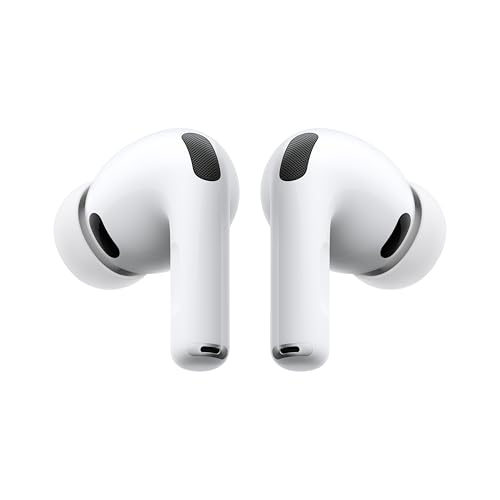
Apple
AirPod Pro Series
Apple-integrated, great ANC, but fit issues & poor Windows support.

Running these analyses costs money. Buy through my links to help keep lights on! I may get a small commission.
Not on the list, but I just got the JBL Live Pro2 to replace my older AirPods and they are amazing! I have a lot of JBL products and I have never been unhappy with any of them truthfully. I think the Vibe buds would be a good choice actually. I’ve seen alot of good reviews on the EarFun Air Pros when I was doing my research, but I just didn’t know much about the brand itself.
I also have the 75Ts but I’ve found the JBL Live Pro 2 to be just as bassy. For a cheaper bassy alternative I would also check out the Oneplus Nord 3 or original CMF Buds.
I’m a hip hop head and I will say the JBL Live Pro 2s hit pretty hard. Can be had for less than $100
I find my $79 JBL live Pro 2s beat most of what I’ve found
I was happy with my Jabra Elite 4 Active but suddenly, after about a year, one of them lost volume after a couple of seconds of use. I got a pair of JBL Live Pro 2 instead. I like everything about them but not the fit. It feels like they're about to slip out any second. I wouldn't dare running or anything like it with them. Would love a clone of the old Jabra, the fit was great.
Hello, I have had my jbl live pro 2 tws for over three years now and I love them. But since two or three months the left one kept getting worse and worse to a point where it sounded like bad radio and I was only able to hear it if I concentrated on it or when the right one wasn't in. So this week I couldn't take it anymore, so I made the decision to get new ones for around 160 €. I am a little short on money right now so this was a hard decision to make. So the day comes my new headphones will arrive and I'm walking to work with my old ones in and the left one just starts working a normal again. I can't explain it, I tried so much to get it to work again, I checked for software updates, fixed everything fixable on the app, cleaned them, shakes them, just everything.I will send the new ones back now, because I guess I don't need them now. Can someone please explain to me how this happened.
I didn't own the N90Q, but I owned the AKG NC700 (mark 1, with TruNote, they removed it from the mark 2). What I can categorically say, having measured how TruNote affects the results with in-ear mics, is that it's useless at making the response more Harman-ish in situ and merely just changes the response : [https://www.audiosciencereview.com/forum/index.php?threads/akg-n700nc-m2-measurements.45391/post-1624551](https://www.audiosciencereview.com/forum/index.php?threads/akg-n700nc-m2-measurements.45391/post-1624551) On the N700NC the feedback loop also operates in a very conventional fashion otherwise (no higher than 500-800Hz or so). I could misunderstand it, but I have a lot of doubts about the validity of that paper (it makes a lot of odd assumptions it seems to me), and it's a method Harman's latest articles on AES don't seem to follow. Picture me very skeptical that this feature actually *worked* as imagined. CustomTune for IEMs works on an entirely different basis, and Apple's active systems are probably quite different as well from Bose's. I can't (and I don't think many amateurs can :D) know whether or not these systems are completely successful, but I know they are in some instances (I can measure for example that the APP2 will successfully deliver the same SPL to your eardrums regardless of the volume of the ear canal up to around 4kHz or so, using a constant impedance curve, and it seems given HP.com's results that the same applies when the impedance curve is different - 711 vs 5128). The latest Harman IEMs I own are the Live Pro 2, and they don't seem to do anything particularly extraordinary in terms of active systems, but I'm quite curious what Harman will do in their future IEMs based on their latest articles :D.
The main difficulty is that the inward facing microphone can't directly measure the response at the eardrum past 500-800Hz or so, significant issues start to arise in the ear canal gain region already, and that the transfer function between the inward facing mic and the eardrum will be inconsistent across users or positions. So a lot of really advanced engineering I don't understand anything about has to happen :D. It's already an incredible achievement that headphones like the AirPods or the Bose CustomTune IEMs seem capable of successfully using active systems past 1kHz, perhaps up to around 4k or so for the AirPods, 5k or so maybe for the Bose. What Bose is already doing - and not Apple at least with the APP2, I need to check for the APP3 - is shifting the frequency of the ear canal gain peak according to the length of the ear canal to match how this peak would shift for sound sources like natural sounds or loudspeakers in free air, or large, open headphones. This so far is the first time I measure evidence of an attempt at individualising the "baseline" target response based on anatomical features ("baseline" as in the "default" curve you get for all sound sources, now with more or less personalised HRTF maps from various products we also have another example of an attempt at individualising "targets", but it's not trying to affect the "basal" response). Bose doesn't adjust anything past 5kHz based on ear canal length, my guess is that the peaks / dips at higher frequencies are so narrow and shift so easily with positioning that, combined with their inability to have their calibration run constantly (CustomTune is a "one off" measurement done at startup), they don't feel confident about trying to address these ? Or perhaps they still don't think that their algorithms yield reliable results at higher frequencies anyway.
At low frequencies the SPL is constant at all points within the chamber formed by the sealed ear canal, so you can directly measure the SPL at the eardrum by measuring it via a mic at the other end of the canal (provided no leakage is present). Past 800Hz or so I'm not qualified enough to understand all of what's going on to be honest - but I confirmed it with an experiment I did a while ago using DIY mics inserted through an IEM's eartip, measuring the difference at different insertion depths, and comparing how different the difference was between the DIY mic and the ear simulator's mic (at the drum), showing that the mic near the ear tip measured a "different difference" vs the ear sim mic, which logically means that one of these is wrong (and obviously the mic in the ear tip since we care about measuring the SPL near the eardrum). A few graphs here : [https://imgur.com/a/pEsfEYw](https://imgur.com/a/pEsfEYw) (red traces the difference at the clone 711 coupler's mic, blue traces the difference at the DIY mic in the ear tip, last graph the "different difference"). It "checks out" with claims made in Bose or Apple patents, or with papers published by Harman or Samsung like these : [https://aes2.org/publications/elibrary-page/?id=22277](https://aes2.org/publications/elibrary-page/?id=22277) [https://aes2.org/publications/elibrary-page/?id=22943](https://aes2.org/publications/elibrary-page/?id=22943) [https://aes2.org/publications/elibrary-page/?id=22585](https://aes2.org/publications/elibrary-page/?id=22585) It's interesting to me that the general trends of the errors I got with my DIY experiment are quite similar to the errors found in Bezzola's 2023 article even when we weren't really trying to measure the same thing. Search in the US patent database for Bose patents signed among others by John Rule or Dan Gauger - it seems to me that CustomTune is something that they worked on for something like a decade before it came to fruition. Bose's patent tend to be quite explicit (unlike Apple's) and tend to provide more graphs and explanations - but I'm still struggling to understand them :D. Something I learned from their patents is how critical it seems the ear tip / nozzle / inward mic / driver arrangement is to extend upwards the usability of the inward facing mic to adjust FR or extend the range over which ANC operates. It's really impressive to me that some of these issues have already been more or less "solved" by Apple and Bose, and a few years ago at that ! Other companies like Harman seem to try right now to develop their own solutions to address these problems.

Apple
AirPod Pro Series
Apple-integrated, great ANC, but fit issues & poor Windows support.

OnePlus
Buds 4
Budget ANC king, but no wireless charging & windy transparency fails.

Beats (Apple)
Fit Pro
Workout secure, Apple-friendly, but wing-tips tear and case feels cheap.

Anker Soundcore
Sport X20
Value workout buds, secure fit, but connectivity can be iffy.

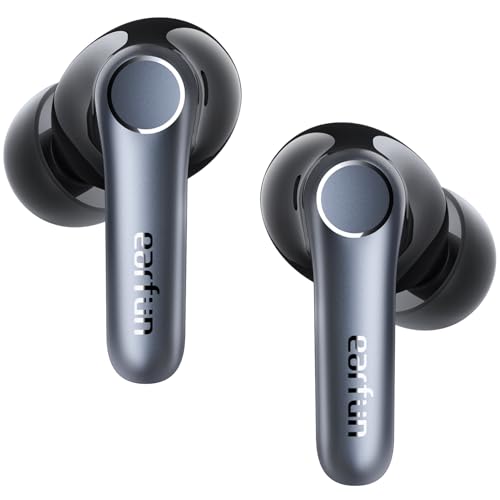
EarFun
Air Pro 4
Budget champ with great sound/ANC, but transparency has static.

Ranked #1
Apple - AirPod Pro Series

Ranked #1
Technics - EAH-AZ100

Ranked #1
Beats (Apple) - Fit Pro

Ranked #1
ISOtunes - PRO Aware 2.0

Ranked #1
Apple - AirPod Pro Series

Ranked #1
Shokz - OpenFit Series