Ubiquiti
AC Mesh Pro


Ubiquiti
Ubiquiti

Ubiquiti

Ubiquiti

i'm in the "Mesh works great if you use it right" camp. i use a u6 pro which is wired to my u6 pro in meshed in my home office to devices that don't have WIFI (desk phone, PC, etc...), and a u6 lr+ which is wired to my U6 mesh in my garage which is meshed and have no issues. there's also a U6+ meshed to give better service to another part of the house (i didn't give it AP priority). both my wired AP's are in the basement (front and rear of the house), and both meshed AP's that are in the house are on the second floor. my cameras on the garage, what i do in my home office, and everything else on my network doesn't care what which AP it's on, works for what i need.
I have the same problem. There is form insulation everywhere, I can’t punch new holes in the walls or ceilings. I deployed the In-Wall 6 and Mesh 6s. The in wall in the office and primary bed room. Two Mesh 6s in the living room front of the house. Blanket coverage.
The things that stink are consumer level hardware and using wifi as a network infrastructure. Most of what you describe is due to those two things - cheap design and construction and iffy firmware for the hardware, and the general inadequacy of wifi to provice a reliable pathway, since it's subject to distance, going through something other than air, interference of several kinds. You don't care about speed - fine - but speed (on a node) is a consequence of weak signal, or interference. So, those two things - speed and reliability of connection are tied together. There are other solutions aside from mesh to reach an outbuilding. Ethernet cable, fiber optic cable, point-to-point radio - all are better than trying to stretch a mesh somewhere far away. In general, when placing mesh points you do not place the mesh where you need the wifi, you place it in a spot that gets a *great* signal from the base router and the clients get a *good* signal. The link is more important than the client. That makes it impractical to use for jumping a bunch of space between two buildings. Eero seems to get the most positivity for pure mesh systems. The plethora of offerings by the major consumer mesh manufacturers (Asus, TP-Link, Netgear, D-Link) shows how they would rather keep pumping out new devices than actually make something you would love to own. In fairness to them, wifi is no way to run a network infrastructure but consumers demand it. Wifi itself was designed as a convenience for portable devices, and convoluting it into network infrastructure was not a good idea, but one driven by the need for sales and consumer demand (plus consumer belief that wifi is somehow better.) u/Scotty1928 makes a good point - I also run UniFi. If I was confronted with your issue (of the outbuilding), I would probably first try an outside AP on the house (outside - and you'd need to wire it to your network.) The AC-M is a particularly good UniFi model for this) and see if you get an acceptable signal at your outbuilding.
It's really not a lot worse that something like Asus, who has a decently robust interface (lots of consumer stuff hides everything behind "simplicity"). The payoff is reliability and a long service life (my oldest UniFi AP is 7 years old, still supported, and still working great.)
Just so you know, mesh doesn't bring roaming to wifi - any APs set up with the same authetication configuration (SSID, passphrase, security method) will allow wifi clients to roam amongst them as needed. Mesh uses what setups like Ubiquiti UniFi and commercial networking hardware use to allow *faster* roaming. UniFi would be my recommendation. It doesn't matter what your brother in law thinks.
UniFi - reliability, self-hosted, no cloud, no subscriptions etc.
UniFi has all the blocking and other features that you'd want. I have not tried it but it now also has ad blocking. At this point, I would never change. It's easy to maintain and upgrade etc. If something does fail, it's pretty simple to replace the component and keep moving. It's got a lot of enterprise type features that I like.
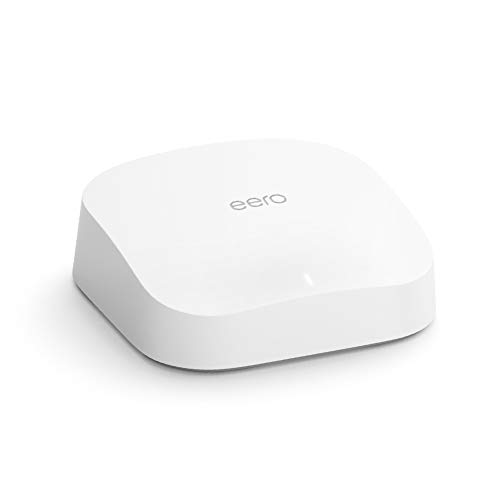
In consumer world - Asus and TP-Link are the better choices. Eero is great hardware has a subscription model for some needed (IMO) features. I would avoid Netgear, D-Link and Linksys - they are not what they once were and have subscription models, sometimes poor support, and varying reliability and quality. You could also consider gl.Inet Flint devices if you're looking for an all-in-one router, they have gained a very good reputation. I agree that a better choice than any of the above would be Ubiquiti UniFi and TP-Link Omada is also decent - it's different than the consumer gear. Reliability is one of the major points of these prosumer setups. I've been running UniFi for 7 years, it's great.
I'm a bit of a network geek, so what I did may be more than you want. I have AT&T 1GB fiber, great service, reliable, fast. I have the BGW320, which is common in these installs. I have a [Unifi Cloud Gateway Max](https://techspecs.ui.com/unifi/cloud-gateways/ucg-max?subcategory=all-cloud-gateways) router sitting behind the 320, which is in IP Passthrough mode. This assigns the public IP address to my router, where I control all security and other configurations. (Including using the DNS servers I prefer over the AT&T servers which are locked in on the 320). I have two [Unifi U6 mesh devices](https://techspecs.ui.com/unifi/wifi/u6-mesh) that provide my wifi. Due to the IP passthrough, I don't use the wifi on the AT&T gateway. I have one U6 connected to the network with Ethernet, and it shares the mesh with a second U6 across the house. My 320 is also located in a corner of my house, so it was worth the effort to run the Ethernet between two Unifi switches and connect the U6 to one. The problem with extenders or repeaters is that they don't share the network bandwidth and provide a constant signal among device, as a mesh setup will. The extenders rebroadcast the incoming signal, and in doing so, they have to use some of the incoming signal power to rebroadcast - similar to creating a second network - which weakens the signal available to devices from the extender. There are a number of affordable mesh systems you could add to your network to improve things. I've heard good things about Google's Nest Mesh system, so that's one thing to look at. The setup I have (gateway, two switches, two mesh devices) is pricier, but not outrageous. The flexibility and the management tools make it worthwhile.
I have Unifi network devices in my home. I have a Cloud Gateway Max used for routing and all my security, which sits behind the ATT gateway via IP passthrough. The firewall, security and other options (like customizing your DNS servers) make it worth the effort to install. I have two Unifi U6 Access points in a mesh. One is attached to the network via Ethernet and controls all the WiFi (I do not use the WiFi on the AT&T device at all). The main need for my mesh is to reach some IoT devices that are located on the other side of the house - sprinkler box, Ring system, garage door opener - along with a Smart TV in the master bedroom. There's just my wife and I here 90% of the time, so what I have works great. All network configuration and management is done from my Unifi gateway using a web interface.
I have a UniFi cloud gateway in IP passthrough, and my WiFi is completely handled with two UniFi U6 access points. One is Ethernet-wired to the gateway and the other serves the other side of the house. Works great. I'm curious about your NAT issues. Using IP passthrough should eliminate NAT completely on your local network.
I like ubiquiti, their U6-MESH APs are pretty rock solid for the price. Side note: do you have coaxial ports in your apartment? I lived in an apartment for a few years that had coax ports in the walls that ran back to the utility closet with the water heater and they were all connected together so I was able use moca adapters and get that sweet sweet wire hard wired speeds anywhere in the apartment. Food for thought
Sorry, but why not Ubiquiti with Cloud management? You're already familiar with the platform and the logging available to you. Get him a Cloud Gateway Ultra and a U6 Lite or U6+ with a PoE Injector, enable cloud management, and that's all you need. You don't even need a switch, just use one of the CGU's Ethernet ports. You can use "Wireless Uplink" (what Ubiquiti calls it's meshing function) if you need to mesh Ubiquiti APs together too. I doubt your dad will complain much about halving speeds in doing so because it'll still be more than enough for a single user. Mesh units for the home are mostly designed for ease of use and management. They don't really target someone who wants extensive logging. Eero can get you there with "eero+" service, but that's a monthly fee for that service. For $250-$350, you can get that Ubiquiti setup and just fold it into your own home setup for multi site management.
Unifi has nothing that compares to actual wireless mesh by the home router competitors. Their accessible products like the DR7 and UE7 don’t use 4x4 antennas, 6ghz or MLO for backhaul which significantly decreases bandwidth. They also don’t have any products with a band for dedicated backhaul, they have absolutely nothing that can compare to a full WiFi mesh from competitors like ASUS, Tplink, Eero or netgear.
Unifi is not the way for WiFI mesh and even if you don’t need mesh it’s not for the average joe either. They are expensive but the easiest setup and most feature rich for the average consumer is ASUS.
Problem 1 you are using the ISP wifi. Those are usually crap and don't allow you to update settings much. Problem 2 the extenders are like mesh in that they are using your own wifi to resend signals. Info to consider: Are you using 5ghz or 2.4ghz signals? Everyone wants the faster 5 ghz but don't consider that these are more affected by walls. If you can use the 2.4ghz your signal will be better. Second you don't want a bunch of your bandwidth eaten up with "back haul" so you need your remote AP(access point) hardwired back to the router. I am a believer in putting the ISP system in passthrough and using your own router/wifi. Option 1 consumer grade. Asus. Get 2 put one at each end of the house. Run a wire between them, one will be your router, the other will be converted to just be an access point. You can set them up in mesh so it's one wifi network and devices can hop as needed. You cannot buy just an AP from Asus, but can get a better and lower cost device. TP link is also good. I avoid everything else. Option 2 Prosumer Get a Ubiquity unifi system. There can be set up simple or go full on and power a football stadium. For home you can get a single unit as the router or one that is router and wifi AP built in, then get a separate dedicated AP for other locations. You can update the AP s as new tech comes out without replacing the working router. GL