Switched last week from an AW3420DW to the Samsung and its a blast. Color is in my opinion a lot better and for work (VSCode) the increased height is great. My poor 3080 though struggles a bit, even in CS2.
No worries!
Yeah, I’d honestly just wait and rebuy the same monitor once it goes back on sale.
I really loved it overall, and the 40” screen size felt perfect — the stuck sub-pixels were just bad luck, and unfortunately Amazon would only do a refund instead of a replacement. At $649 it was a no-brainer for me, but at $1,199 it’s just not something I can swing right now.
Until then, I’ll just be sticking with my AW3420DW, which still treats me well. If the G75F pops back up on sale again (or I catch one locally), I’d absolutely grab another one.
No VRR flicker at all on my unit. Like I stated before, I returned my first one due to pixel issues (it came from Amazon) and repurchased directly from Samsung, so I’ve had a good amount of time with it.
With VRR enabled, it’s been completely stable, and no flickering even in darker scenes where VA panels usually struggle. I also haven’t noticed any ghosting.
I don’t believe the G75F 40” has a VRR Control option like some of the other Odyssey monitors. I’ll double-check when I get home, but I’m pretty sure I’ve never come across that setting.
For reference, I’ve played Arc Raiders, both Horizon games, Final Fantasy XV and XVI, Wuthering Waves (quite a bit), and now Crimson Desert with no issues in any of them.
If you’re curious about my pc specs let me know and I can share them as well.
So I finally had a chance to sit down and run this test, there was no visible flickering on my unit. I let it run for a while just to be sure, and I didn’t notice anything at all.
That said, VRR flicker isn’t just about the panel itself. Frame time consistency plays a huge role. If your frame times are swinging a lot, you’re effectively forcing the refresh rate to swing with it. One of the easiest ways to reduce or eliminate it is to tighten up frame time variance with a frame cap. Keeping your FPS within a more stable range helps VRR operate more consistently and can make a big difference overall. Secondly, having a strong enough GPU for this resolution helps for keeping frame times consistent. Less fluctuation = VRR has less work to do.
I hope this helps and I hope you enjoy the monitor if you decide to purchase it!
Tbh, I’m not really shure about this. I bought just a 21:9 Alienware 3420DW for exactly this purpose, and besides 120hz being laggy af, I miss some height, especially in racing games. Imo this is a great monitor for productivity, but not for gaming.
In racing games I feel vertically limited.
Don’t understand me wrong the overall bigger image is really helpful, but maybe I’m just too used to 24“ 16:9
Coming from a 240hz monitor I bought a few months before, then 120hz is laggy af. Sometimes I regret buying that monitor, because of the big difference, but it so smooooooth 😍
I can’t imagine what a 360 or even 500hz panel feels like 😍🤪
I almost decided to pick up the AW3425DW as an upgrade to my AW3420DW, but once I saw CES' offerings for the new panels with an expected release of Q1 this year, I held off.
It's looking like the new panels will have the RGB-Stripe configuration for better text clarity, a higher screen durability/scratch resistance that puts it on par with most IPS displays, and some models are supporting DP 2.1.
If you're looking to buy now, I'd choose the Alienware; if you're willing to wait a little longer and save a little more, I'd see what these new monitors are looking like!
I've owned two 34" ultrawides, the AW3420DW (120hz IPS) and later the AW3425DW (240hz OLED) and have been pleased with both. I find it extremely immersive in single and multiplayer games - most support ultrawide well, if they don't then there's a mod for it. I've also been appreciating 3440x1440 res, more real estate than standard 1440p, and not nearly as demanding as 4k.
The feature differences between brands are usually just USB ports and maybe things like a KVM switch built-in. Most, if not all, of them use even the same panel tech from the same manufacturer, so it really comes down to price and looks outside of that.
Top Ultrawide Monitors on Reddit
1
LG
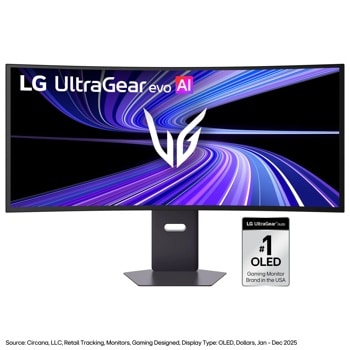
45GX950A-B
70% positive of 908 users
45-inch 800R OLED: immersive gaming, polarizing curve for work.



 BendaRodriquez